What you see and do
- Break the journey to the desert in Midelt. The longest drive of every shorter Casablanca tour becomes two half days.
- Reach Merzouga with energy left: the camel ride into Erg Chebbi follows a drive of about 265 km, not 450 km or more.
- Have a full day at the dunes after the camp night, with sunrise, Khamlia and time for sandboarding or a 4x4 outing.
- See the Kasbah and medina of Tangier, with Cap Spartel if time allows.
- Keep the free days of the shorter loops in Chefchaouen and Essaouira.
- Tour Fes and Marrakech with a local city guide, including the Badi Palace and Ben Youssef Madrasa in Marrakech.
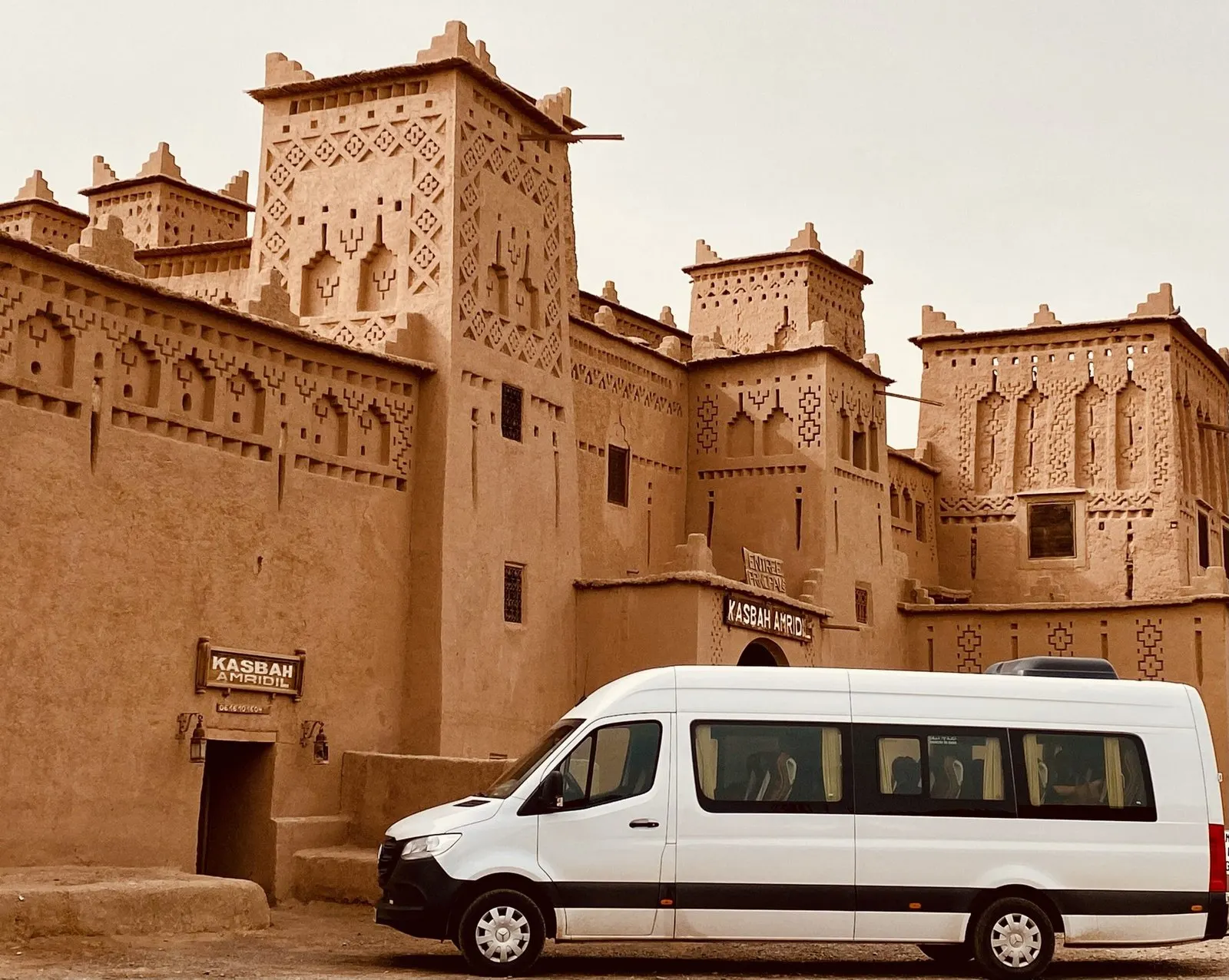
- Cross the south by Todra Gorge, the Dades Valley and Ait Ben Haddou, then spend a day in the Ourika Valley.
Day-by-day itinerary
17 days, about 2,516 km by road. Tap a day to open it.
Day 1Arrival in Casablanca
You land at Mohammed V Airport, where your driver is waiting, and head into the largest city in Morocco.
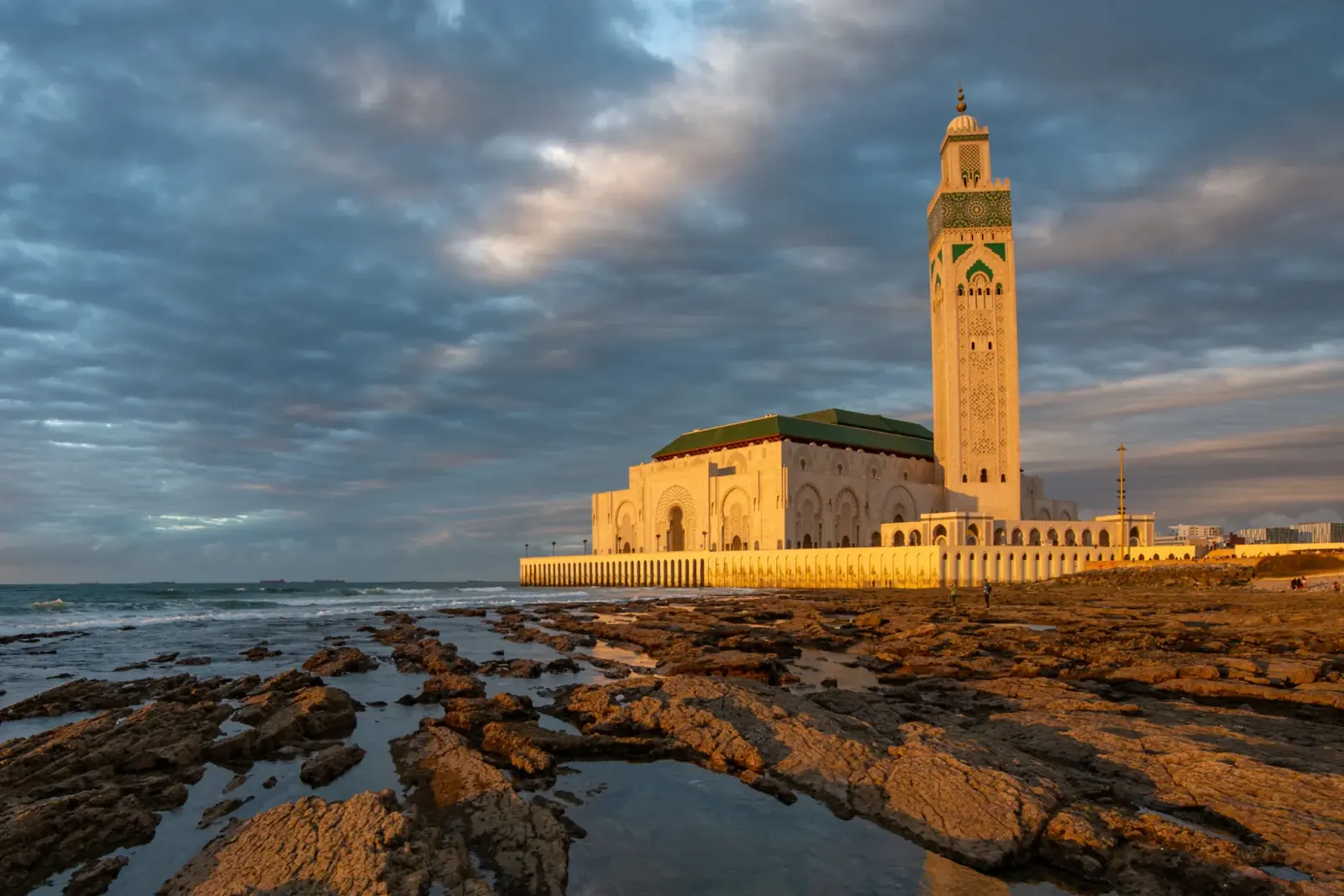
If there is time, you stop at the Hassan II Mosque. Its minaret is among the tallest in the world and part of the building stands over the Atlantic. Otherwise the day is for settling in. Sixteen nights lie ahead and none of them needs to be rushed.
Day 2Casablanca to Tangier by Rabat365 km
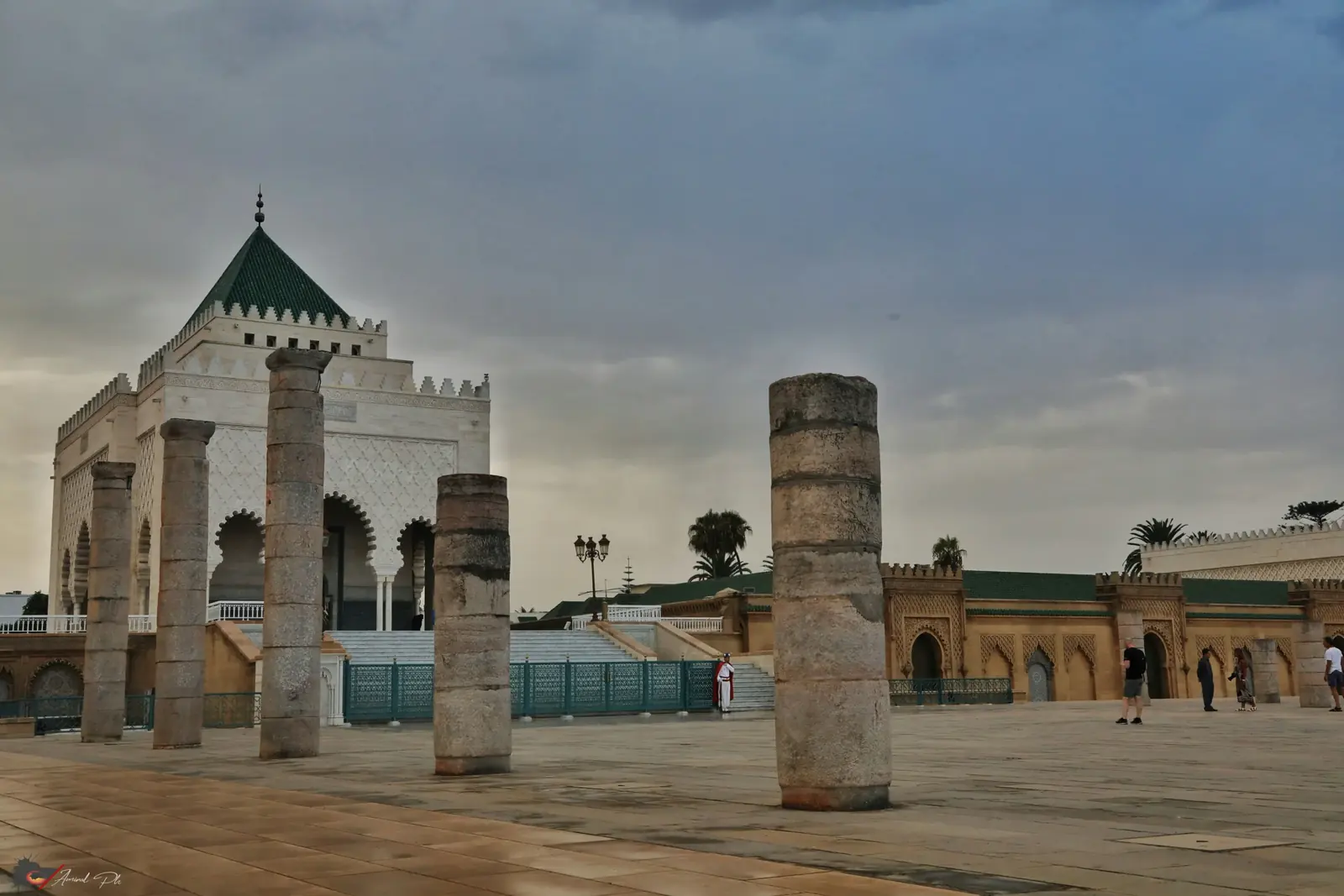
A morning in Rabat opens the trip. You see the Hassan Tower, begun in the 12th century and never completed, then the Kasbah of the Udayas, a fortress quarter of the same period above the mouth of the Bou Regreg river, and the Andalusian Gardens inside its walls.
The motorway north brings you to Tangier in the afternoon. Unlike the 16-day route, this one takes you into the old town: the Kasbah at the top of the hill, once the seat of the sultan's governors, and the medina lanes below it with their cafes and small galleries.
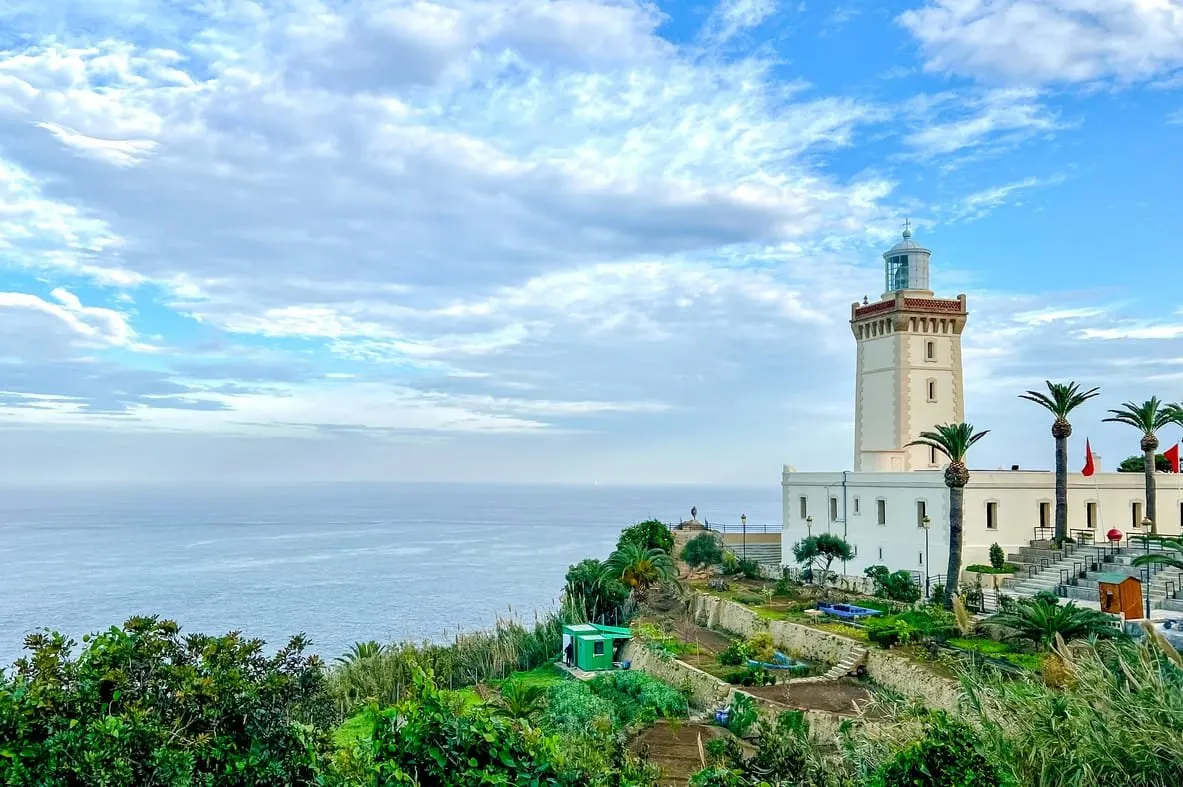
If the light holds, you drive out to Cap Spartel, the headland where the Atlantic meets the Strait of Gibraltar. This is the day with the most distance in the first week, and it is nearly all on fast road.
Day 3Tangier to Chefchaouen115 km
A short day. The road leaves the coast and winds through the hills and villages of the Rif.
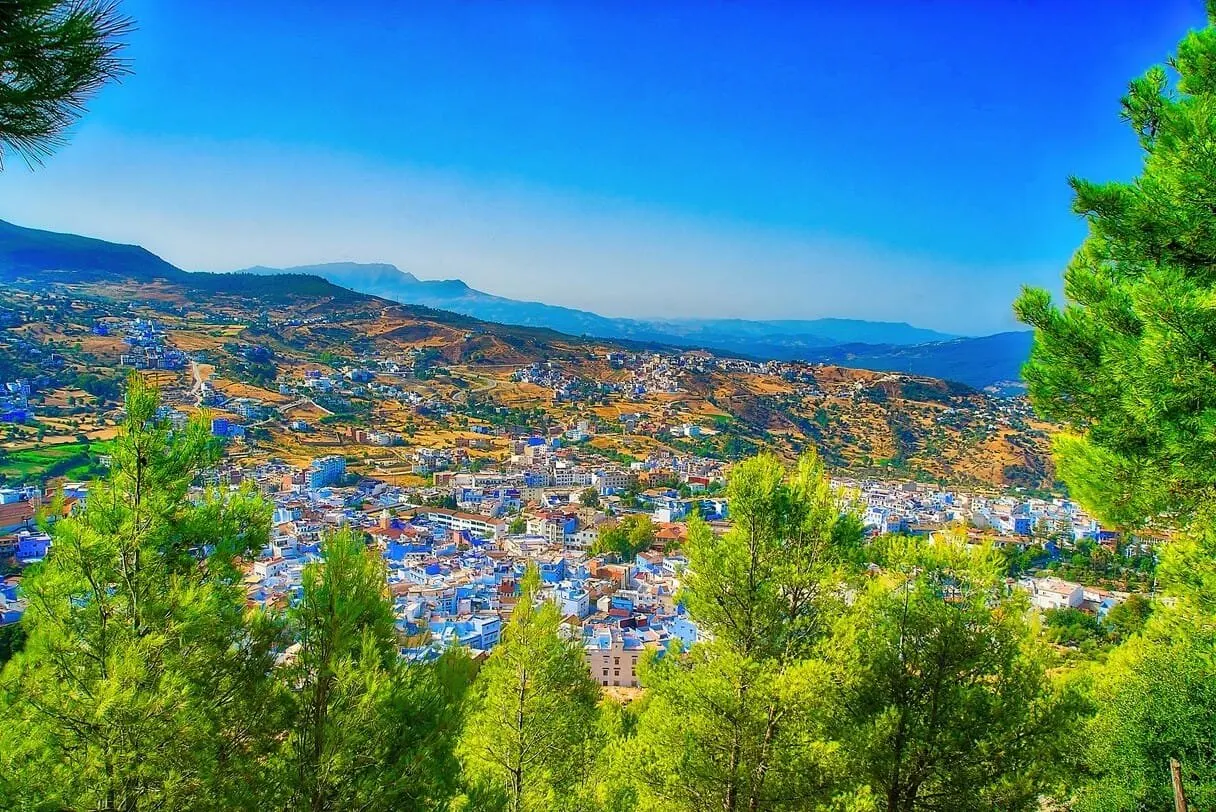
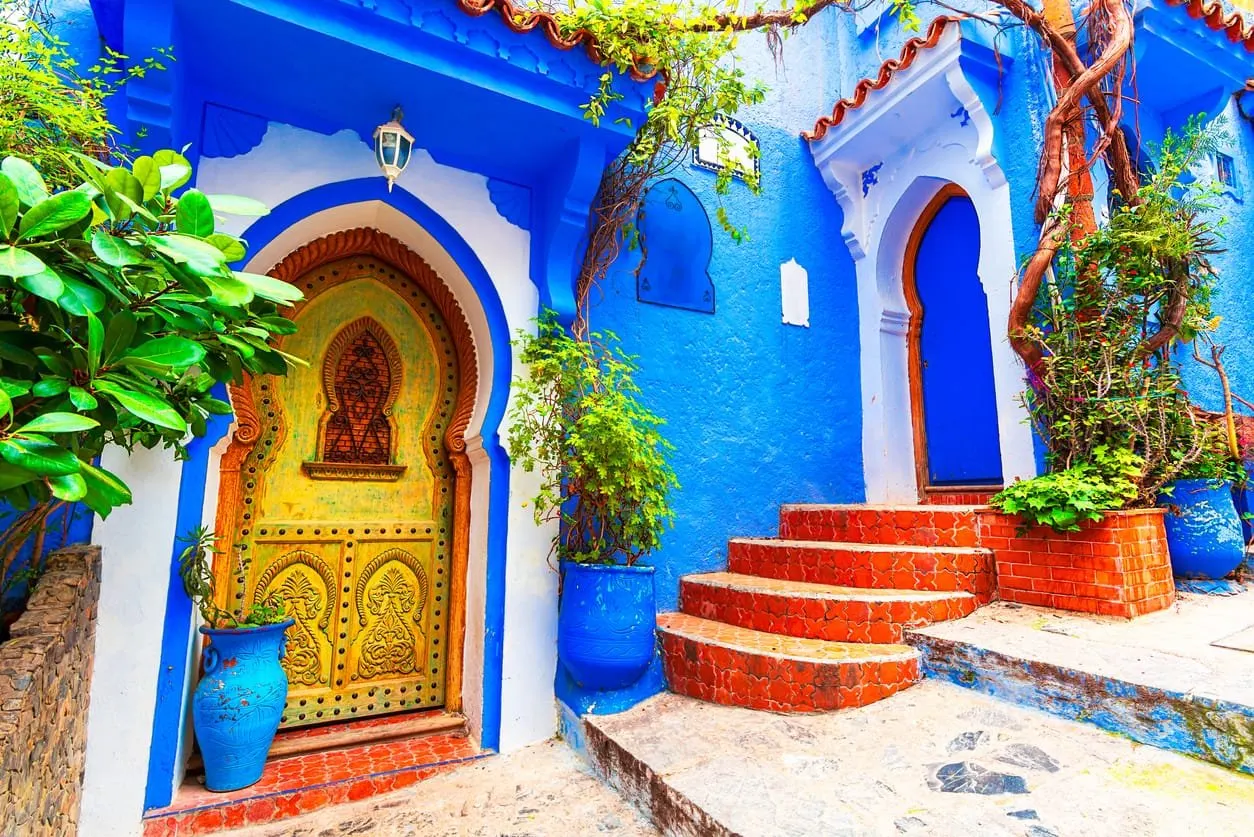
You reach Chefchaouen with most of the day still to come. Drop your bags at the riad and walk. The town is built on a slope, painted in shades of blue from the paving up, and after Casablanca, Rabat and Tangier it feels small and slow.
Day 4Free day in Chefchaouen
Your own day. The usual pattern is the medina in the morning, when the light is soft and the lanes are quiet, then the Kasbah Museum on the square or the market streets where blankets and woven goods from the Rif are sold.
For the afternoon, find a rooftop cafe, order mint tea and look at the mountains. On a trip this long, days like this are what keep the later ones enjoyable.
Day 5Chefchaouen to Fes by Volubilis and Meknes264 km
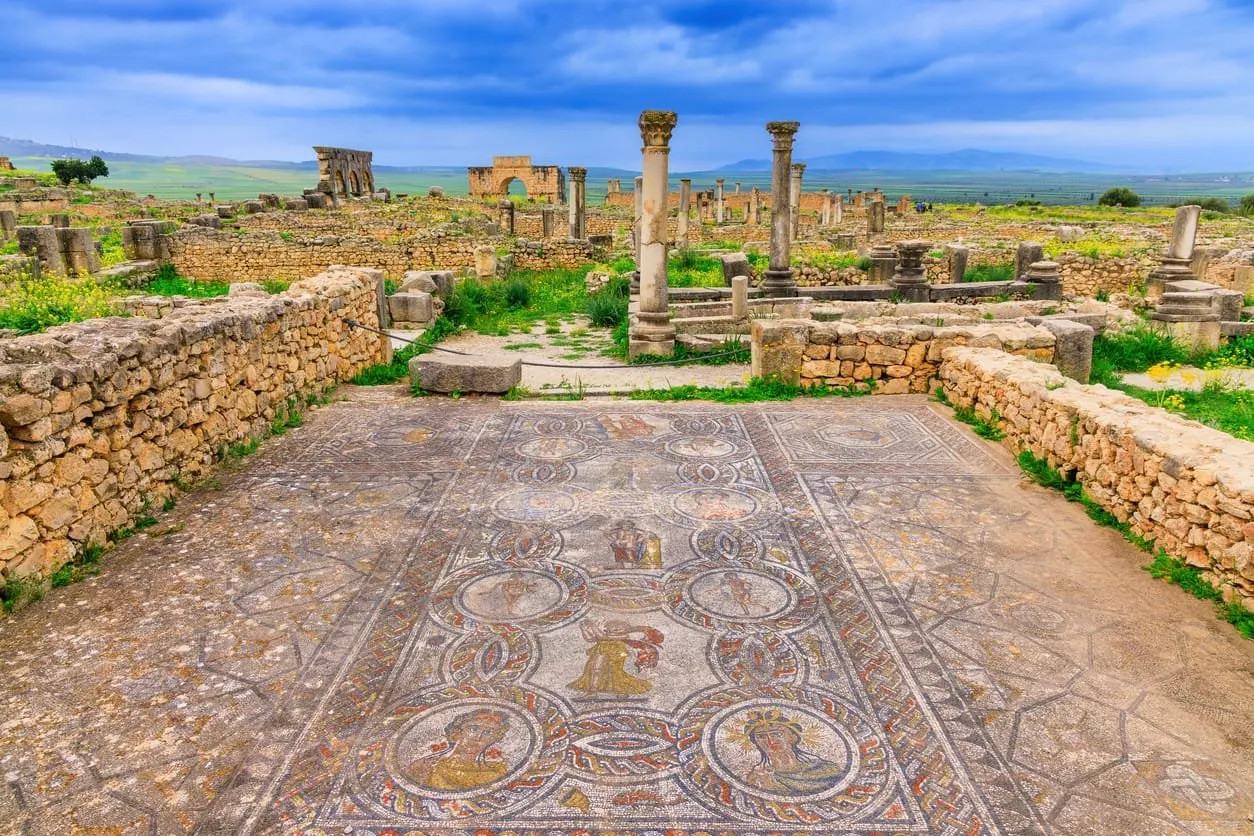
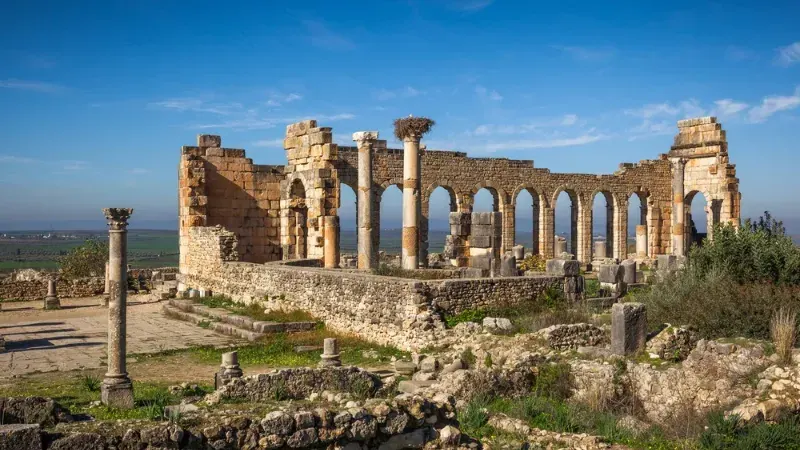
South from the Rif, the first stop is Roman Volubilis. The town grew rich on olive oil and grain, and the houses of its wealthier families still have their mosaic floors. It is a UNESCO World Heritage site, listed in 1997.
Meknes is the least visited of the four imperial cities, so it is usually calmer than the others. You see Bab Mansour and what is open of Moulay Ismail's granaries and stables. Check with us nearer the time, as restoration work has closed some sites in recent years.
You arrive in Fes before dinner.
Day 6Guided day in Fes
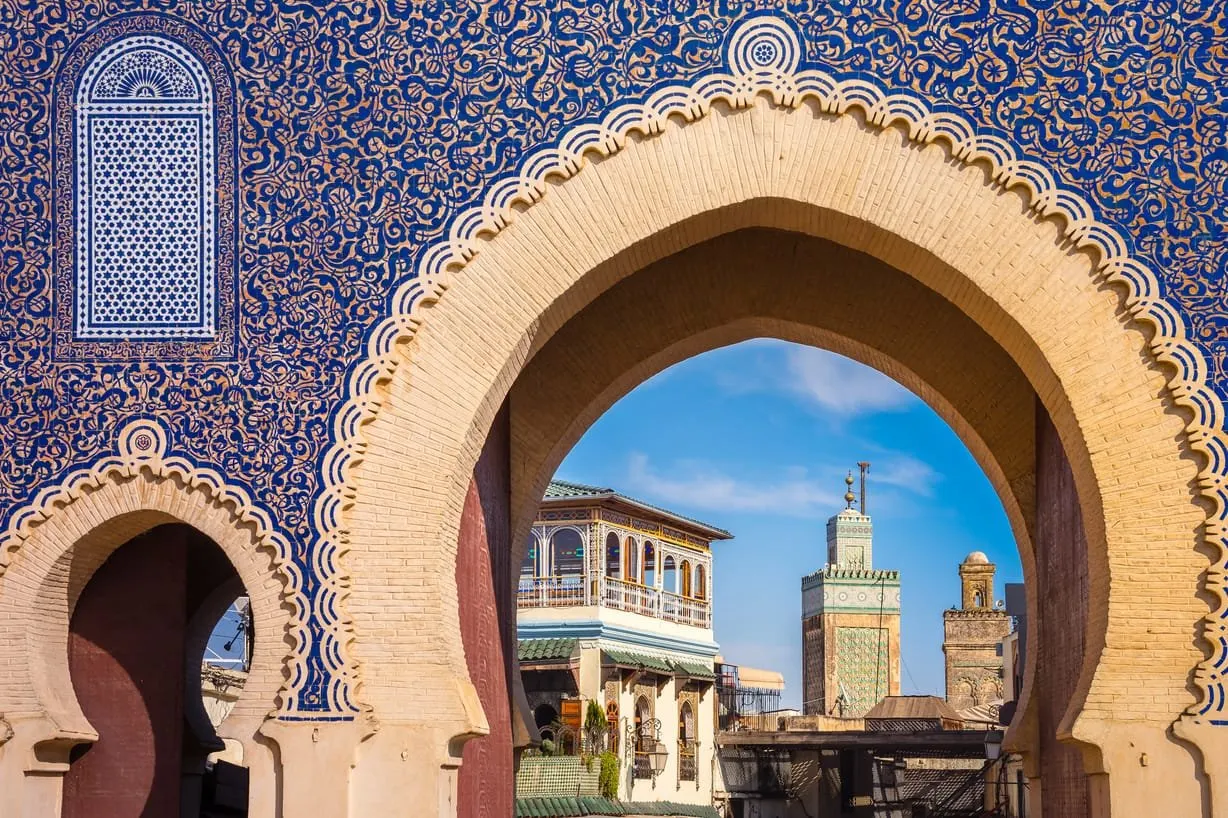
A full day on foot with a local city guide in one of the largest car-free urban areas in the world. Goods still move through Fes el Bali by handcart and mule, so step aside when you hear a shout behind you.
The route takes in Al Quaraouiyine, the medieval madrasas with their carved cedar and plaster, the craft quarters and the tanneries. If a long day of walking is too much, the guide can shorten it. Say so in the morning.
Day 7Fes to Midelt by Ifrane and the cedar forest198 km
This is where the 17-day route parts from all the others. Shorter tours drive from Fes to Merzouga in a single day of about 450 to 465 km. You stop less than halfway.
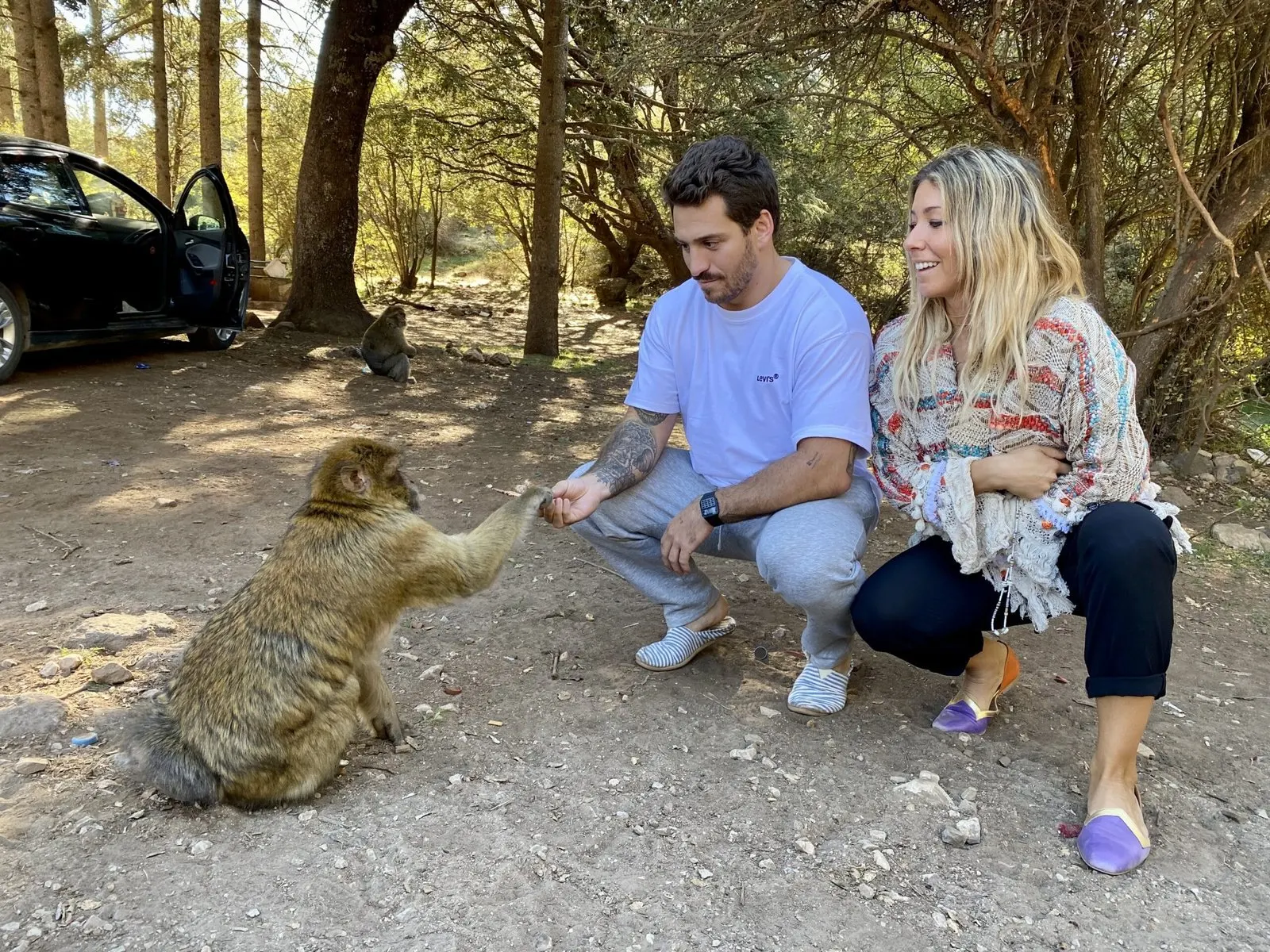
The morning is the same Middle Atlas road, by Ifrane and the cedar forest near Azrou, but with time to get out and walk among the trees and look for Barbary macaques without watching the clock.
By afternoon you are in Midelt, a market town at about 1,500 m on the high plain between the Middle and High Atlas. It is a plain, quiet place with few sights, and nights are cold in winter. Its purpose on this route is a good sleep.
Day 8Midelt to Merzouga by the Ziz Valley265 km
The road crosses the eastern High Atlas and drops into the Ziz Valley, where a strip of date palms and mud-brick villages follows the river south through bare rock.
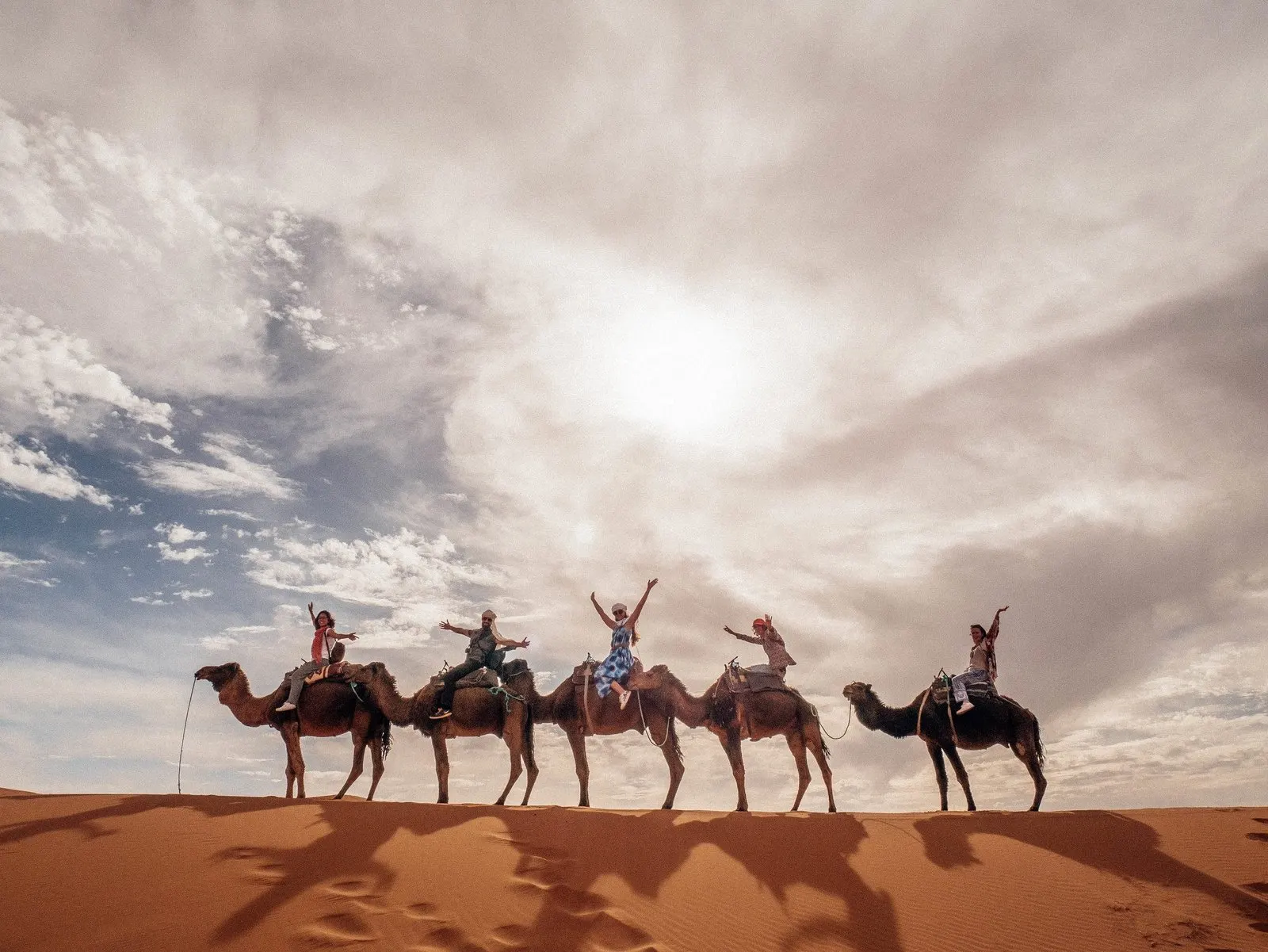
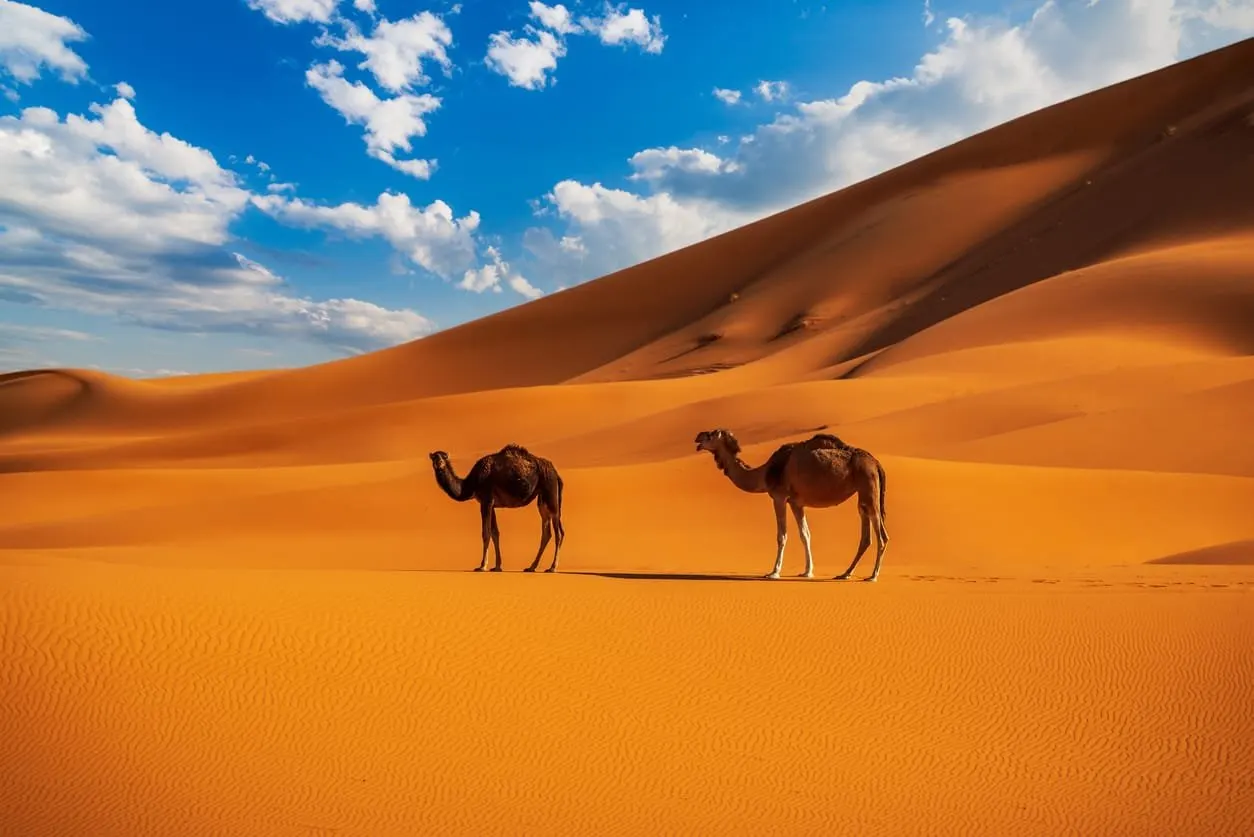
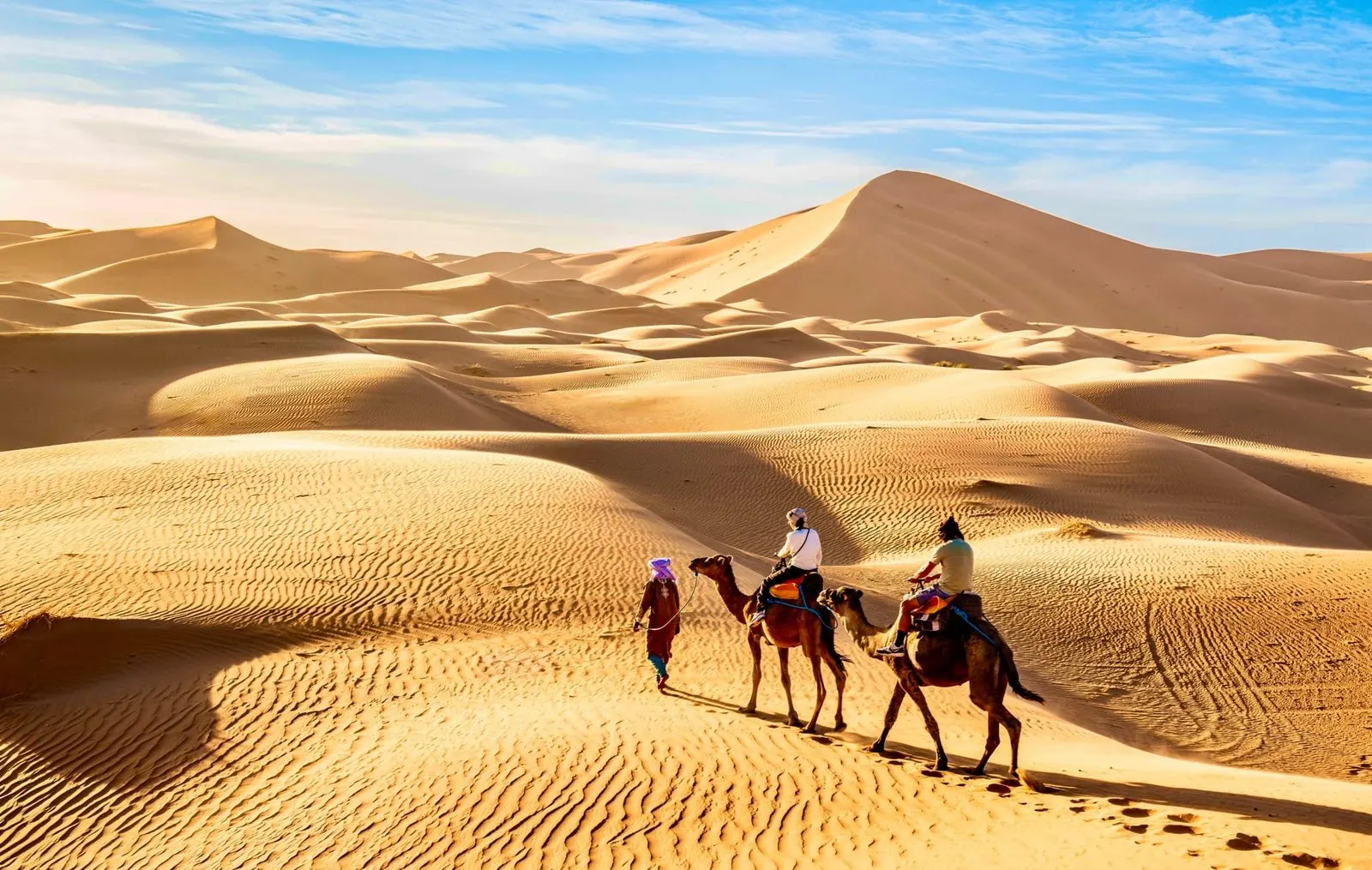
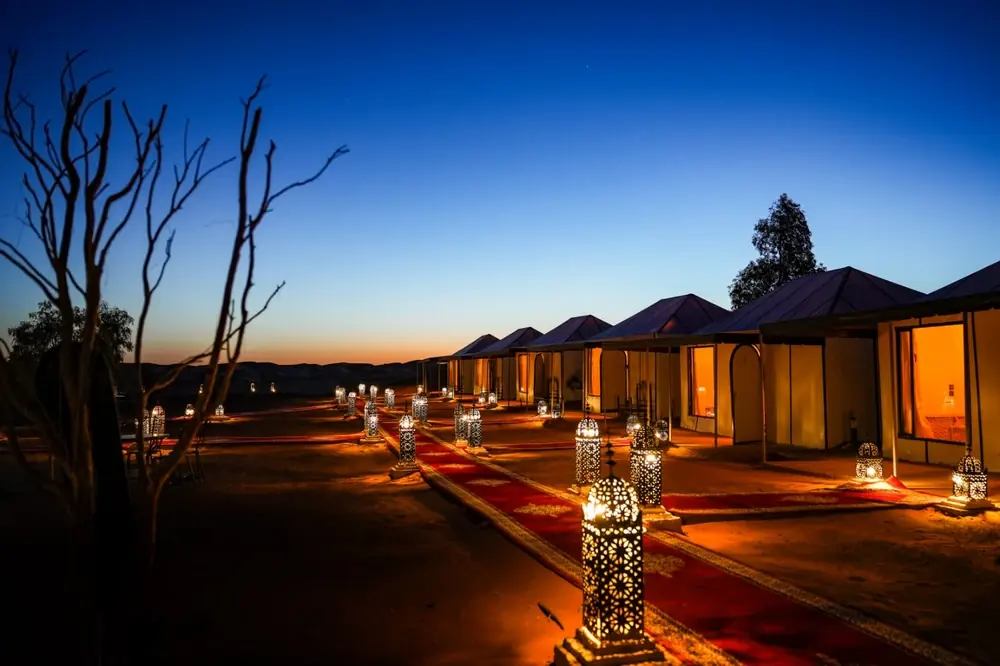
You reach Merzouga in the afternoon and change the vehicle for camels. The ride into Erg Chebbi is timed for sunset, and you spend the night at a desert camp with dinner and music. Arriving after a half day of driving is the main benefit of the Midelt stop.
Day 9A full day around the Merzouga dunes
It is worth getting up in the dark for sunrise on the dunes. Breakfast follows, then an unhurried circuit by car that includes Khamlia and its Gnawa musicians.
Lunch is often the local stuffed flatbread sometimes called Berber pizza. The afternoon is open: sandboarding, a 4x4 drive around the erg or quad bikes can be arranged as paid extras, or you can simply rest in the shade until the heat goes out of the day.
Day 10Merzouga to the Dades Valley by Todra Gorge265 km
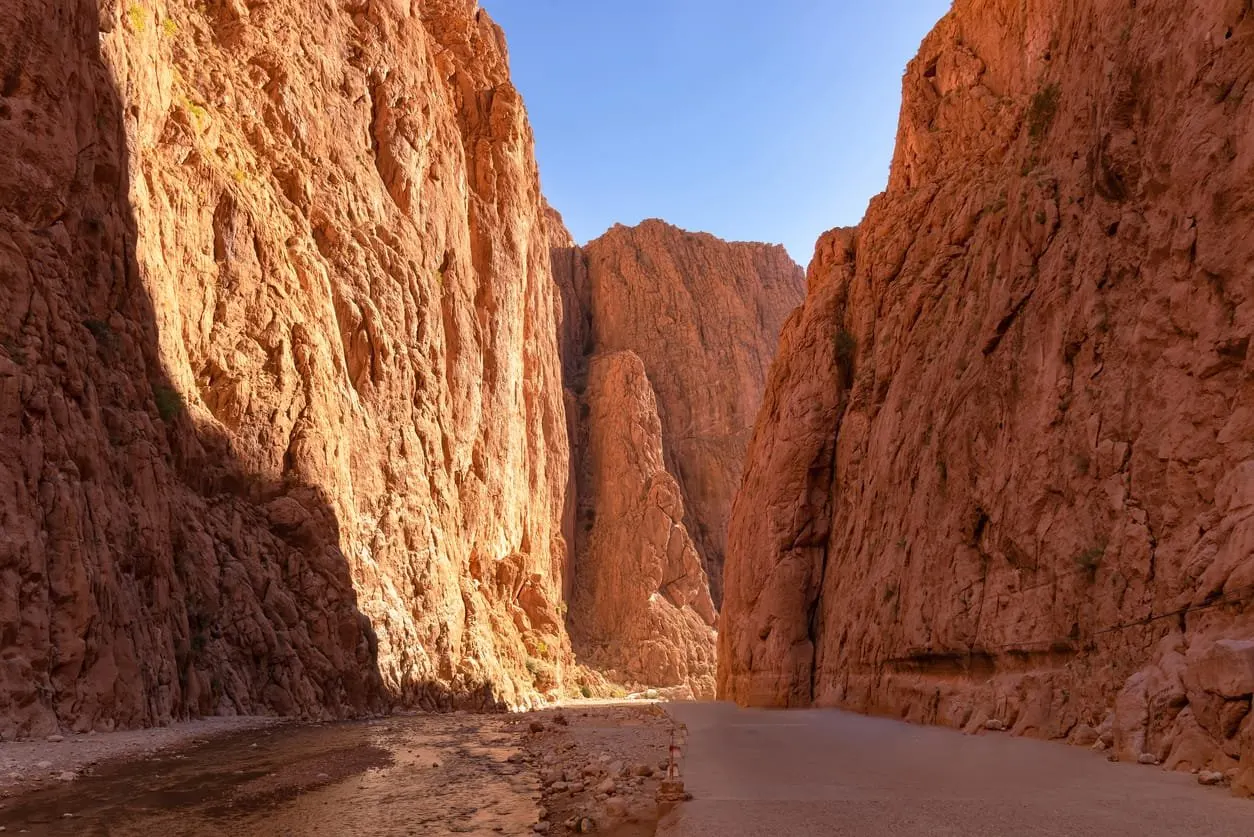
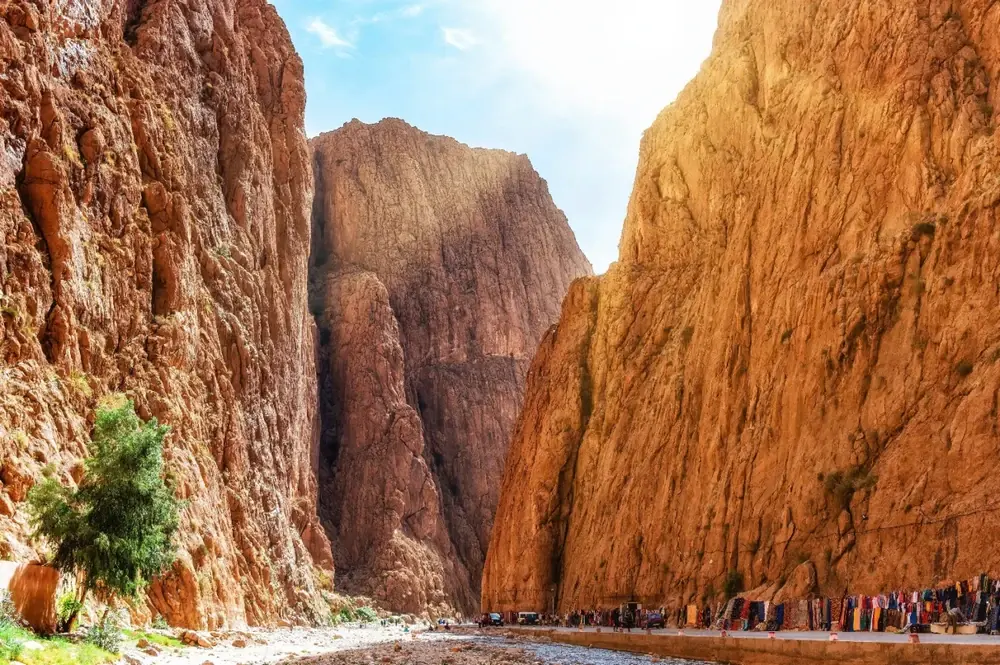
You leave the sand for the rock country to the west. Todra Gorge is the main stop, a slot between limestone walls about 300 m high, with a stream you can paddle in on a hot day.
Beyond Tinghir the road runs between the High Atlas and the Jbel Saghro, passing fortified farmhouses in various states of repair. You stop for the night in the Dades Valley.
Day 11Dades Valley to Marrakech by Ouarzazate and Ait Ben Haddou325 km
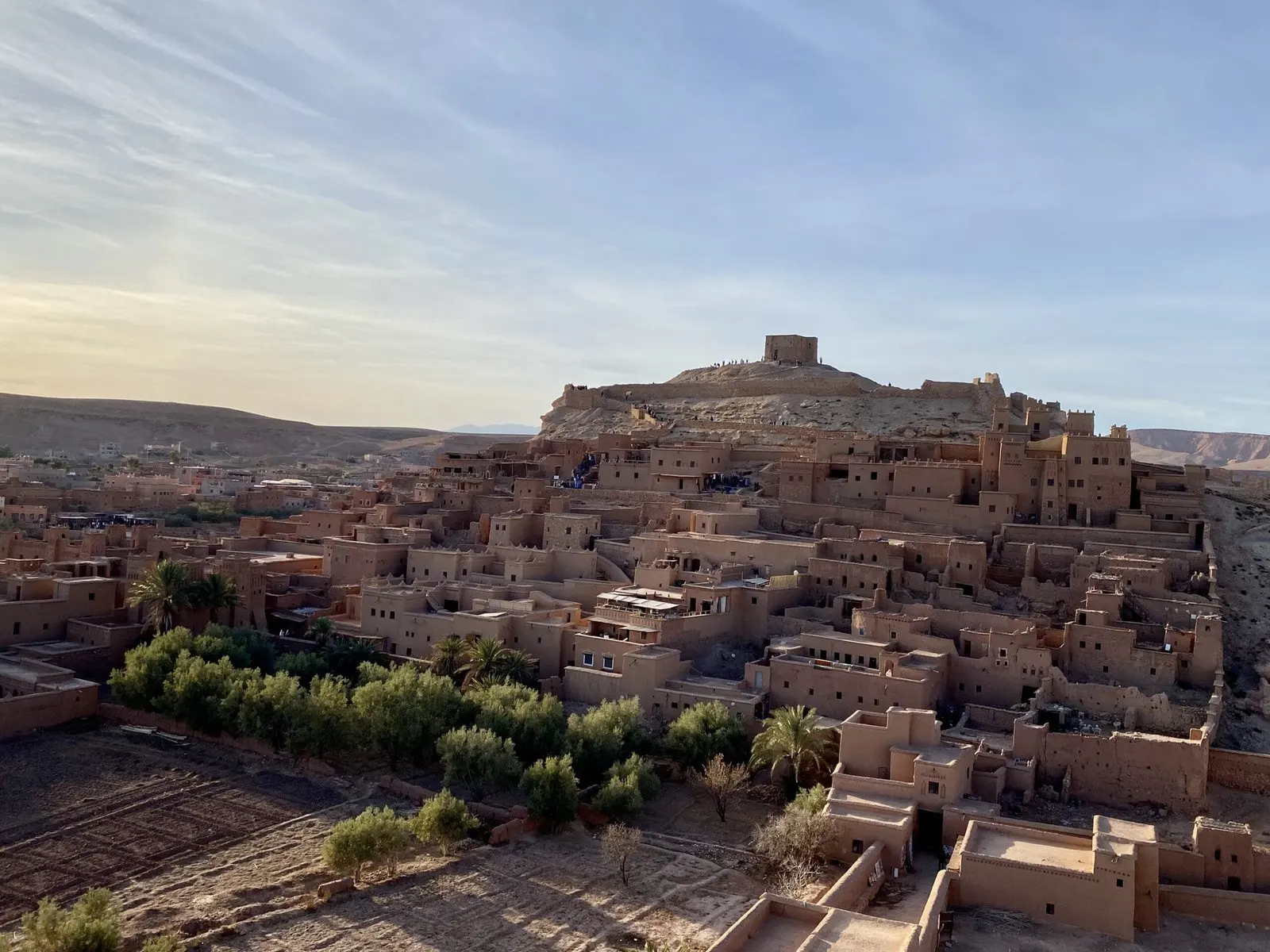
The hardest road day left on the route. You pass through Ouarzazate and stop at Ait Ben Haddou, the earth-built ksar on the old caravan road, listed by UNESCO in 1987. Go up to the top for the view over the river bed and the palm gardens.
The afternoon is the mountain crossing by the Tizi n'Tichka pass, about 2,260 m high. The road is good but winding, and anyone prone to car sickness should sit in front. Marrakech is your base for the next three nights.
Day 12Guided day in Marrakech
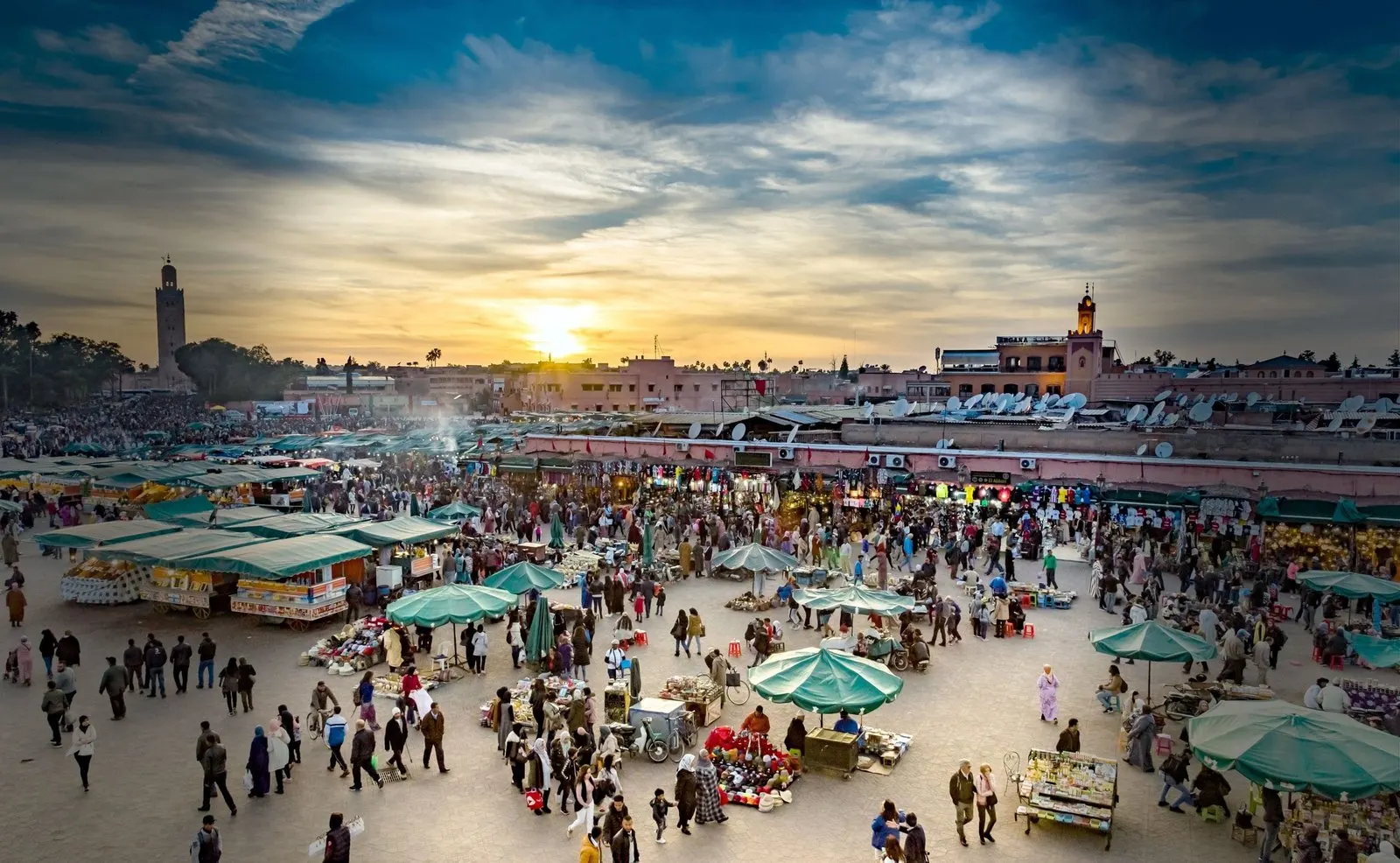
With a local city guide you cover the essentials of Marrakech: the Koutoubia Mosque, the Bahia Palace, the ruined Badi Palace with its storks and sunken gardens, and the Ben Youssef Madrasa. Each charges its own entrance fee.
The souks and Jemaa el-Fna fill the rest of the day. The square is at its liveliest after dark, so you may want to come back on your own after a rest.
Day 13Day trip to the Ourika Valley120 km
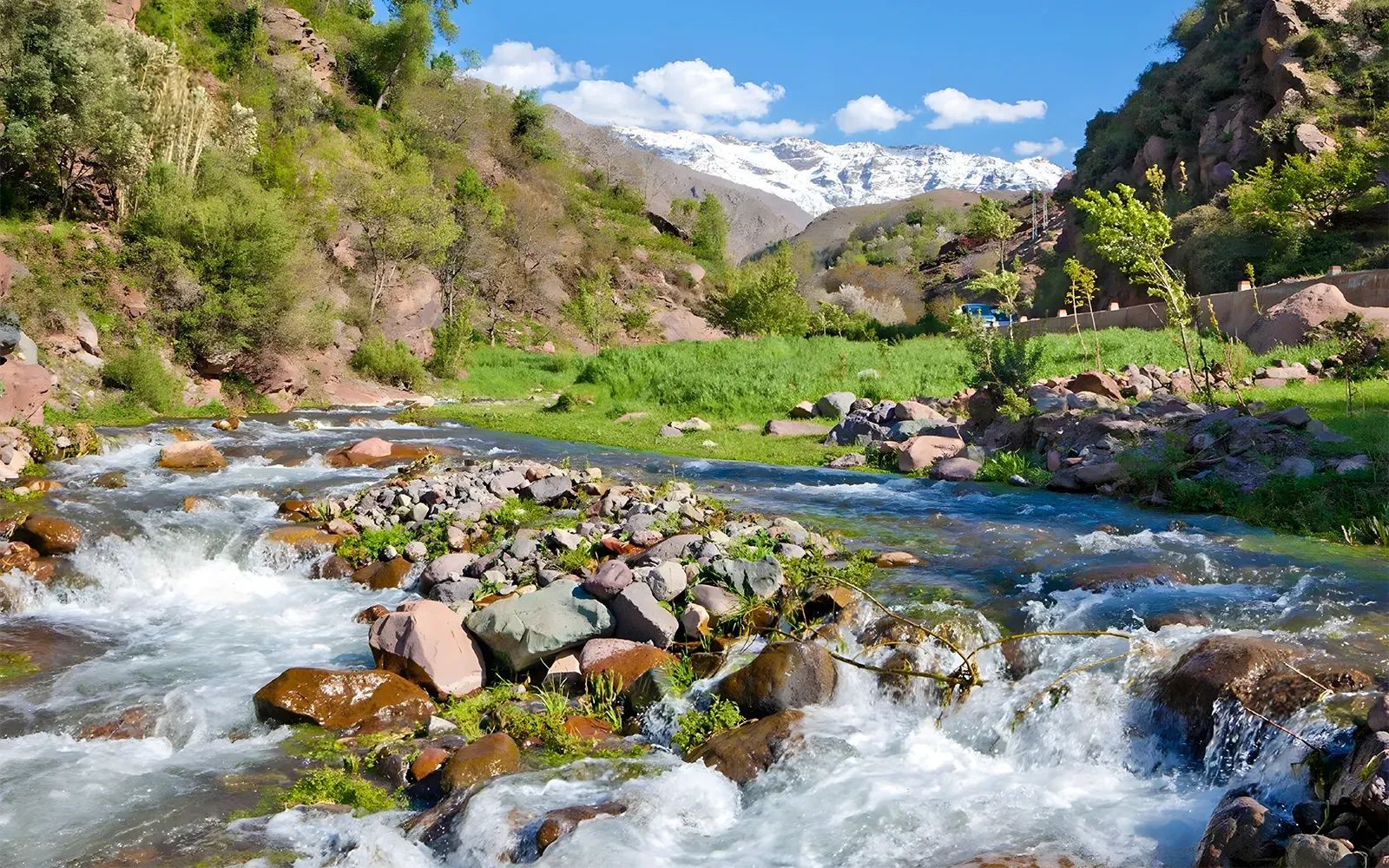
The Ourika Valley is an hour from the city, at the foot of the High Atlas. The river is lined with gardens and villages, and the air is a few degrees cooler than in Marrakech.
The waterfall walk at Setti Fatma is optional and rough underfoot. If you would rather have a third day in Marrakech itself, this is the easiest day of the tour to drop.
Day 14Marrakech to Essaouira178 km
You head for the Atlantic, pausing at an argan cooperative where the oil is made by hand.
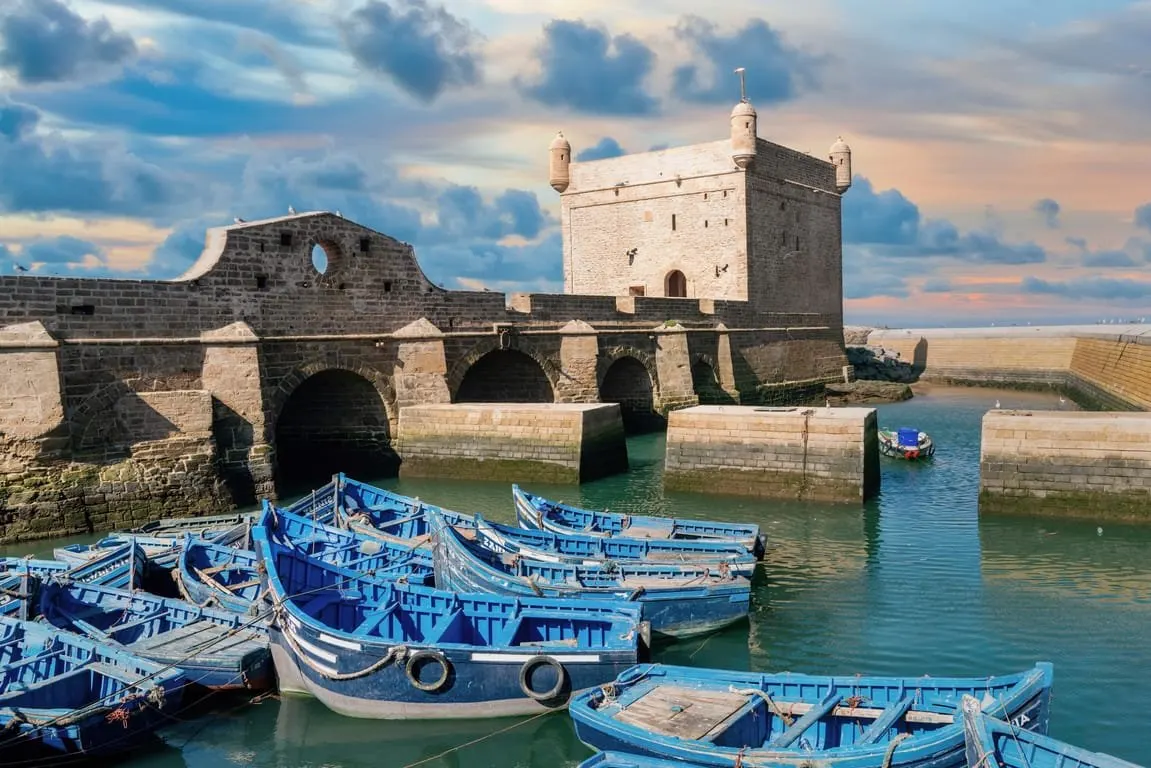
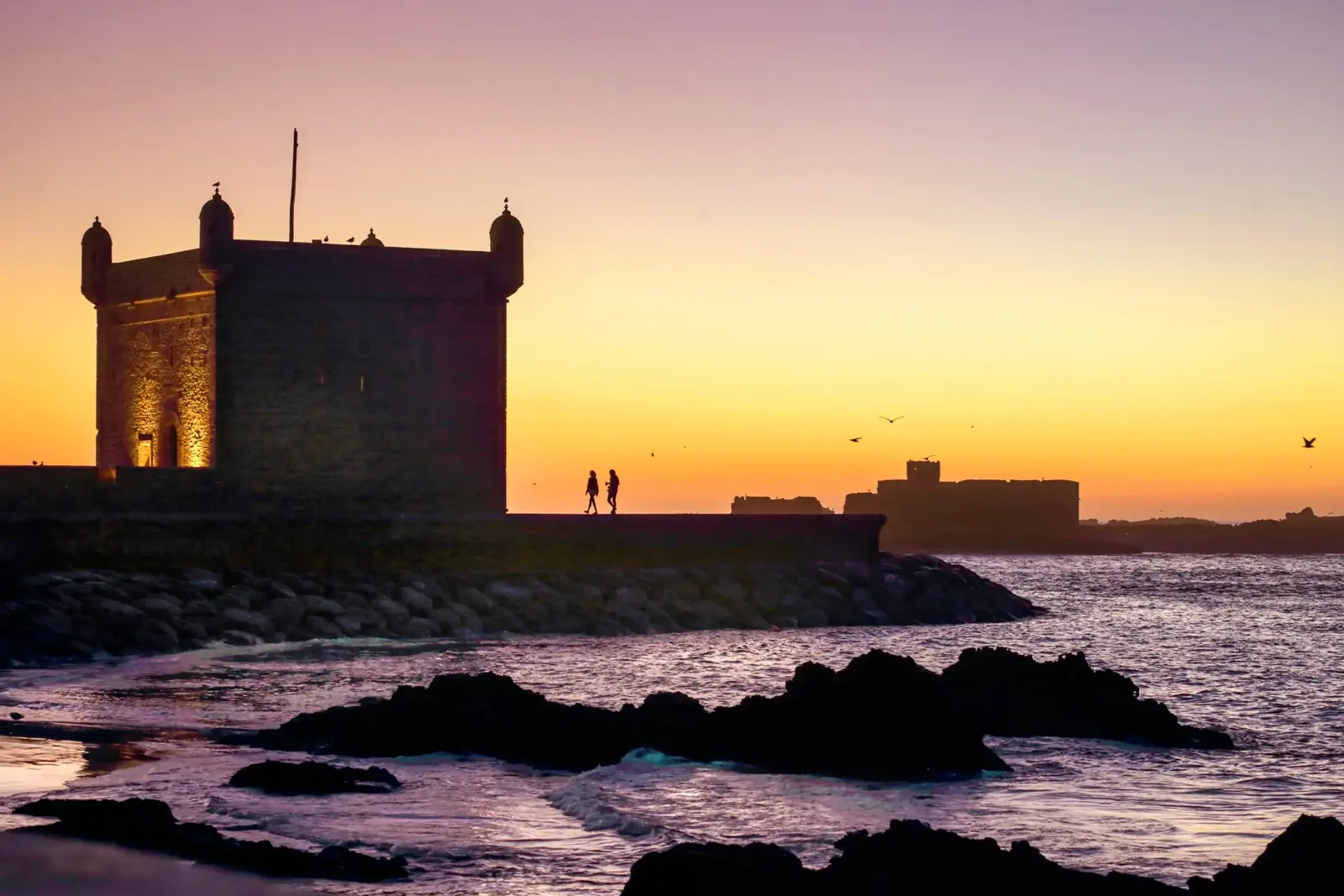
In Essaouira you walk the 18th-century ramparts and the harbour, and settle into the medina, a World Heritage site since 2001. Gulls, salt air and a steady wind replace the heat and noise of Marrakech.
Day 15Free day in Essaouira
The last free day. There is nothing you need to see. Wander the medina, eat fish by the port, walk the beach as far as you like.
It is also a practical day: time to repack, buy the last presents at calmer prices than in Marrakech, and rest before the drive north.
Day 16Essaouira to Casablanca376 km
With the Midelt stop in place, this is now the longest drive of the whole tour. It follows the coast north, with breaks in small seaside towns and at viewpoints along the way.
You arrive in Casablanca in the evening for a final night.
Day 17Departure from Casablanca45 km
Your driver takes you to the airport for your flight home. As on all our routes, the end point can be changed to Marrakech if that suits your flights better.
Price and what changes it
This 17-day private tour costs €4,600 to €7,800 per person. Every trip is tailored, so the final price depends on your group size, hotel and camp level, and what you add.
- Group size. Seventeen days of vehicle and driver are divided among the travellers, so each added person lowers the price per head. A solo traveller pays the most.
- Accommodation level. Sixteen nights at standard, comfort or luxury level. This is the largest share of the cost on a tour of this length.
- Desert nights. Standard or luxury camp, and where the second Merzouga night is spent. Compare the options in desert camps in Merzouga.
- What you drop or add. Removing the Ourika day, adding a night in Tangier or booking desert activities changes the quote. See what a Morocco tour costs.
Other lengths are priced on the Morocco tour cost page.
Included and not included
Included
- Private air-conditioned vehicle for the seventeen days
- English- or Spanish-speaking driver
- Airport pickup and departure transfer
- Sixteen nights of accommodation at the level you choose
- Local city guides for the guided days in Fes and Marrakech
- Camel ride in the Erg Chebbi dunes
- Breakfast every day, and some dinners, listed in your quote
Not included
- Lunches and drinks
- Entrance fees to monuments
- Optional activities such as sandboarding, 4x4 outings or quad bikes
- Tips
- Flights
Is this the right tour for you?
It suits you if
- Long days in a car are the part of a Morocco tour you fear most. With the Midelt stop, no day here goes much past 375 km.
- You are travelling with children, older relatives or anyone with a bad back. Ten moderate road days are easier on the body than nine with one very long one.
- You are retired, on sabbatical or otherwise not counting days of leave.
- You want Tangier with time inside the Kasbah and medina, not only the coast around it.
Think twice if
- You do not mind one long drive. Midelt itself has little to see, and the 16-day Morocco tour from Casablanca visits the same places with a hotel night fewer.
- Tangier is not a priority. The 15-day tour and 14-day tour skip the far north and still include Chefchaouen, the desert and Essaouira.
- You tire of changing rooms. The sixteen nights are spread over nine places, with four one-night stops: Tangier, Midelt, the Dades Valley and the last night in Casablanca.
- This is your first trip and you are not sure you will like Morocco. Seventeen days is a large commitment of time and money. Many first-time visitors are well served by the 10-day tour.
- You expect a desert hotel on arrival. Here the camp night comes first, on day eight, and the second Merzouga night follows.
Places on the route
What travellers say
★★★★★
“Booking this tour was one of the best decisions I made for my trip.”
Questions about the 17-day Morocco tour from Casablanca
Is 17 days too long for Morocco?
For most first visits it is more than is needed, and 10 to 14 days covers the main places. Seventeen days makes sense when you want the far north and the coast as well, and care more about short driving days than about saving time.
What is different about the 17 day tour compared with the 16 day tour?
One night in Midelt. The drive from Fes to Merzouga is split into about 198 km and 265 km, the camel ride happens on arrival and the full desert day follows it. In Tangier the afternoon goes to the Kasbah and medina.
Why stop in Midelt?
Because it sits roughly halfway between Fes and the Sahara. It is a simple mountain town with little sightseeing, and the reason to sleep there is to avoid a drive of eight hours or more in one day.
What is the longest drive on the 17 day tour?
Essaouira to Casablanca on day sixteen, about 376 km. Casablanca to Tangier on day two is about 365 km, mostly on motorway. No other day is over 325 km.
How many hotels will I stay in over 17 days?
Sixteen nights in nine places, with Casablanca at both ends. Marrakech has three nights. Chefchaouen, Fes, Merzouga and Essaouira have two each, and Tangier, Midelt and the Dades Valley have one.
Is Midelt cold?
It can be. The town stands at about 1,500 m, so winter nights often fall close to freezing and even spring and autumn evenings are cool. Pack a warm layer whatever the season. See what to wear in Morocco.