Is there a dress code in Morocco?
There is no legal dress code for visitors, and nobody will stop you for what you wear. Morocco is a Muslim country where most people dress modestly, and the practical rule is to cover shoulders and knees in public. You will see tourists in shorts and vest tops in Marrakech. They are not in trouble, but they attract more attention, and in small towns they stand out sharply.
Loose clothing is also the right answer for the climate. Long, light layers in cotton or linen keep the sun off and are cooler than bare skin in dry heat.
What should you wear in each setting?
| Setting | What works | What to avoid |
|---|---|---|
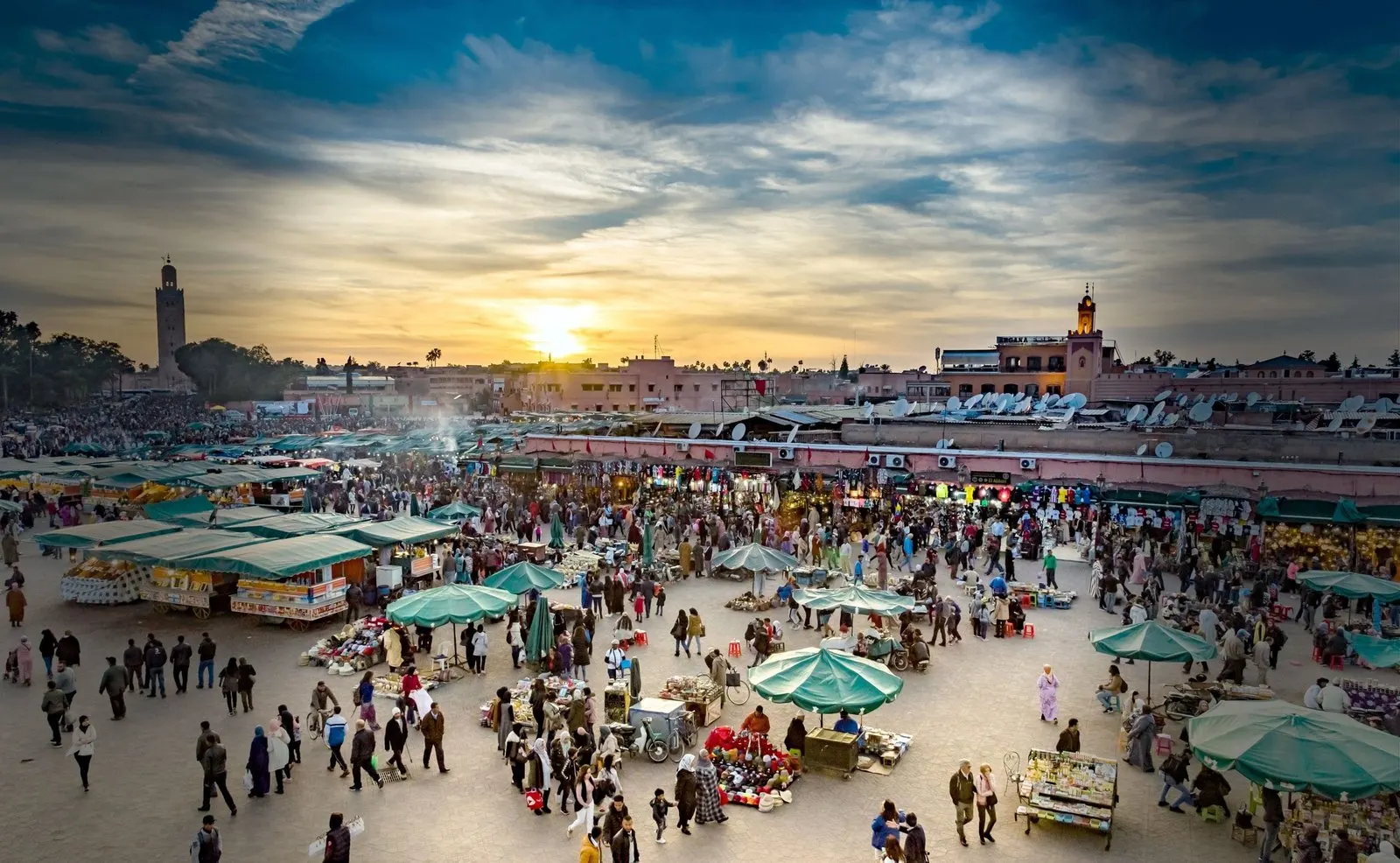
| Cities and medinas | Loose trousers or a long skirt, T-shirt or shirt with sleeves, closed shoes or sturdy sandals, a scarf | Short shorts, crop tops, strappy tops, anything tight or sheer |
| Mosques and religious sites | Shoulders, upper arms and knees covered. Shoes that slip off easily. Women may want a scarf to hand | Shorts, sleeveless tops, hats indoors |
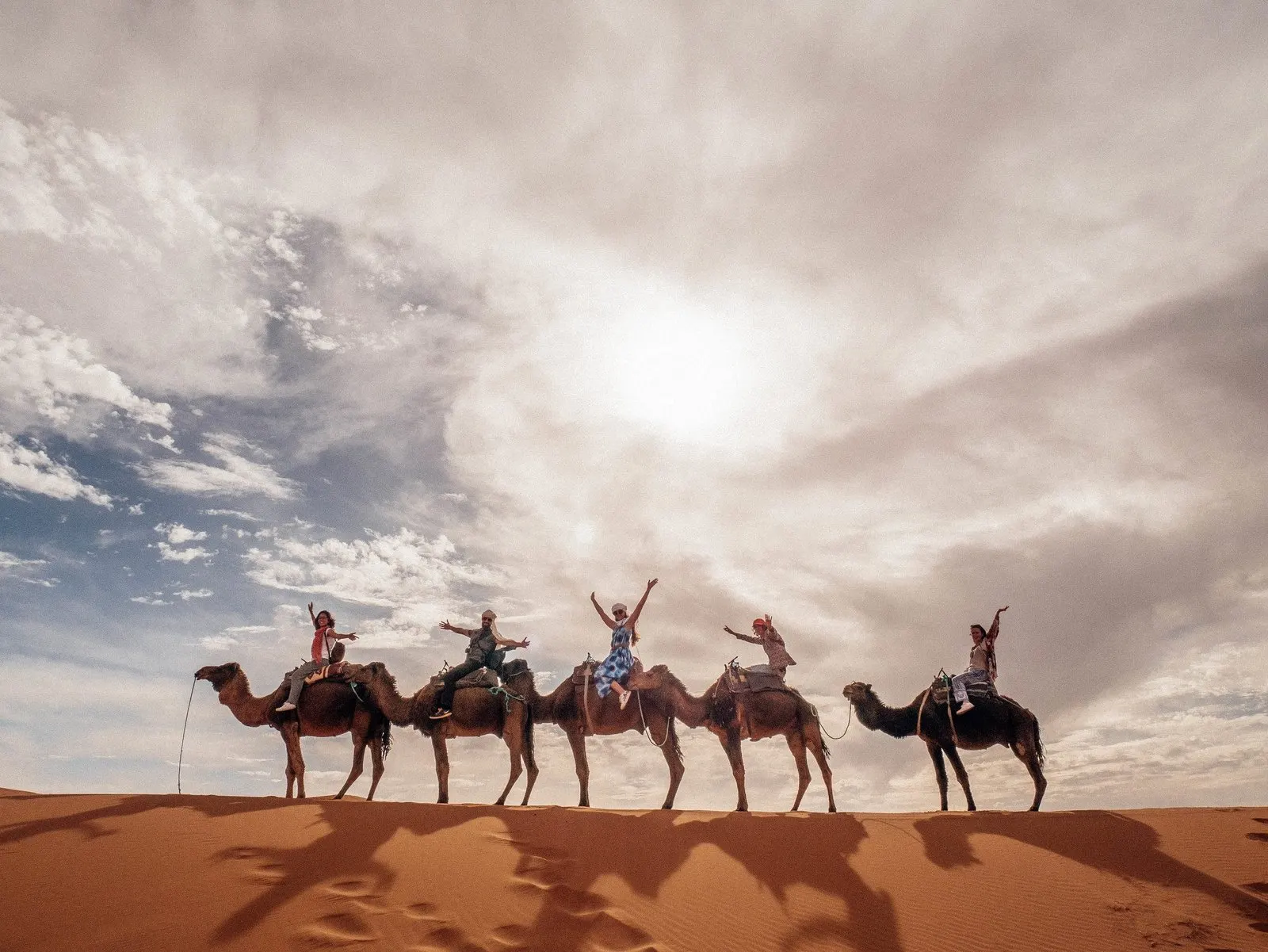
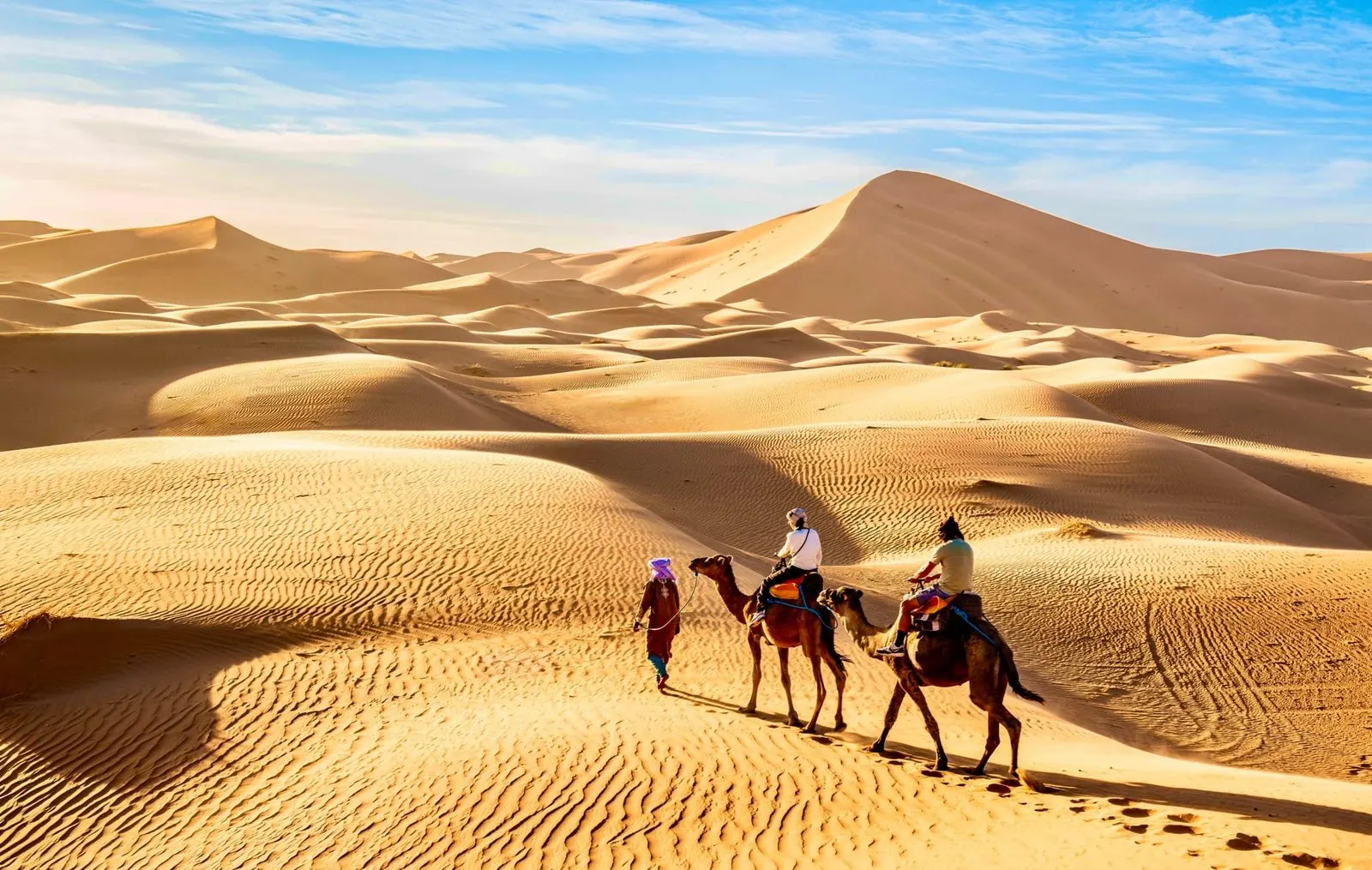
| Desert | Long loose trousers, long-sleeved shirt, headscarf or wide hat, sunglasses, warm jacket for night | Shorts on a camel, flip-flops in hot sand, only summer clothes |
| Mountains | Walking shoes with grip, layers, fleece, windproof or rain jacket | Smooth-soled shoes, a single heavy layer |
| Beach and pool | Normal swimwear at the beach or pool. Cover up when you leave it | Swimwear in town, topless sunbathing |
| Riads and restaurants | Whatever you like indoors. Smart-casual for upmarket restaurants in Marrakech | Nothing in particular |
Cities and medinas
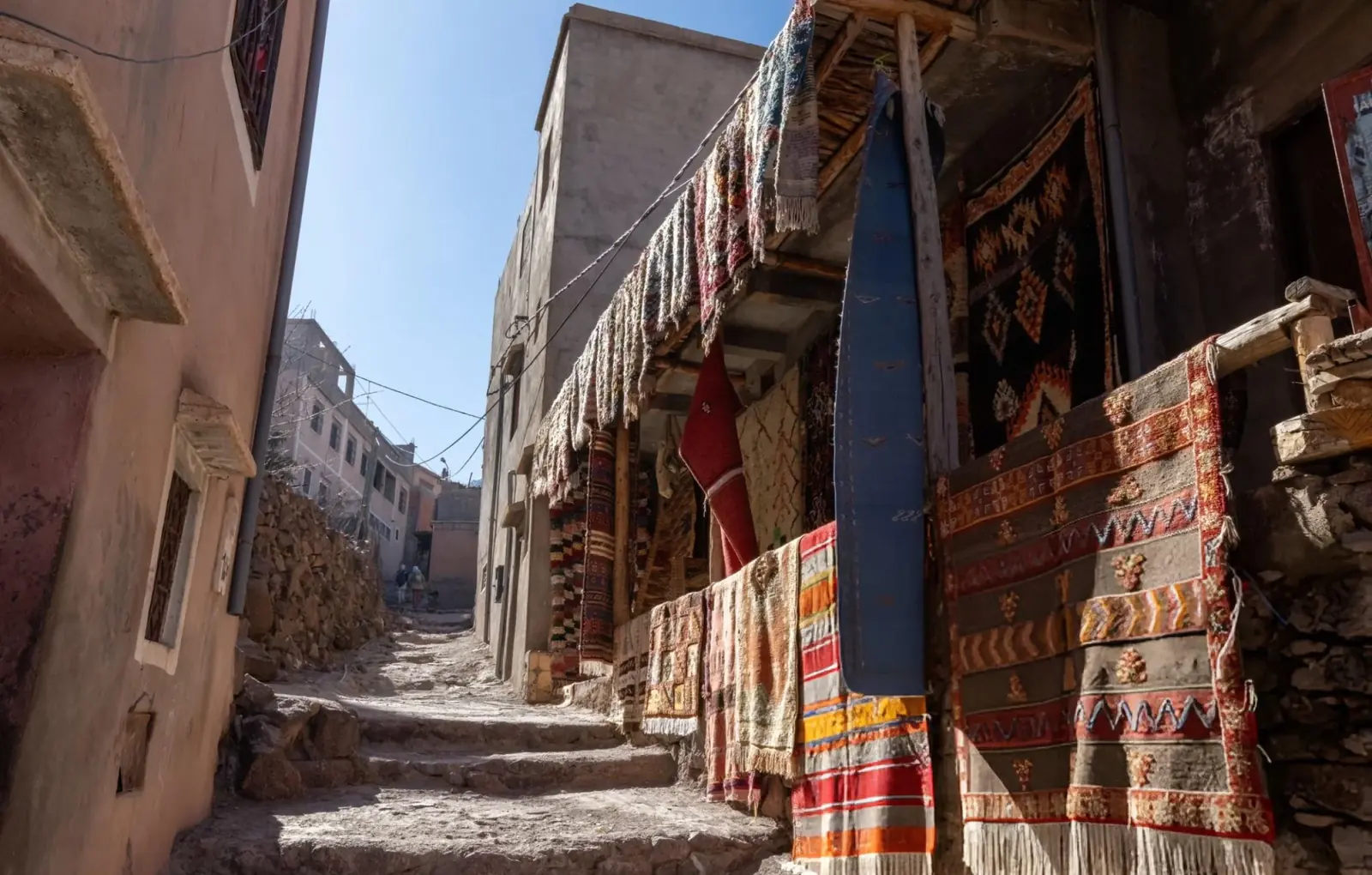
Dress for walking on uneven, sometimes dirty ground in a crowd. Medina lanes are cobbled, shared with scooters, handcarts and donkeys, and wet in places. Closed shoes are better than sandals. The modern districts of Marrakech, Casablanca and Rabat are more relaxed than the medinas, and small towns on the road to the desert are more conservative than either.
Mosques and religious sites
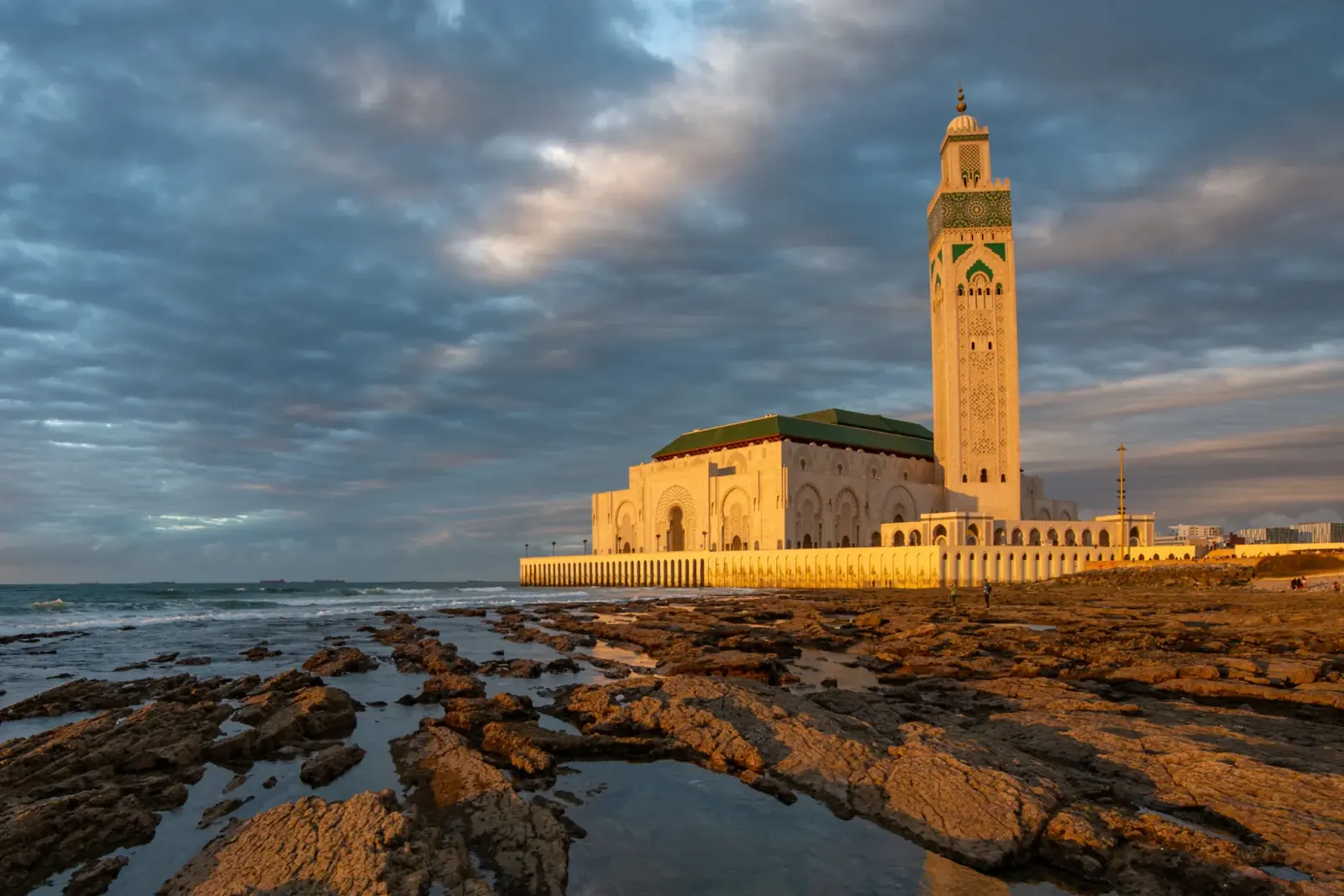
Most mosques in Morocco are closed to non-Muslims, so the question arises less often than visitors expect. The main exception is the Hassan II Mosque in Casablanca, which non-Muslims visit on guided tours. Cover shoulders and knees there, and expect to remove your shoes. The same standard is right for shrines, madrasas such as Ben Youssef in Marrakech, and the Mausoleum of Mohammed V in Rabat. A headscarf is not generally required of visiting women, though carrying one costs nothing.
Desert
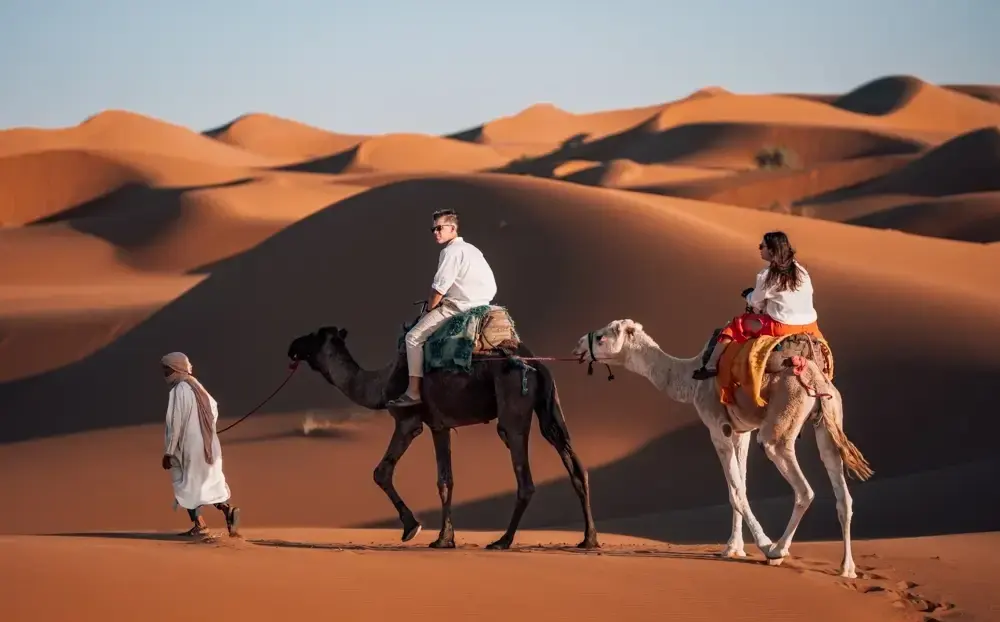
Cover up for the sun by day and for the cold by night. Long trousers also protect your legs on a camel saddle, where shorts chafe. A cotton scarf wrapped around the head and face is the most useful single item: it shades you and keeps blown sand out of your mouth. You can buy one in any town on the way for a small sum, and your driver or the camel handlers will show you how to tie it.
Mountains
The High Atlas is cooler than Marrakech in every season, and the weather turns faster. On a day trip to Imlil or the Ourika Valley, bring a layer even in summer, and shoes with grip for stony paths. From November to March the passes can be cold enough for a proper coat at the photo stops.
Beach
Swimwear, including bikinis, is normal at hotel pools and on the tourist beaches of Essaouira and Agadir. Put on a dress or a shirt and shorts to walk back through town. Essaouira is windy for much of the year, so a light jacket is useful there even in August.
What should women wear in Morocco?
Women are most comfortable in loose clothes that cover the shoulders, chest and knees. Foreign women are not expected to cover their hair. Moroccan women themselves dress in many ways, from djellabas and headscarves to jeans and T-shirts, and you will see all of them in the same street.
- Good choices: wide-leg linen trousers, maxi or midi skirts and dresses, loose shirts, T-shirts with sleeves, a tunic over leggings.
- A large scarf earns its place. It covers shoulders at a religious site, shades your head in the desert and warms you in the evening.
- Leggings alone and tight jeans draw more attention than loose cuts. Wear a longer top over them.
- Modest dress reduces unwanted attention. It does not prevent it. See the section for women in our Morocco safety guide.
- Hammams: in a public hammam women usually keep their underwear bottoms on. Hotel spas provide disposable ones.
What should men wear in Morocco?
Men have it easy: long trousers or knee-length shorts and a T-shirt or shirt are fine almost everywhere. Moroccan men rarely wear shorts outside the beach and sport, so long, light trousers fit in better in medinas and villages and are required in spirit, if not in rule, at religious sites. Sleeveless vests and going shirtless belong at the pool and the beach only.
What should you wear in each season?
| Season | Typical conditions | Daytime | Evening and extras |
|---|---|---|---|
| Spring (March to May) | Marrakech about 22 to 30°C by day, 10 to 15°C at night. Desert nights can still drop below 10°C | Light trousers, T-shirts, a long-sleeved shirt | Jumper or light jacket. Light rain jacket for the north in March and April |
| Summer (June to August) | Inland 33 to 40°C and more. Coast in the low to mid 20s°C | The lightest, loosest cotton or linen you own, in long cuts. Wide hat | Little extra inland. A light jacket for Essaouira and for mountain evenings |
| Autumn (September to November) | Warm in September, mild by November. Nights cool from October | As spring | Fleece or jacket from mid-October, especially for the desert |
| Winter (December to February) | Cities 17 to 20°C by day, 5°C or so at night. Desert and mountain nights near freezing | Trousers, long sleeves, a jumper. It is often T-shirt weather in the midday sun | Insulated jacket, hat, gloves, thermal layer, warm socks. Riads can be cold indoors |
Temperatures are typical ranges, not forecasts. For month-by-month detail see the best time to visit Morocco.
What do you need for a night in the desert?
You need a warm layer for the night in every month except high summer, and serious warm clothes in winter. The dry air loses heat fast after sunset. In April, a day of about 30°C at Merzouga can be followed by a night close to 10°C. From December to February, nights are close to freezing.
- October to April: fleece or insulated jacket, long trousers, warm socks, a hat. Add thermal underwear and gloves from December to February.
- May, June and September: a jumper or light jacket for sunrise.
- July and August: nights stay warm. Light sleepwear is enough.
- For the camel ride: long trousers, closed shoes or secure sandals, scarf, sunglasses.
- Take a small overnight bag. On most tours your main luggage stays in the vehicle or at the hotel, and only a daypack goes to camp.
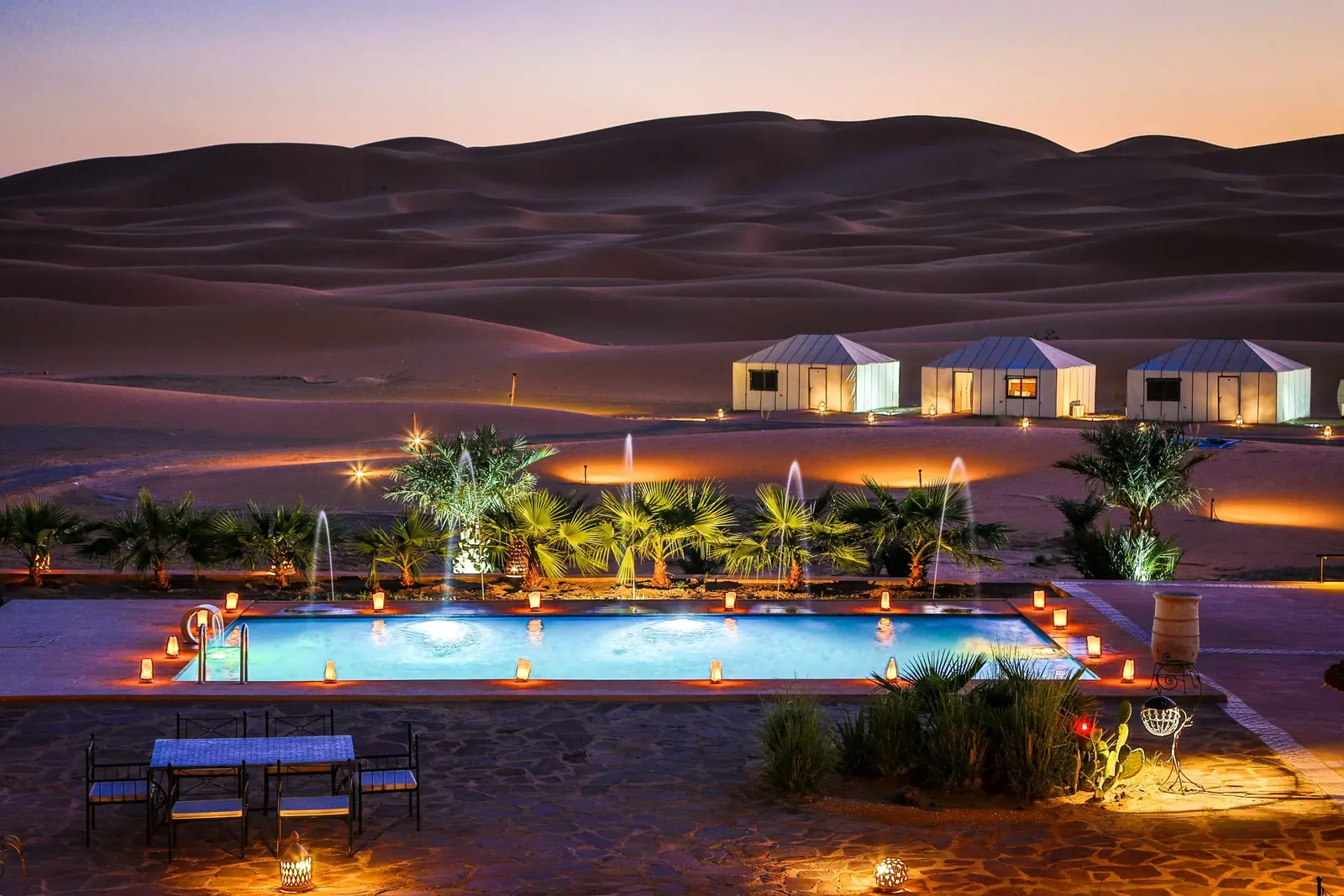
Camps supply bedding and blankets. How warm the tent is depends on the camp level, which is one of the differences explained on our luxury desert camp in Merzouga page. The camel ride and camp night are part of every route on our Morocco desert tours page.
Which shoes should you bring?
Bring one pair of comfortable closed walking shoes and one pair of sandals. That covers almost every trip.
- Walking shoes or trainers with a good sole for medinas, Ait Ben Haddou, Todra Gorge and mountain paths. Choose a pair you do not mind getting dusty.
- Sandals with a back strap for hot days, riads and the camp. Loose flip-flops are poor on cobbles and on dunes.
- On the dunes many people go barefoot at sunset when the sand is cool. At midday in summer the sand burns, so keep shoes on.
- Walking boots only if you plan real trekking in the Atlas.
- Leave high heels at home. Medina paving makes them unusable.
What should be on your packing list?
- 2 or 3 pairs of loose trousers, or long skirts
- 4 or 5 tops with sleeves, at least one with long sleeves
- 1 jumper or fleece, and an insulated jacket from October to April
- A large cotton scarf
- Sun hat and sunglasses
- Swimwear, for riad pools and the coast
- Closed walking shoes and sandals
- Sleepwear warm enough for a tent in the cooler months
- High-factor sunscreen and lip balm
- A daypack for the desert night and for walking days
- Refillable water bottle, hand sanitiser, tissues
- Head torch or phone torch for the camp
- Plug adaptor for European two-pin sockets (types C and E, 220 V)
- Any personal medication, in its original packaging
Questions people ask
Can you wear shorts in Morocco?
Yes, it is not prohibited, and knee-length shorts are common on tourists in Marrakech and on the coast. Long, loose trousers are more comfortable in medinas, villages and religious sites, and they attract less attention.
Do women have to cover their hair in Morocco?
No. Foreign women are not expected to wear a headscarf, and many Moroccan women do not either. A scarf is useful for sun and sand in the desert and for visiting religious sites.
Can I wear a bikini in Morocco?
Yes, at hotel and riad pools and on tourist beaches such as Essaouira and Agadir. Cover up when you leave the pool or beach.
What should I wear in Marrakech in summer?
Wear the lightest loose cotton or linen you have, in long cuts, with a wide hat and sunglasses. Afternoons are typically 35 to 39°C, so plan to be indoors or at a pool in the middle of the day.
What should I wear in Morocco in winter?
Dress in layers: a T-shirt and jumper by day, and a warm jacket, hat and thermal layer for evenings. Desert and mountain nights are near freezing from December to February, and riads can be cool indoors.
Can I wear jeans in Morocco?
Yes. Jeans are common among Moroccans and visitors and work well from October to April. They are too hot for summer and heavy to dry, so lighter trousers are a better choice then.
What colours should I wear in the desert?
Light colours are cooler in the sun, and sand-toned clothes hide dust. Avoid anything you would mind getting dusty, because fine sand gets into everything.