What should you know about Morocco at a glance?
Morocco sits at the north-west corner of Africa, with an Atlantic coast, a Mediterranean coast, the Atlas mountains through the middle and the Sahara beyond them.
- Capital
- Rabat. Casablanca is the largest city
- Languages
- Arabic and Amazigh are official. Moroccan Arabic (Darija) is the everyday language and French is widely used
- Currency
- Moroccan dirham (MAD), a closed currency obtained inside the country
- Time zone
- UTC+1 for most of the year. Clocks go back one hour during Ramadan
- Plugs
- Type C and Type E, two round pins, 220 volts
- Main airports
- Casablanca Mohammed V (CMN), Marrakech Menara (RAK), Fes Saiss (FEZ), Tangier Ibn Battouta (TNG), Agadir Al Massira (AGA)
- Best months
- March to May and September to November
Where should you go in Morocco?
Most first trips combine Marrakech, the Sahara dunes at Merzouga and Fes, then add the north or the coast if there is time.
| Place | What it is known for | Time to allow | Read more |
|---|---|---|---|
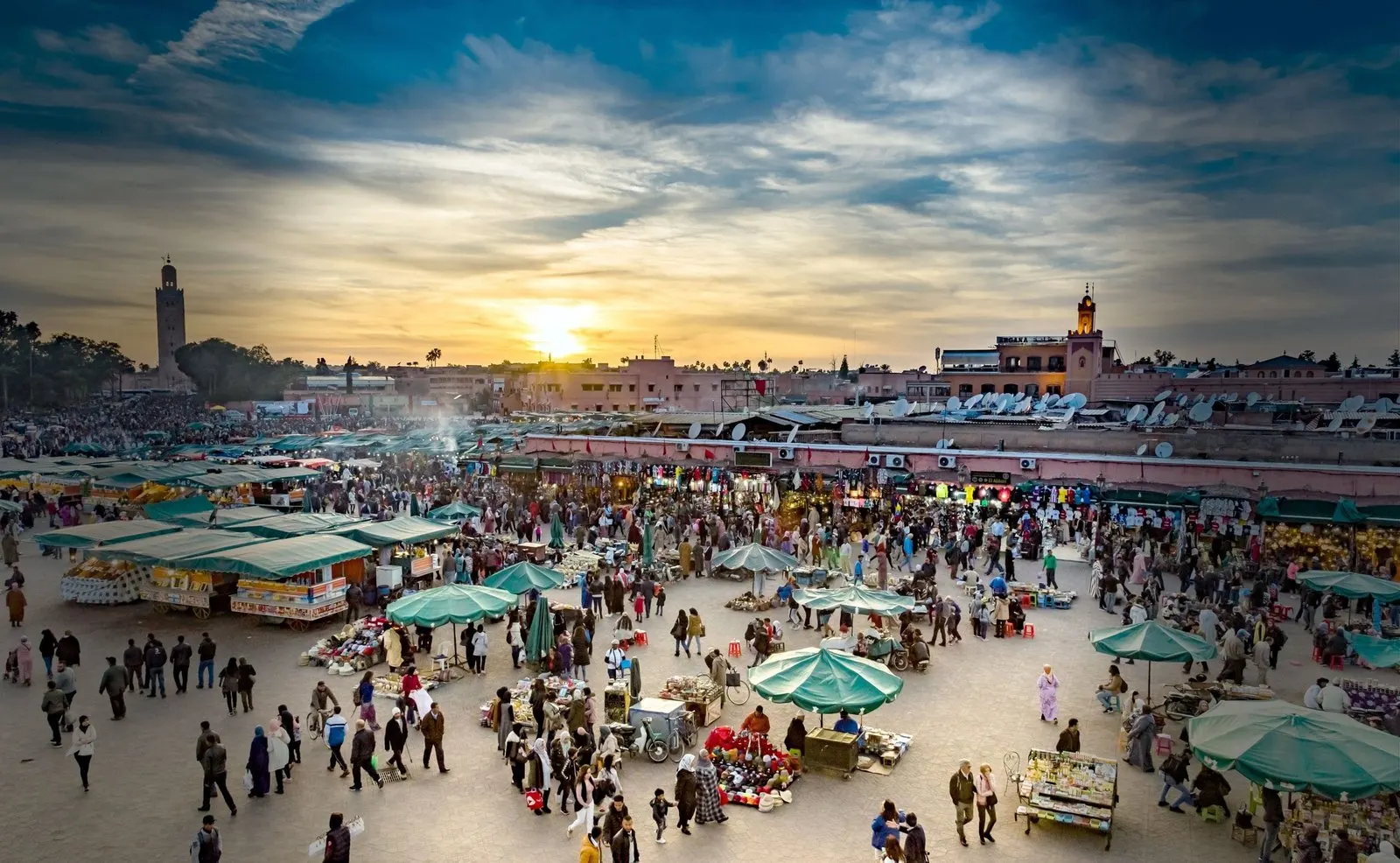
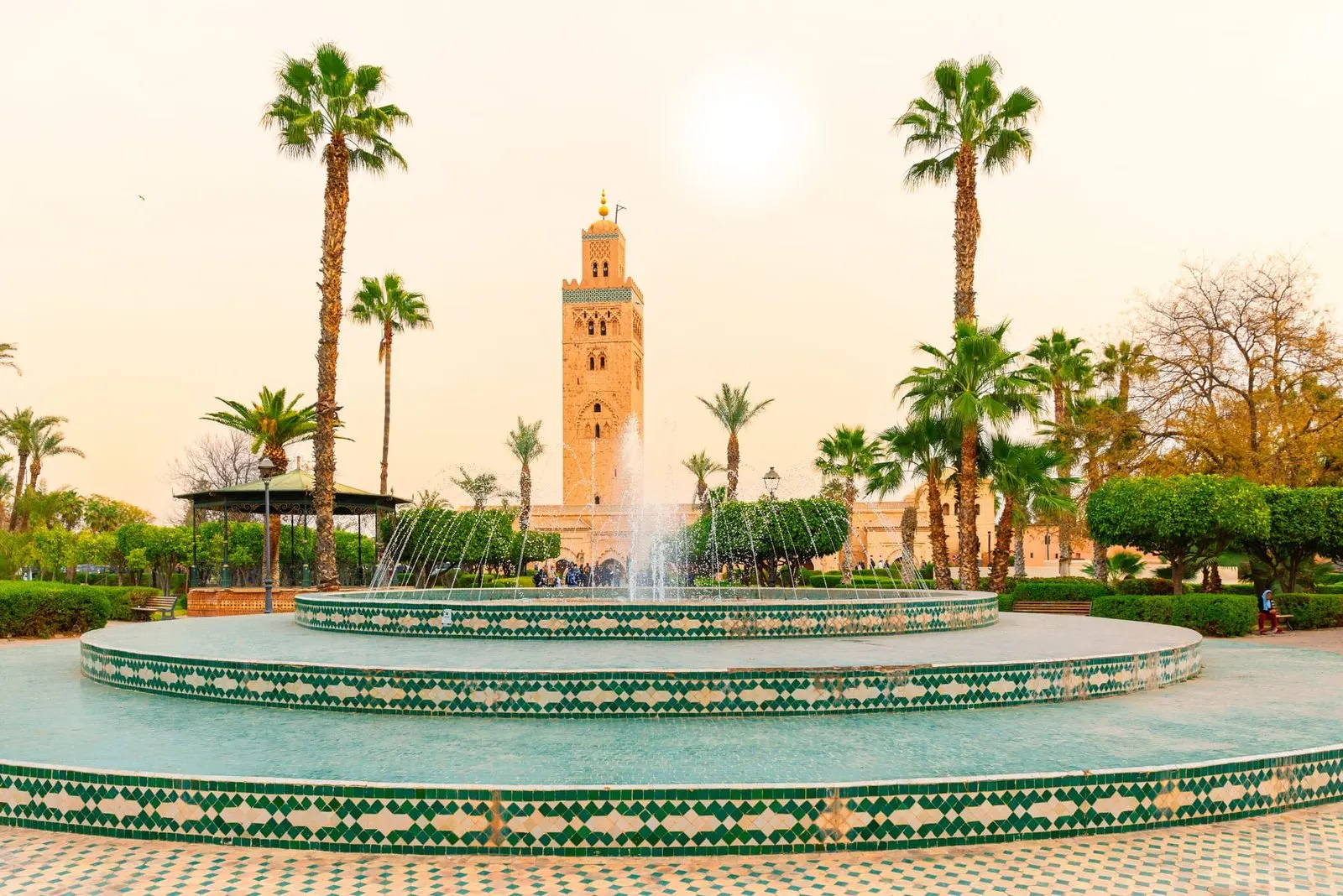
| Marrakech | The medina and souks, Jemaa el-Fna square, palaces and gardens, the High Atlas on the horizon | 2 to 3 nights | Fes vs Marrakech |
| High Atlas valleys (Imlil, Ourika) | Mountain villages and walking below Toubkal, the highest peak in North Africa | A day trip, or 1 to 2 nights | Day trips from Marrakech |
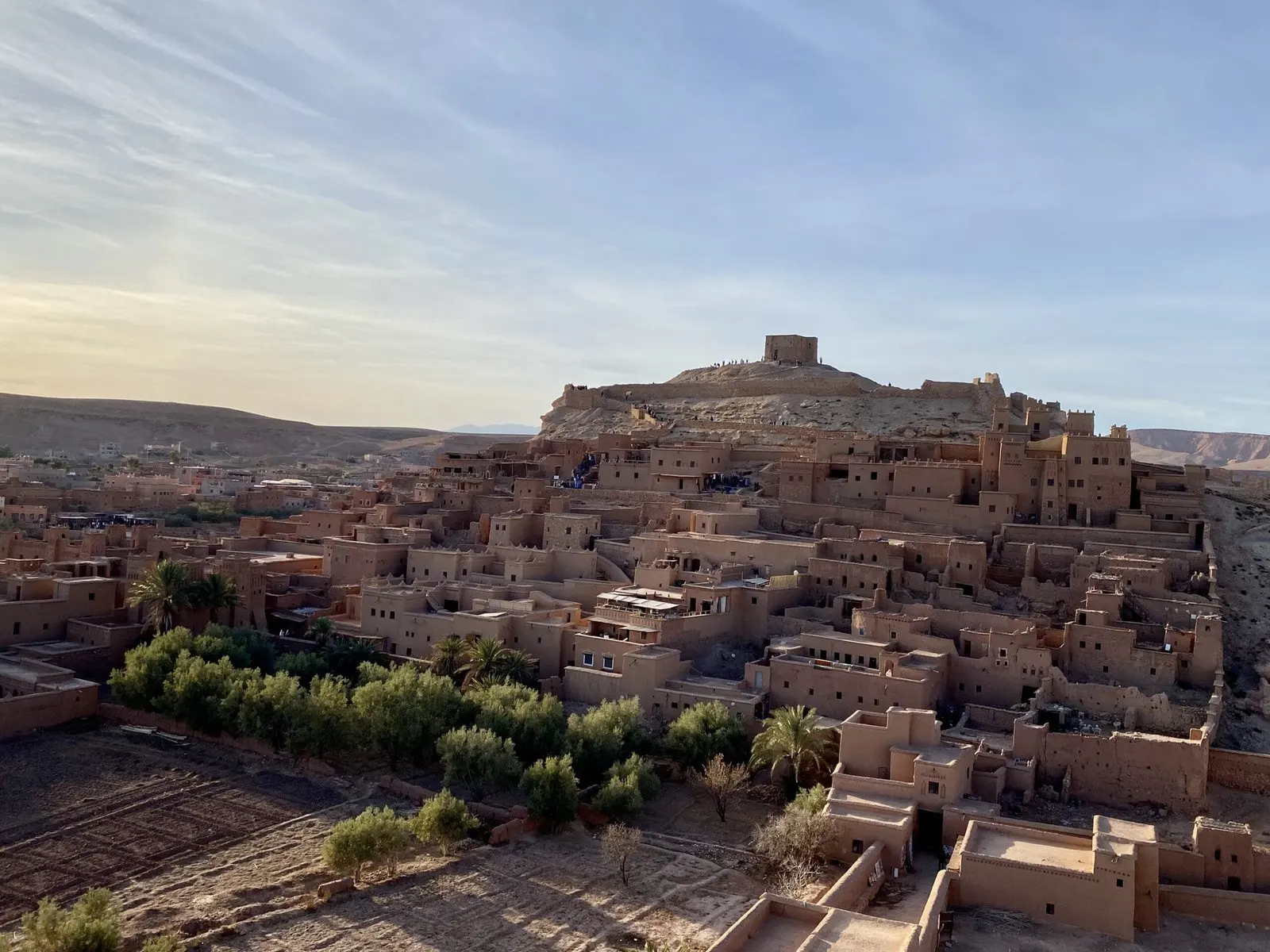
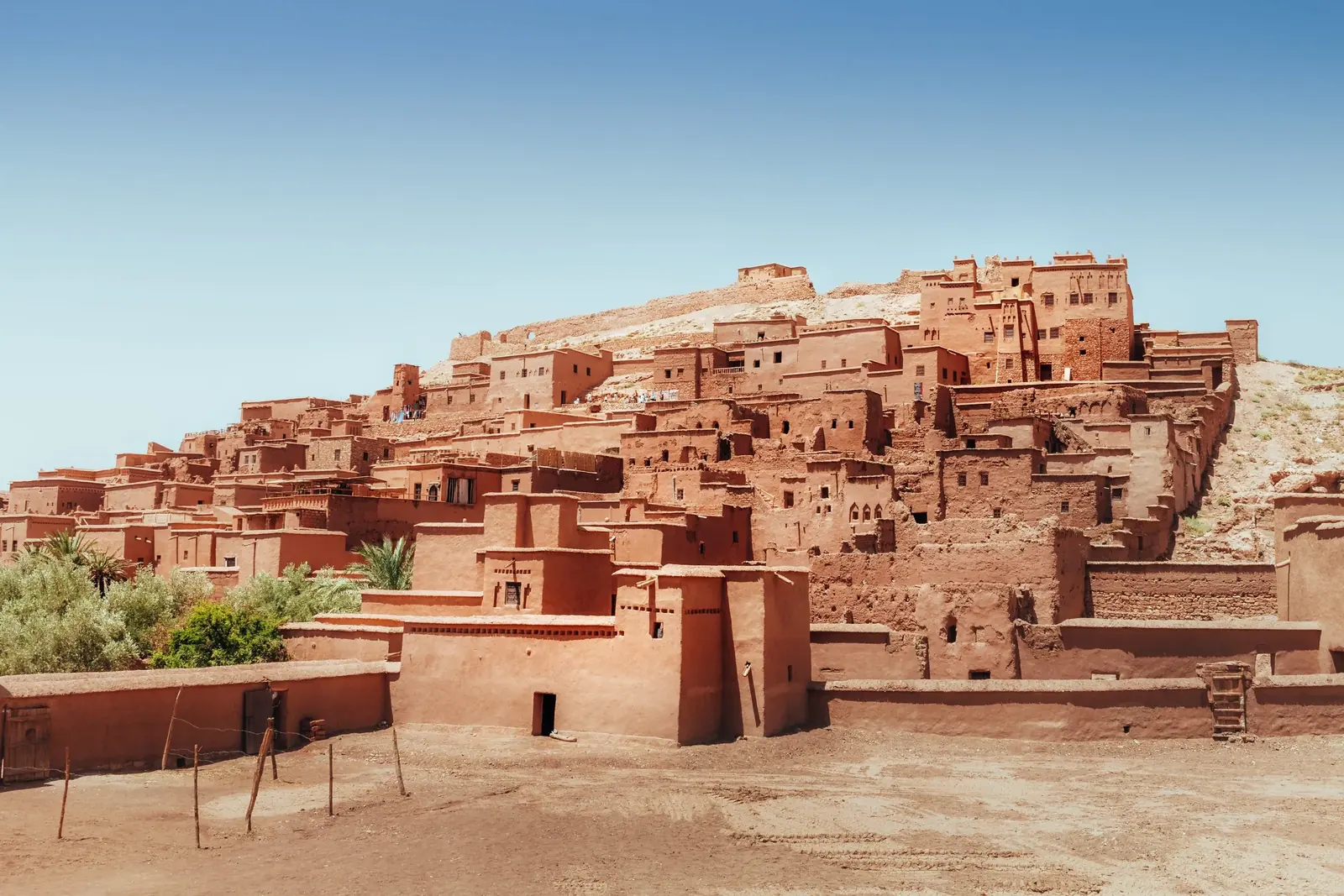
| Ait Ben Haddou and Ouarzazate | A mud-brick fortified village listed by UNESCO, and the film studios nearby | Half a day on the way south | 3-day desert tour |
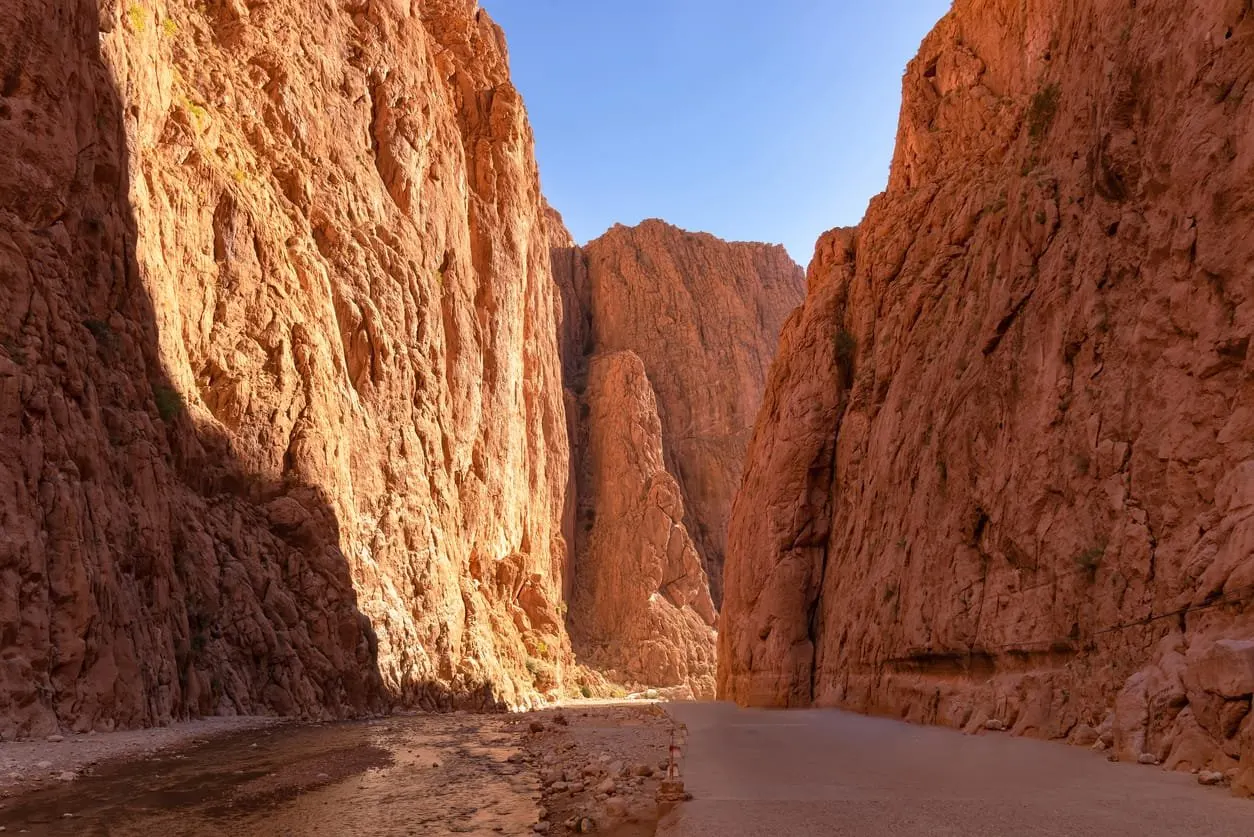
| Dades and Todra gorges | Red rock canyons, palm groves and old kasbahs | 1 night | 4-day desert tour |
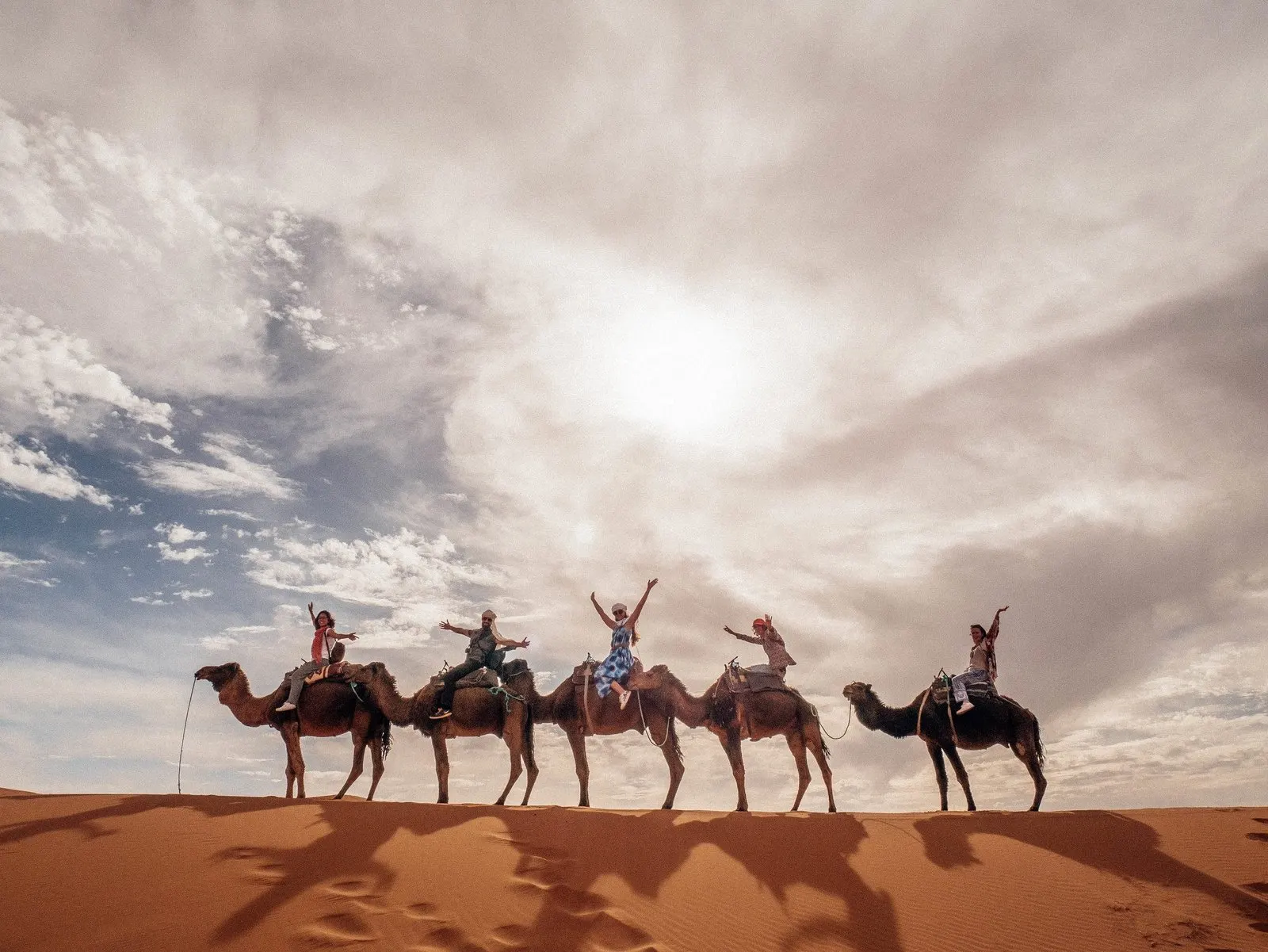
| Merzouga and Erg Chebbi | High sand dunes, camel treks and nights in a desert camp | 1 to 2 nights | Morocco desert tours |
| Fes | The largest and oldest medina, the tanneries, craft workshops | 2 nights | Fes vs Marrakech |
| Meknes and Volubilis | A quieter imperial city and the best preserved Roman ruins in the country | A day between Chefchaouen and Fes | 10-day itinerary |
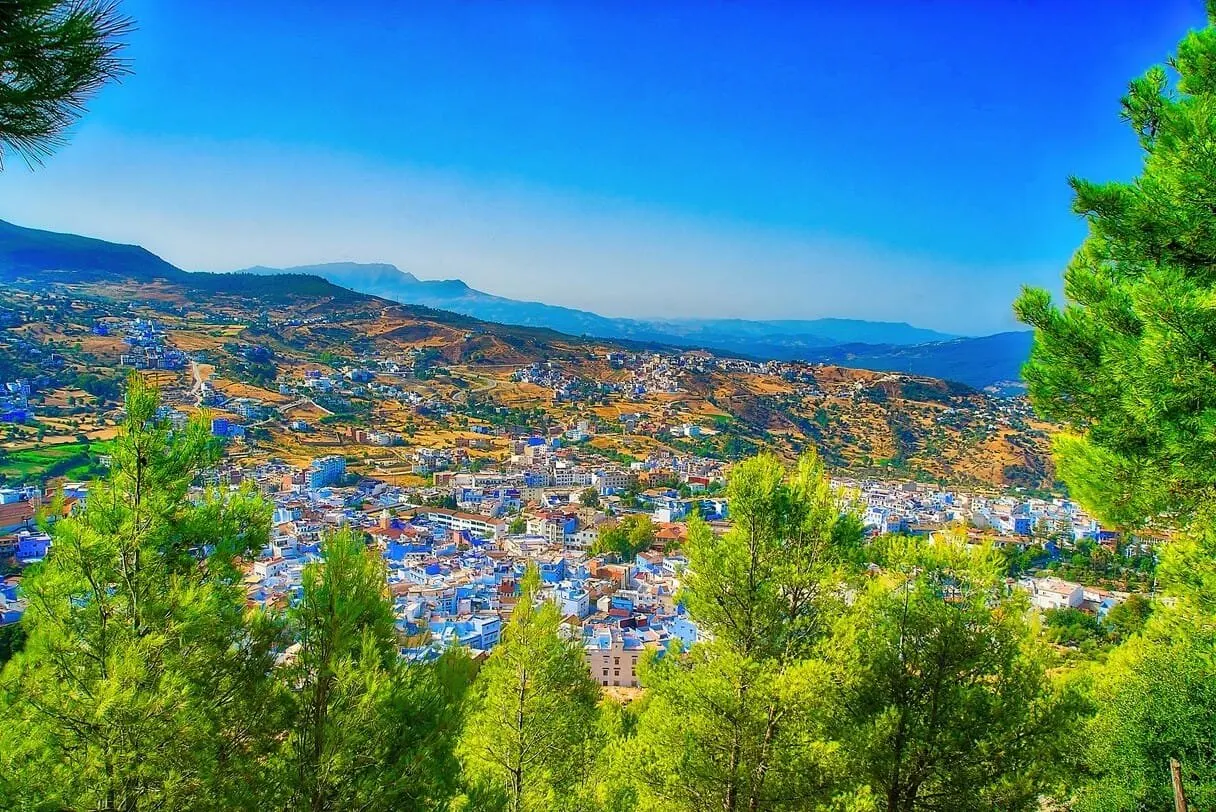
| Chefchaouen | A blue-painted hill town in the Rif mountains | 1 to 2 nights | 10-day tour from Casablanca |
| Casablanca and Rabat | The Hassan II Mosque, and the capital with its Hassan Tower and kasbah | Half a day each | 8-day tour from Casablanca |
| Essaouira | A walled fishing port on the Atlantic, windy and relaxed | A day trip, or 1 to 2 nights | 14-day tour |
Times are the minimum that feels unhurried. Add a night wherever you like to slow down.
Two choices come up on almost every first trip. If you only have time for one of the great medinas, Fes vs Marrakech sets out how they differ. If you are deciding which dunes to visit, Erg Chebbi vs Erg Chigaga compares the two.
How many days do you need in Morocco?
Seven days is the shortest trip that covers Marrakech and the Sahara without rushing, and ten days adds Fes and the north. With fewer than five days, stay in one region.
The limit is road distance, not the number of sights. Marrakech to Merzouga is about 560 km over the Tizi n'Tichka pass, and Fes to Merzouga is about 450 km.
| Days | What fits | Trade-off | Private tour price per person | See |
|---|---|---|---|---|
| 3 | Marrakech to Merzouga and back, or one way to Fes, with one night in a desert camp | Two long driving days out of three. The last day back to Marrakech is about 550 km | €500 to €800 | 3 days to Merzouga, 3 days to Fes |
| 5 | The same desert route at a slower pace, with a second night in the dunes or the valleys | Still a desert trip. No time for the north | €700 to €1,000 | 5-day desert tour |
| 7 | Marrakech, the kasbah route, the Sahara and guided city time | You choose between Fes and extra days in Marrakech | €1,700 to €3,800 | 7-day itinerary, 7-day tour |
| 10 | Casablanca, Rabat, Chefchaouen, Fes, the Sahara and Marrakech | A full loop with a few long days and little spare time | €2,900 to €5,500 | 10-day itinerary, 10-day tour |
| 14 | The ten-day loop plus two nights in Chefchaouen, an Atlas valley day and Essaouira | Asks for two weeks of leave. The pace is comfortable | €3,700 to €6,700 | 14-day tour |
Prices are for private tours run by Hassan and his team in Marrakech, per person, the same all year. Where you land in the range depends on group size and hotel level.
Our Morocco itinerary page goes through each length in more detail, including which stops to drop first when time is short.
When is the best time to go?
Spring (March to May) and autumn (September to November) suit most routes, because the cities are warm without being hot and the desert is comfortable by day.
- Summer: the Sahara and Marrakech are very hot in July and August. The Atlantic coast stays far milder.
- Winter: days are often sunny, but desert and mountain nights can drop to around freezing and snow can affect the high passes.
- Ramadan: the dates move about eleven days earlier each year. Travel still works well, with some changes to opening hours and daytime eating.
The coast, mountains and desert each have their own season, so check best time to visit Morocco for the month you have in mind.
How do you get to Morocco, and what do you need to enter?
Most visitors fly in. Casablanca Mohammed V is the main long-haul hub, and Marrakech Menara has the widest choice of flights from Europe. Fes, Tangier, Rabat and Agadir also have international airports, and ferries cross from southern Spain to Tangier.
It often pays to fly into one city and out of another. Arriving in Casablanca or Fes and leaving from Marrakech, or the reverse, saves a full day of driving back to where you started.
How do you get around Morocco?
Use trains between the big cities and a car with a driver for the mountains and desert. The rail network stops at Marrakech in the south, so nothing on the desert route can be reached by train.
| Option | Works well for | Advantages | Drawbacks |
|---|---|---|---|
| Train (ONCF) | Tangier, Rabat, Casablanca, Meknes, Fes, Marrakech | Comfortable and inexpensive. The Al Boraq high-speed service links Tangier and Casablanca in a little over two hours | No trains to Chefchaouen, Essaouira, the gorges or the desert. Conventional services can run late |
| Intercity bus | Towns without a station, including Chefchaouen, Essaouira and Merzouga | Cheap, with numbered seats on the main national companies | Slow, fixed timetables, no stops for viewpoints. A bus to Merzouga leaves you in the village, still short of a camp in the dunes |
| Grand taxi | Short hops between neighbouring towns | Leaves when full, so there is little waiting on busy routes | Shared and cramped unless you pay for every seat. Fares need agreeing in advance |
| Petit taxi | Journeys inside one city | Cheap and everywhere | Cannot leave the city limits. Ask for the meter or agree the fare first |
| Self-drive hire car | Confident drivers who want full freedom | Stop wherever you like, at your own pace | Mountain roads are slow and tiring, city traffic is aggressive, and UK government advice notes that road accidents are frequent and night driving is dangerous |
| Private driver | The Atlas, the gorges, the Sahara and multi-city loops | Door to door, stops on request, someone local to handle the long days and the logistics | Costs more than public transport, most of all for one or two people |
If you are weighing a shared minibus against your own vehicle, see private vs group tours.
Where should you stay: riad, hotel or desert camp?
Stay in a riad in the old cities, a hotel where you want a pool or easy car access, and a camp for your night in the dunes. Most trips use all three.
- Riad: a traditional house built around a courtyard, converted into a guesthouse with a handful of rooms. You sleep inside the medina, breakfast is usually on the roof terrace, and staff know the neighbourhood. The drawbacks are steep stairs, rooms that face inwards, and a walk from the nearest gate because cars cannot enter the lanes.
- Hotel: larger, usually outside the medina walls, with lifts, pools and parking. Better for limited mobility, families who want space and the hot months. You give up some character and need a taxi to reach the old town.
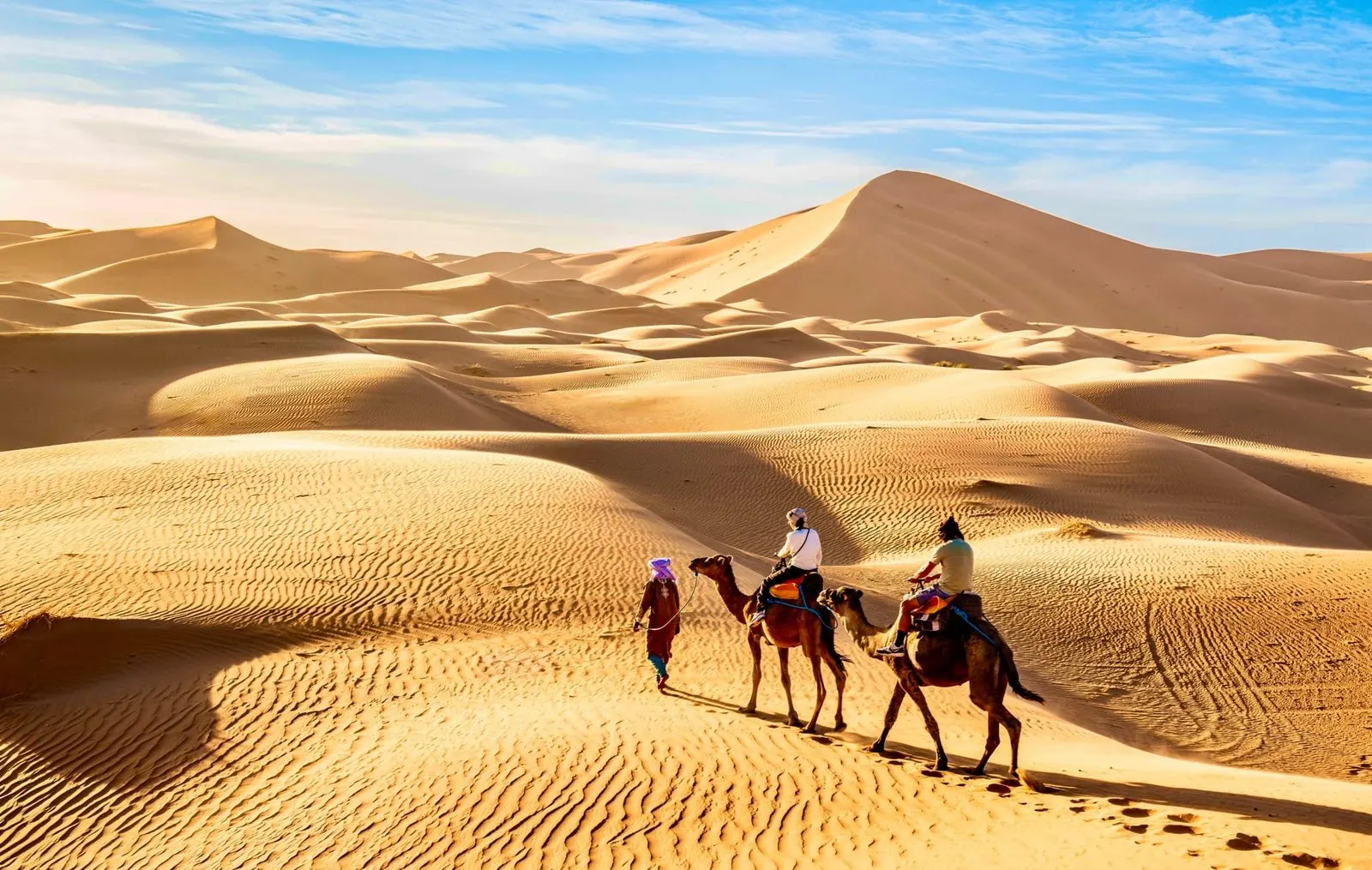
- Desert camp: fixed tents among or beside the dunes, reached by camel or 4x4. Standard camps are simple, sometimes with shared bathrooms. Higher levels have private bathrooms and proper beds. Nights are cold from late autumn to early spring at every level.
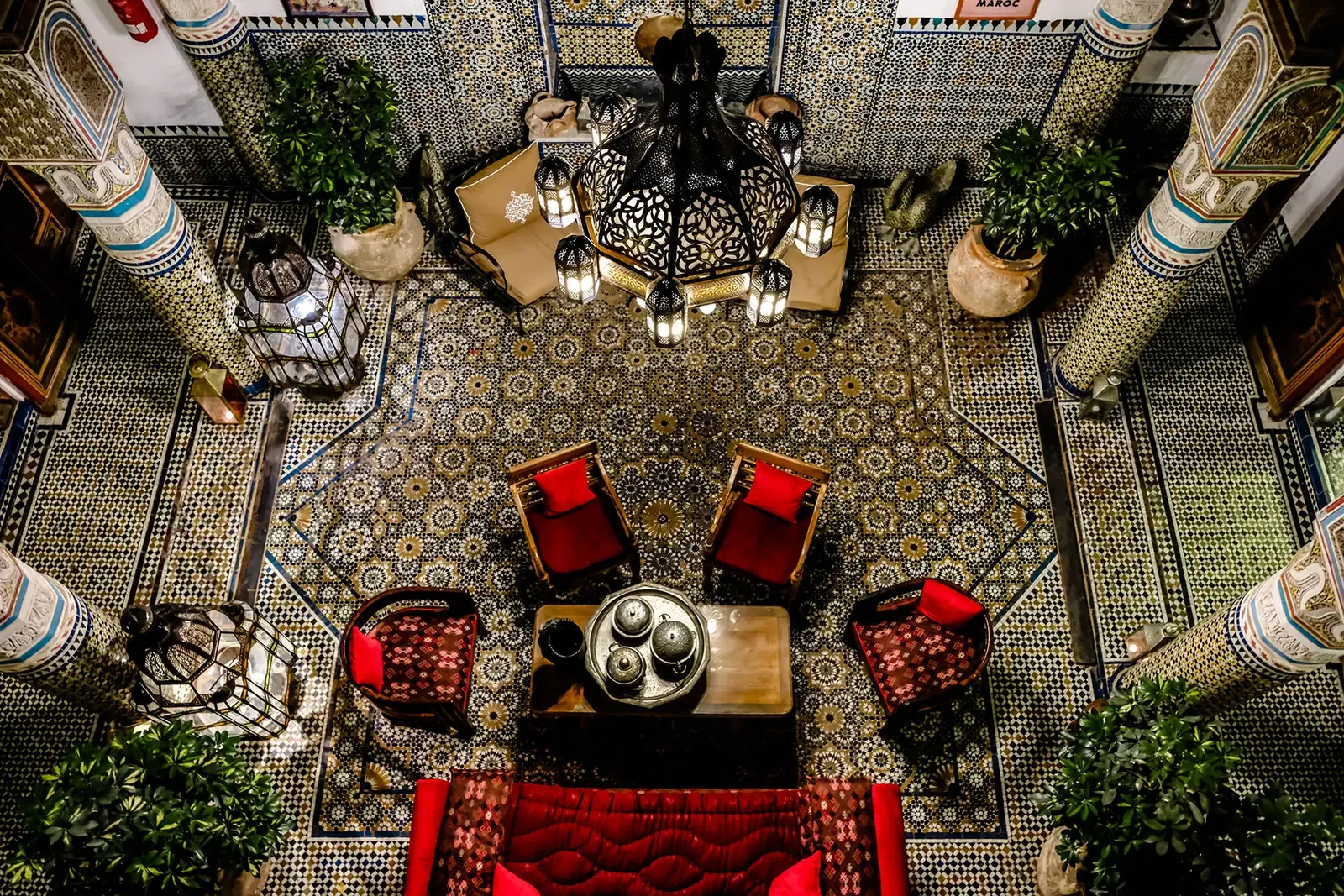
Our tours come in standard, comfort and luxury levels, and the camp is where the difference shows most. Luxury desert camp in Merzouga explains what the top level includes and what it cannot change.
How do money, cards and tipping work?
You pay in Moroccan dirhams, mostly in cash, and you get them after you arrive. The dirham is a closed currency, so it is hard to buy or sell abroad.
- Getting cash: bank ATMs in cities and larger towns are the easiest source. Airports and city centres have exchange offices as well. Withdraw before you head south, because machines are scarce in the gorges and around the dunes.
- Cards: accepted in most hotels, many riads, larger restaurants and bigger shops in the main cities. If a terminal offers to charge in your home currency, choose dirhams.
- Cash: needed for souks, small cafés, taxis, tips, entrance fees and almost everything in rural areas. Keep small notes and coins, as a 200 dirham note is hard to break.
Tipping is customary but not compulsory, and amounts are a matter of habit, not rule. As a rough guide, people leave 5 to 10 percent in restaurants where service is not already added, a few dirhams for small services, and something like 100 to 200 dirhams a day for a private driver or guide.
Morocco tour cost lists our price range for every length from 3 to 17 days and explains what moves the figure.
What will you eat and drink?
Expect slow-cooked stews, bread with every meal, plenty of vegetables and a great deal of sweet mint tea. Food is mildly spiced, not hot.
- Tagine: meat, chicken or vegetables stewed in a conical clay pot. Chicken with preserved lemon and olives, and lamb with prunes, are the classics.
- Couscous: steamed semolina with vegetables and meat, traditionally the family meal on Fridays.
- Harira: a tomato, lentil and chickpea soup, eaten year round and to break the fast in Ramadan.
- Pastilla: a thin pastry pie, sweet and savoury at once, most associated with Fes.
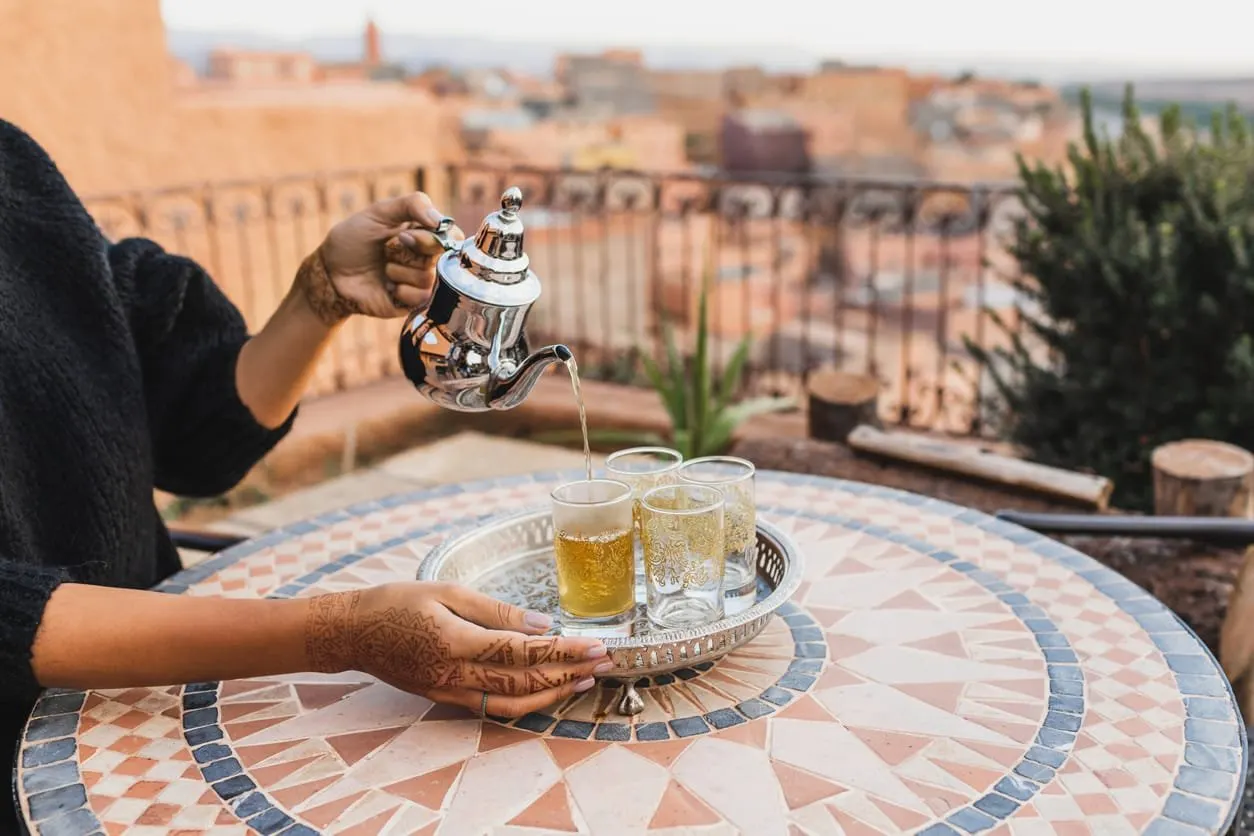
Most visitors drink bottled or filtered water throughout the trip. City tap water is treated, but a change of water is a common cause of stomach upsets.
Alcohol is available but not everywhere. Licensed hotels, some restaurants, bars and certain supermarkets in the larger cities sell it. Many riads, most medina restaurants and smaller towns do not, and drinking in the street is not acceptable. During Ramadan most Moroccans fast from dawn to sunset. Restaurants that serve visitors generally stay open, some local cafés close by day, alcohol can be harder to find, and it is polite not to eat, drink or smoke in the street.
What language and etiquette should you know?
You can travel comfortably with English in hotels, riads and tourist areas, and a few words of Arabic or French help everywhere else. Moroccans speak Darija, the local form of Arabic, at home. Amazigh (Berber) languages are widely spoken in the Atlas, the Rif and the south. French is common in business, on menus and on signs, and Spanish is heard in the north.
| Say | Meaning |
|---|---|
| Salam alaikum | Hello (literally "peace be upon you") |
| Shukran | Thank you |
| La, shukran | No, thank you |
| Afak | Please |
| Bshhal? | How much? |
| Bslama | Goodbye |
- Dress: there is no dress code for visitors, but covering shoulders and knees is respectful and draws less attention in medinas, villages and the countryside. This applies to men as well as women.
- Photography: ask before photographing people, and accept a refusal. Performers and animal handlers in the squares expect payment. Do not photograph police, soldiers or official buildings.
- Mosques: as a general rule, mosques in Morocco are closed to non-Muslims. The main exception is the Hassan II Mosque in Casablanca, which non-Muslims can enter on guided visits outside prayer times.
- Bargaining: treat it as a conversation. Decide what the item is worth to you, offer less, and be ready to walk away politely. Do not start unless you mean to buy.
Is Morocco safe, and what about health?
Most visits pass without serious incident, and the problems travellers do meet are petty theft, persistent touts and road accidents. Government advice for Morocco asks visitors to take care without warning against travel to the main tourist regions. We set out what the US and UK say, with dates, on is Morocco safe.
- Insurance: buy travel insurance that covers medical treatment and evacuation, and check it covers anything active you plan, such as trekking or quad bikes.
- Medicines: bring what you take regularly in its original packaging, plus the basics for an upset stomach. Pharmacies are easy to find in towns.
- Sun and heat: carry water, wear a hat and rest at midday in the warmer months. The desert sun is strong even when the air feels cool.
- Medical advice: ask your doctor or a travel clinic about vaccinations well before you leave. We are not qualified to advise on them.
What should you pack?
Pack layers, whatever the month, because a single day can run from a cold desert dawn to a hot afternoon. A short list covers most trips:
- Loose clothes that cover shoulders and knees
- A warm layer for desert and mountain nights, and a proper jacket from November to March
- Comfortable closed shoes for uneven medina lanes, plus sandals
- A scarf, which serves against sun, sand and cold
- Sunglasses, a hat and sunscreen
- A plug adapter for Type C or E sockets and a power bank for the camp night
For the detail by season and region, see what to wear in Morocco.
Will your phone and the internet work?
Yes in the cities and along main roads, with weaker and patchier signal in the mountains, the gorges and the dunes. Morocco has three mobile networks: Maroc Telecom, Orange and Inwi.
A local prepaid SIM is usually the cheapest way to get data, and is sold at airports and phone shops. You will normally be asked for your passport. Travel eSIMs and roaming also work, so compare the cost with your plan. Wifi is standard in riads and hotels. In desert camps, expect it to be limited or absent.
What mistakes do first-time visitors make?
Nearly all of them come from underestimating distance or overfilling the days. These are the ones we see most.
- Trying to see everything in a week. Chefchaouen, Fes, the Sahara and Marrakech in seven days means most of the trip is spent in a vehicle.
- Booking a desert trip that is too short. Merzouga cannot be done from Marrakech in two days at a sane pace. Three days is the minimum, and four or five is kinder.
- Confusing Agafay with the Sahara. Agafay is a stony plain under an hour from Marrakech. It is a pleasant evening out, with no sand dunes.
- Flying in and out of the same city without checking. An open-jaw ticket often saves a day.
- Following a helpful stranger in the medina. Offers of directions usually end at a shop or with a request for money. Use offline maps or ask a shopkeeper.
- Packing for heat only. Desert nights and mountain passes are cold for much of the year.
Should you take a tour or travel independently?
Travel independently if your trip is mainly cities on the rail network, and use a driver or tour for the Atlas and the Sahara.
Independent travel suits you if
- You are visiting Marrakech, Fes, Rabat, Casablanca or Tangier and little else
- You have time to spare and do not mind slow buses
- You enjoy arranging transport and rooms as you go
- Budget matters more than comfort or time
A tour or driver suits you if
- Your route includes the gorges, the desert or several regions
- You have ten days or fewer and want to use them well
- You would rather not drive mountain roads yourself
- You are travelling with children, older relatives or a group
Tours come in two kinds. Shared group tours are cheap and fixed: set dates, set stops, a minibus of strangers. Private tours cost more because the vehicle and driver are yours, and in return the route, pace and hotel level are your choice. Private vs group tours goes through that trade-off with prices.
We only arrange private tours, so weigh our view accordingly. If you are comparing operators, best Morocco tour companies explains how to judge them and read their quotes, and every route we publish is on the Morocco tours page.
Questions people ask
Do I need a visa to visit Morocco?
It depends on your nationality, and the rules can change. Check your government's advice and the Moroccan consulate for your country, including the passport validity required.
Can I buy Moroccan dirhams before I travel?
Usually not, or only at a poor rate. The dirham is a closed currency, so plan to withdraw from an ATM or change money after you land.
Is English widely spoken in Morocco?
In hotels, riads, restaurants and shops that deal with visitors, yes. Elsewhere French and Arabic are far more useful, and a few words of either go a long way.
Can I drink the tap water in Morocco?
City tap water is treated, but most visitors stick to bottled or filtered water to avoid stomach upsets. Use bottled water in rural areas and the desert.
What plug sockets does Morocco use?
Type C and Type E, the two-pin round plugs used in much of continental Europe, at 220 volts. Travellers from the UK, US, Canada and Australia need an adapter.
Can I visit Morocco during Ramadan?
Yes. Sights and tourist restaurants stay open, though some cafés close by day and hours can shorten. Evenings are lively after the fast is broken, and it is polite not to eat or drink in the street in daylight.
Is Morocco a good destination for families?
Yes, with a slower route. Children tend to enjoy the camels, camps and kasbahs, but long driving days are hard on them, so add nights and keep each day's drive short.