What you see and do
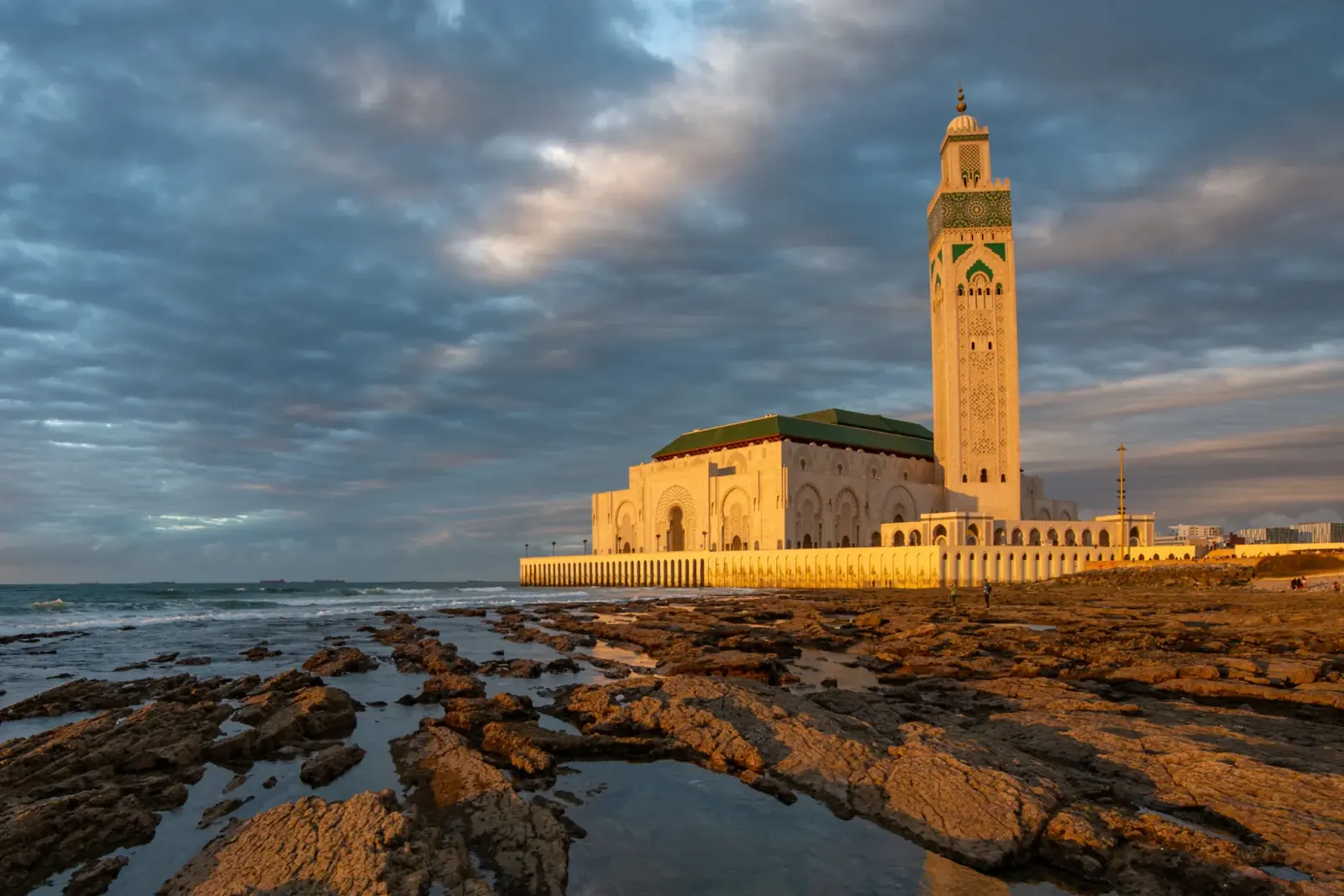
- Ease in with an afternoon at the Hassan II Mosque and the Corniche in Casablanca.
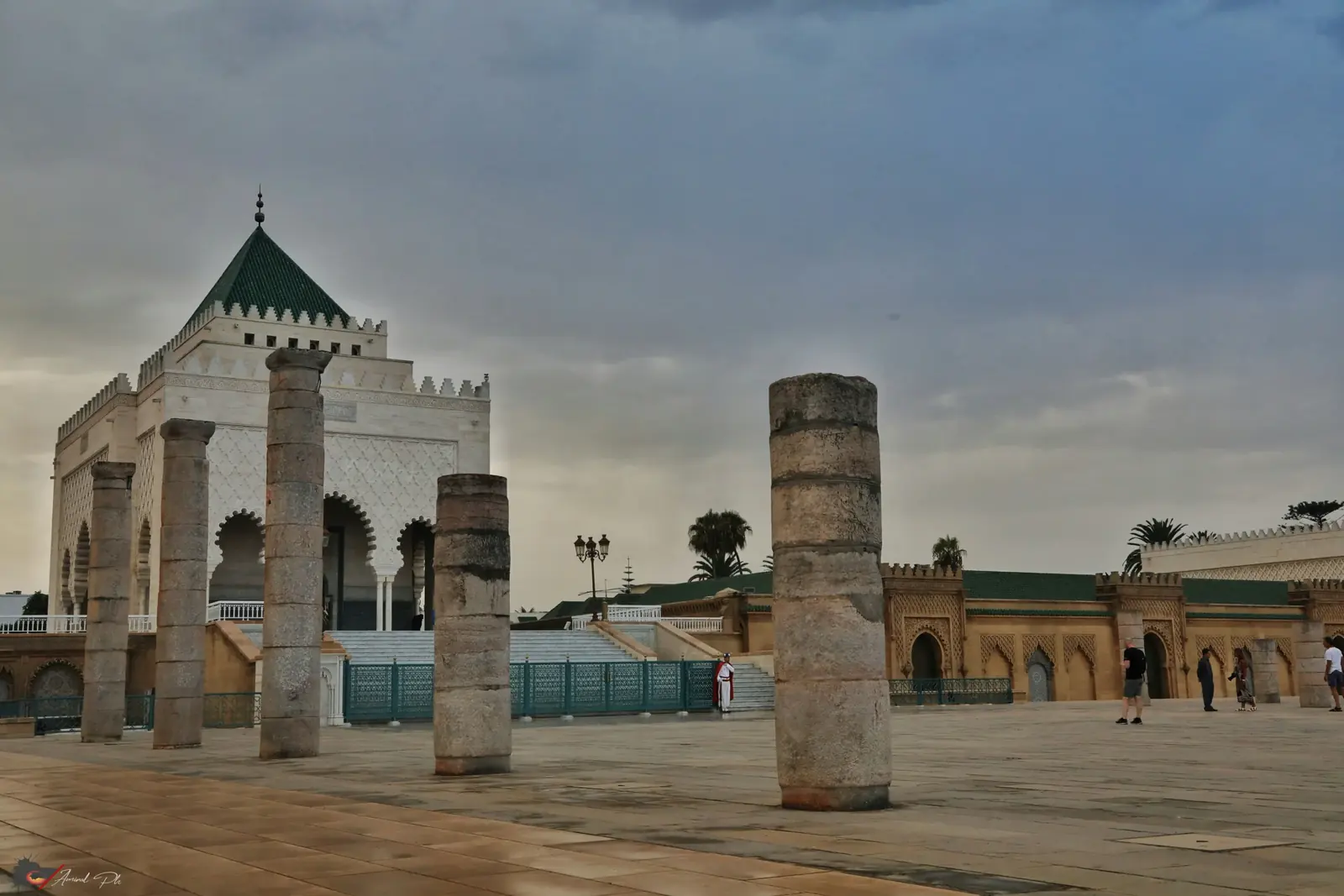
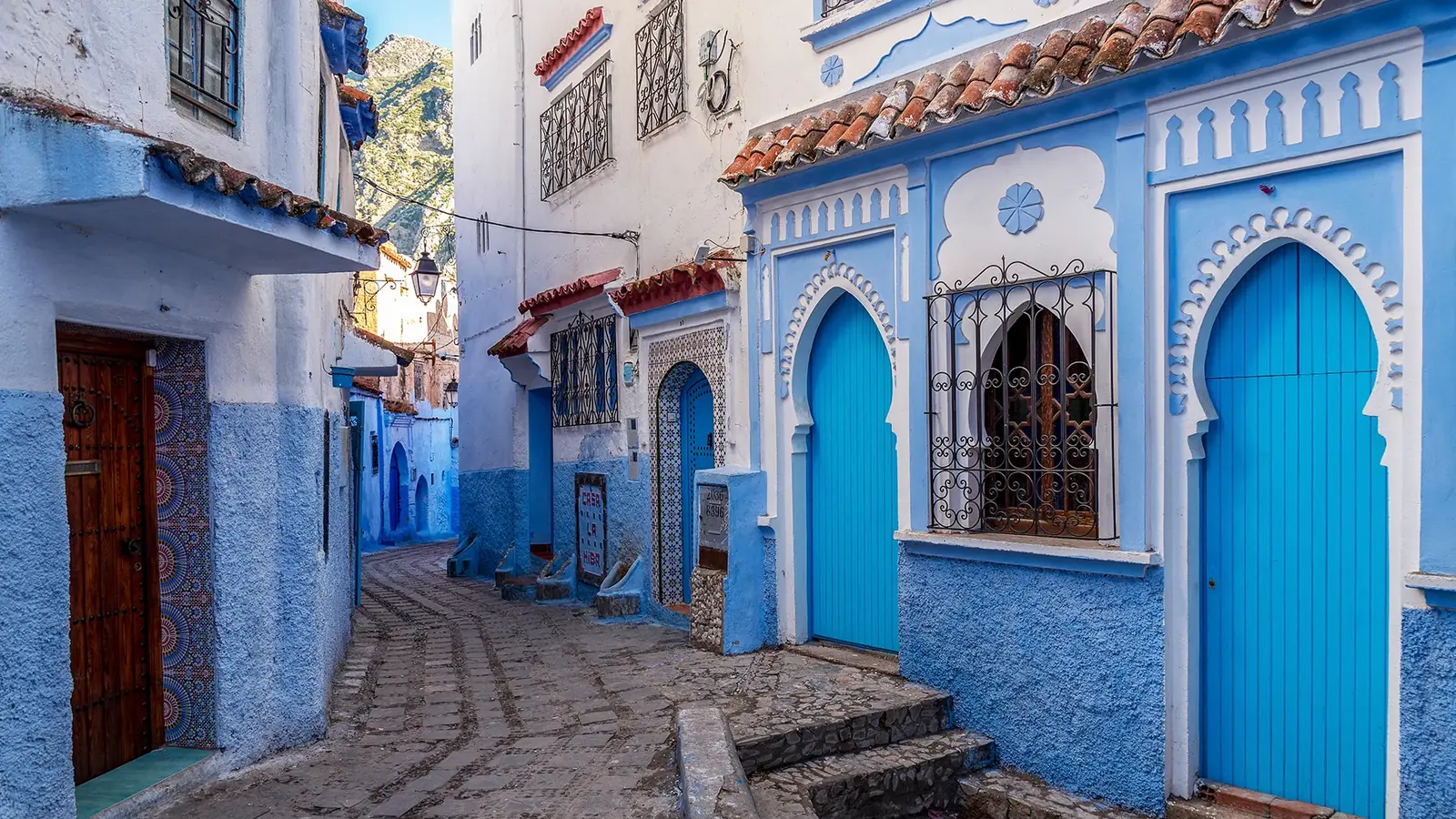
- Stay two nights in Chefchaouen, with a whole day free in the blue medina and the Rif hills.
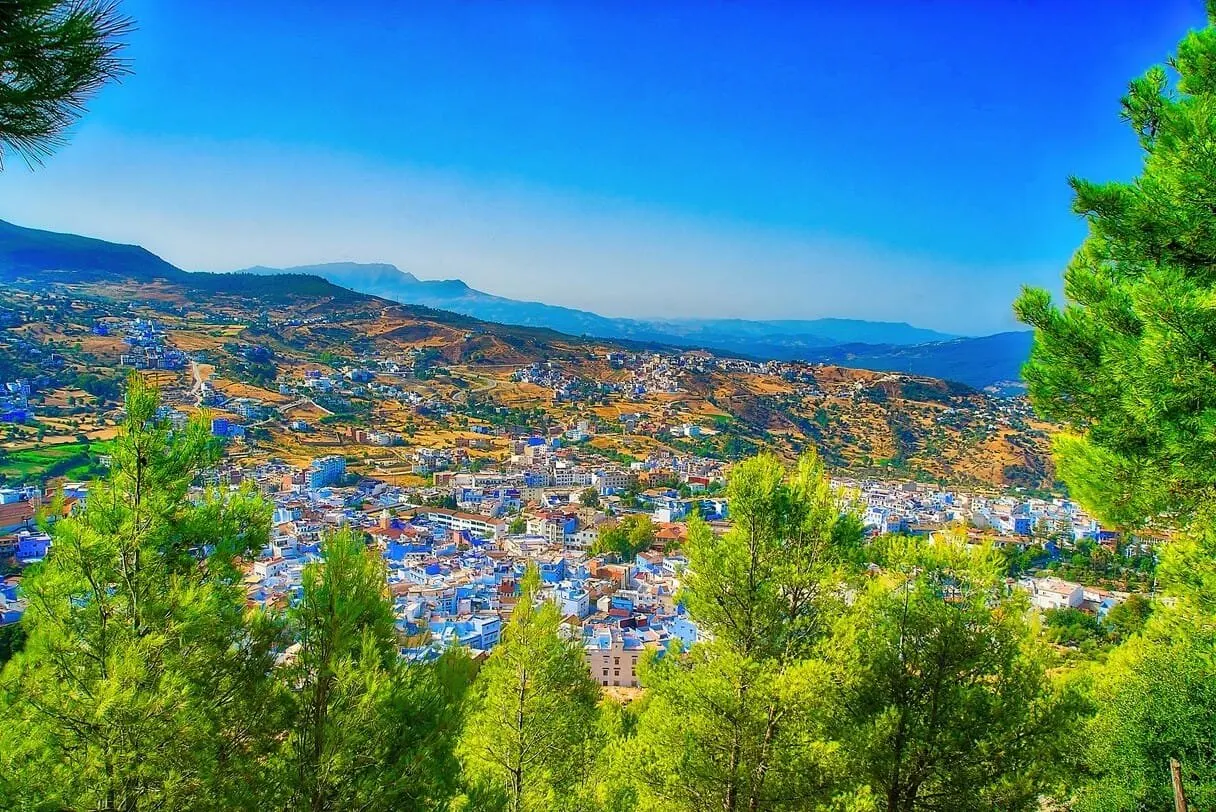
- See Roman Volubilis and the Bab Mansour gate and Royal Stables of Meknes.
- Tour the Fes medina with a local guide, from Bab Boujloud to the tanneries.
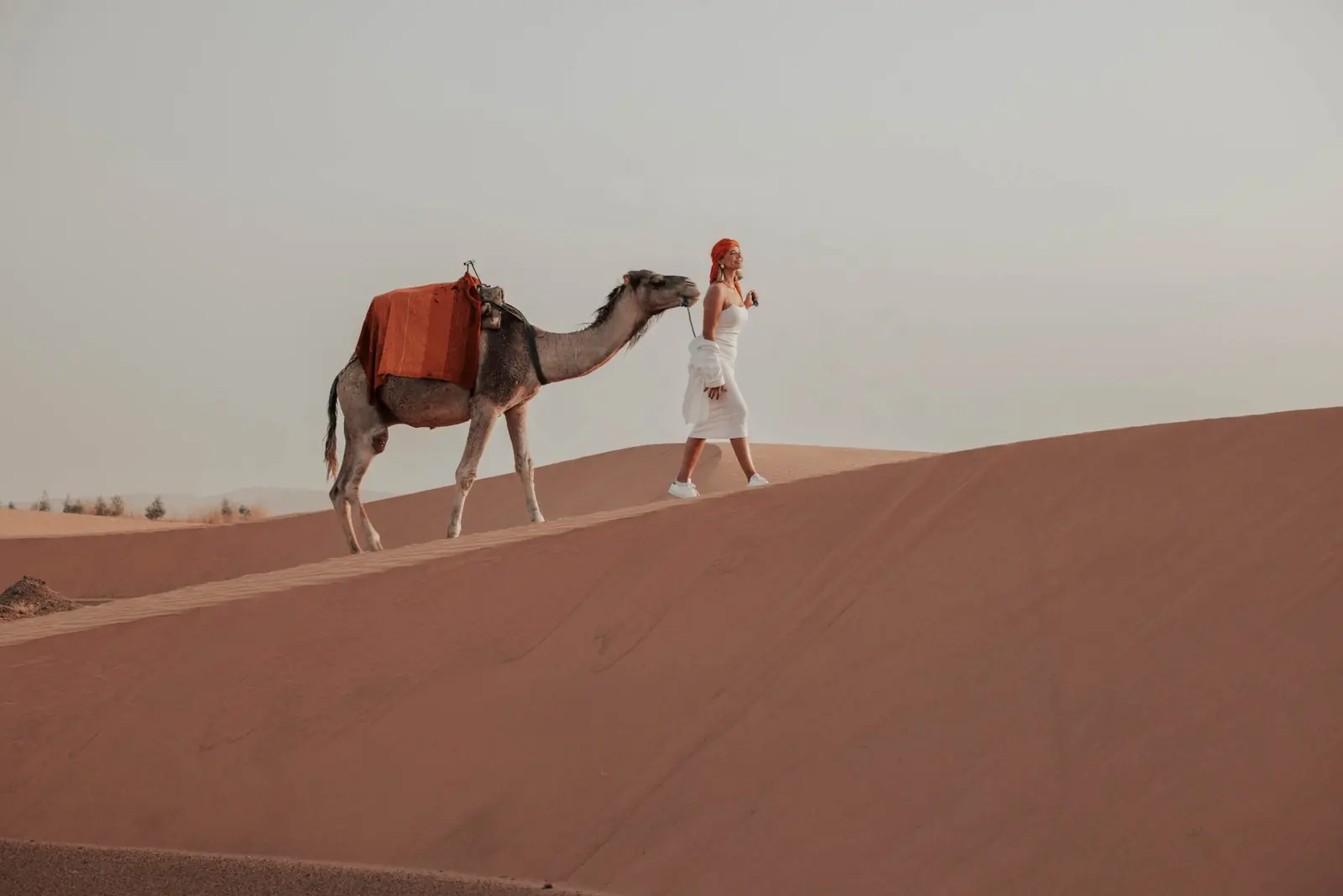
- Spend two nights at Merzouga: a sunset camel ride, a sunrise and a day around the Erg Chebbi dunes.
- Cross the south by Todra Gorge, the Dades Valley, Ouarzazate and Ait Ben Haddou.
- Base yourself in Marrakech for three nights, with a guided city day and a day in the Ourika Valley.
- End on the Atlantic at Essaouira, then follow the coast by El Jadida back to Casablanca.
Day-by-day itinerary
14 days, about 2,392 km by road. Tap a day to open it.
Day 1Arrival in Casablanca
Your driver meets you at Mohammed V Airport and takes you to your hotel to rest. With two weeks ahead, there is no reason to hurry on the first day.
In the afternoon you visit the Hassan II Mosque, which stands partly over the sea, and then drive along the Corniche, the seafront strip of cafes and restaurants where the city comes to walk in the evening. It is a gentle introduction before the first long drive.
Day 2Casablanca to Chefchaouen by Rabat340 km
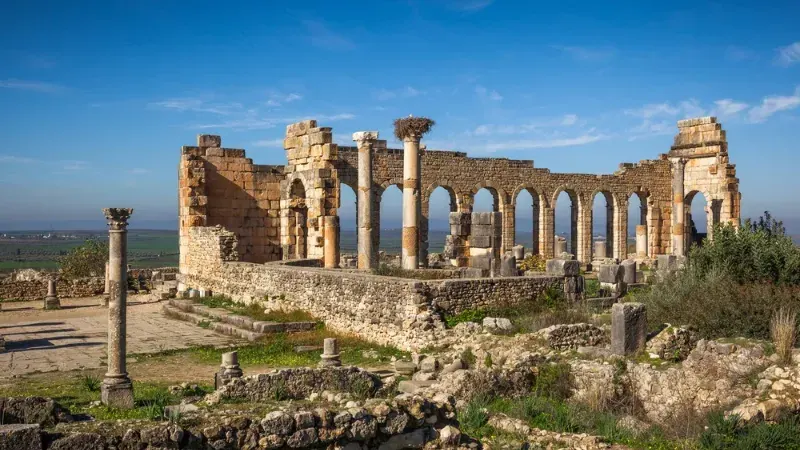
You leave Casablanca after breakfast and reach Rabat in about an hour. The capital is quieter and greener than Casablanca. You stop at the Hassan Tower, an unfinished minaret from the 12th century, and walk through the Kasbah of the Udayas, whose blue and white lanes end at a terrace over the river and the ocean.
North of Rabat the road crosses rolling farmland with small villages, then starts to climb. The Rif is a wetter, greener range than the Atlas, and the change is clear from the car window.
You arrive in Chefchaouen in the late afternoon and check into your riad. There is no need to see everything tonight, because tomorrow is yours.
Day 3Free day in Chefchaouen
Nothing is scheduled. This is the first of the days that only a two-week route can afford. Shorter tours see Chefchaouen in an evening and a morning, and the lanes are at their busiest in the middle of the day when coach groups pass through. With two nights you can be out early while the alleys are empty.
The medina takes a couple of hours to wander. For a longer walk, the path to the Spanish Mosque on the hill opposite takes about half an hour each way and gives the best view back over the town, especially near sunset. Otherwise, sit in the main square, Plaza Uta el-Hammam, and let the day go by.
Day 4Chefchaouen to Fes by Volubilis and Meknes325 km
A full day through the old heartland of the country. From the Rif you drive south to Volubilis, a Roman town with mosaics still in place, a triumphal arch and wide views over farmland. It has been a UNESCO World Heritage site since 1997. Allow about an hour, and bring a hat because there is almost no shade.
The next stop is Meknes, an imperial city built up by Sultan Moulay Ismail. You see the Bab Mansour gate, the vaulted Royal Stables and granaries, and some of the medina. Restoration work has closed some Meknes monuments in recent years, so the stops depend on what is open.
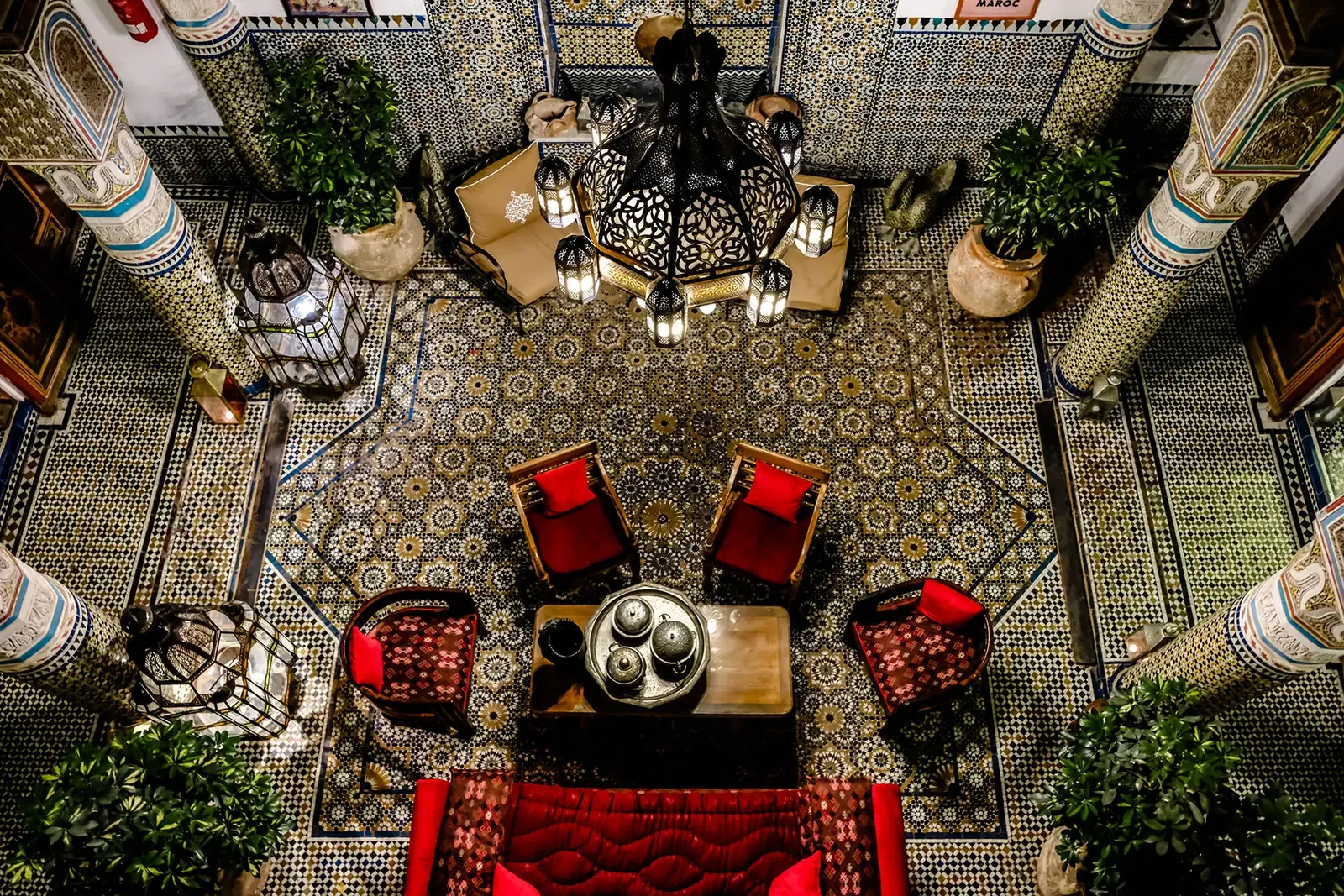
The last leg to Fes takes under an hour. You stay in a riad inside the old city, reached on foot for the final stretch because the medina is closed to cars.
Day 5Guided day in Fes
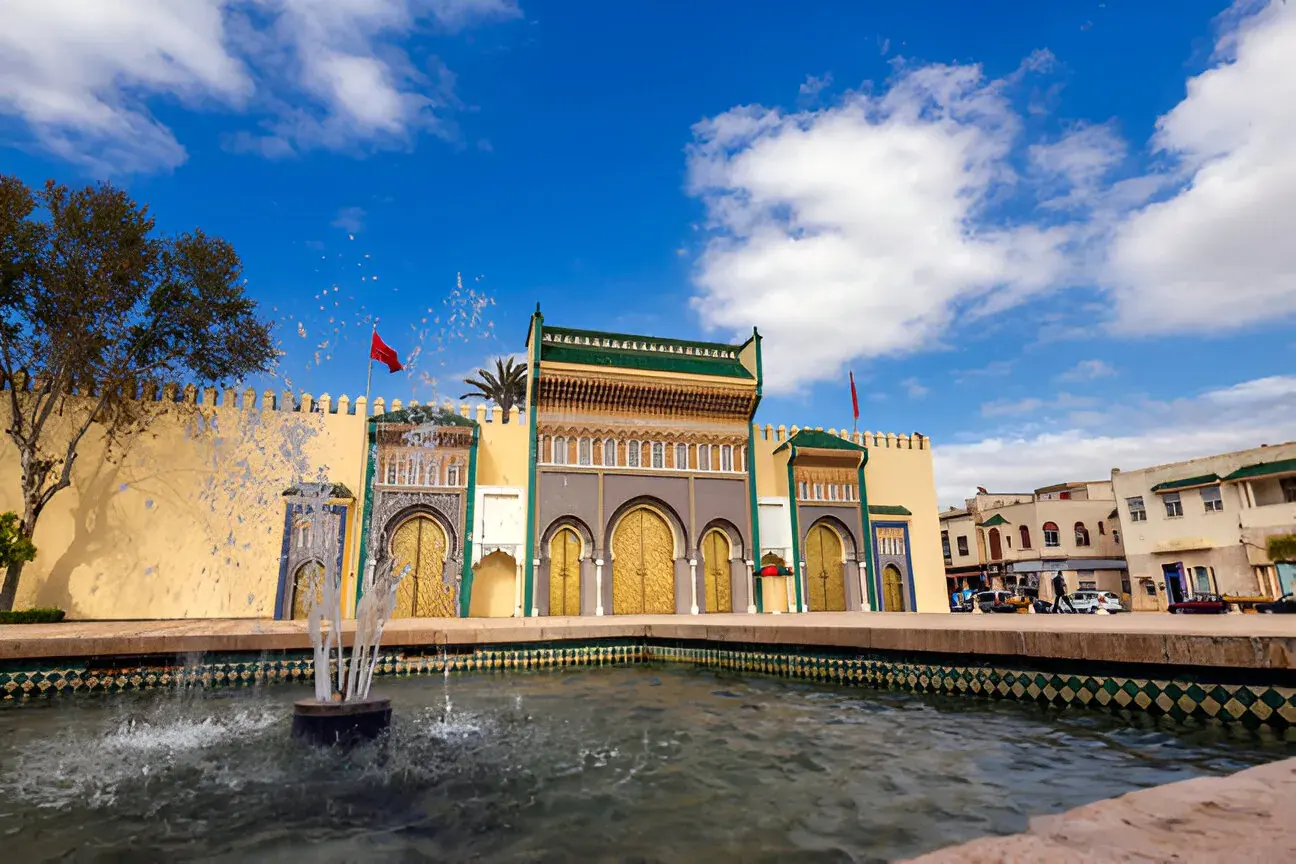
A local city guide spends the day with you. You begin at the Royal Palace gates and the Mellah, the former Jewish quarter, then enter Fes el Bali through Bab Boujloud, the gate tiled in blue on one face and green on the other.
In the medina you pass Al Quaraouiyine, the mosque and university that dates from the 9th century, visit the Attarine Madrasa with its carved plaster and cedar, and look down on the tanneries, where hides are still worked by hand in stone vats. The day ends at a viewpoint over the whole old city. Fes is the most intense stop of the trip, and having a quiet riad to return to helps.
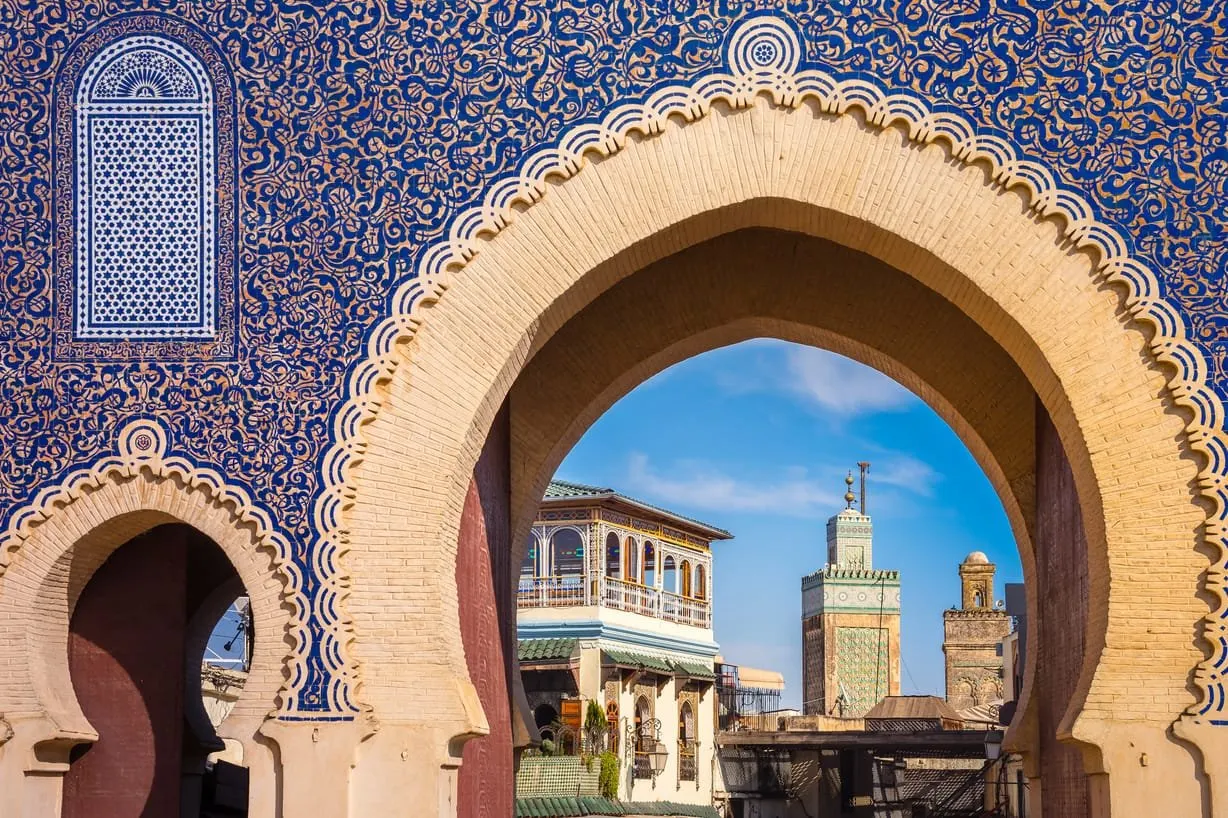
Day 6Fes to Merzouga and into the dunes465 km
The longest drive of the fortnight, so you leave early. The first stop is Ifrane, a tidy mountain town at about 1,650 m with a cool climate and steep roofs. Shortly after, in the cedar forest around Azrou, you may see Barbary macaques among the trees.
You break for lunch in Midelt. The afternoon brings the biggest change of scenery of the trip, as the road drops through the Ziz Valley and its palm groves towards the desert plain.
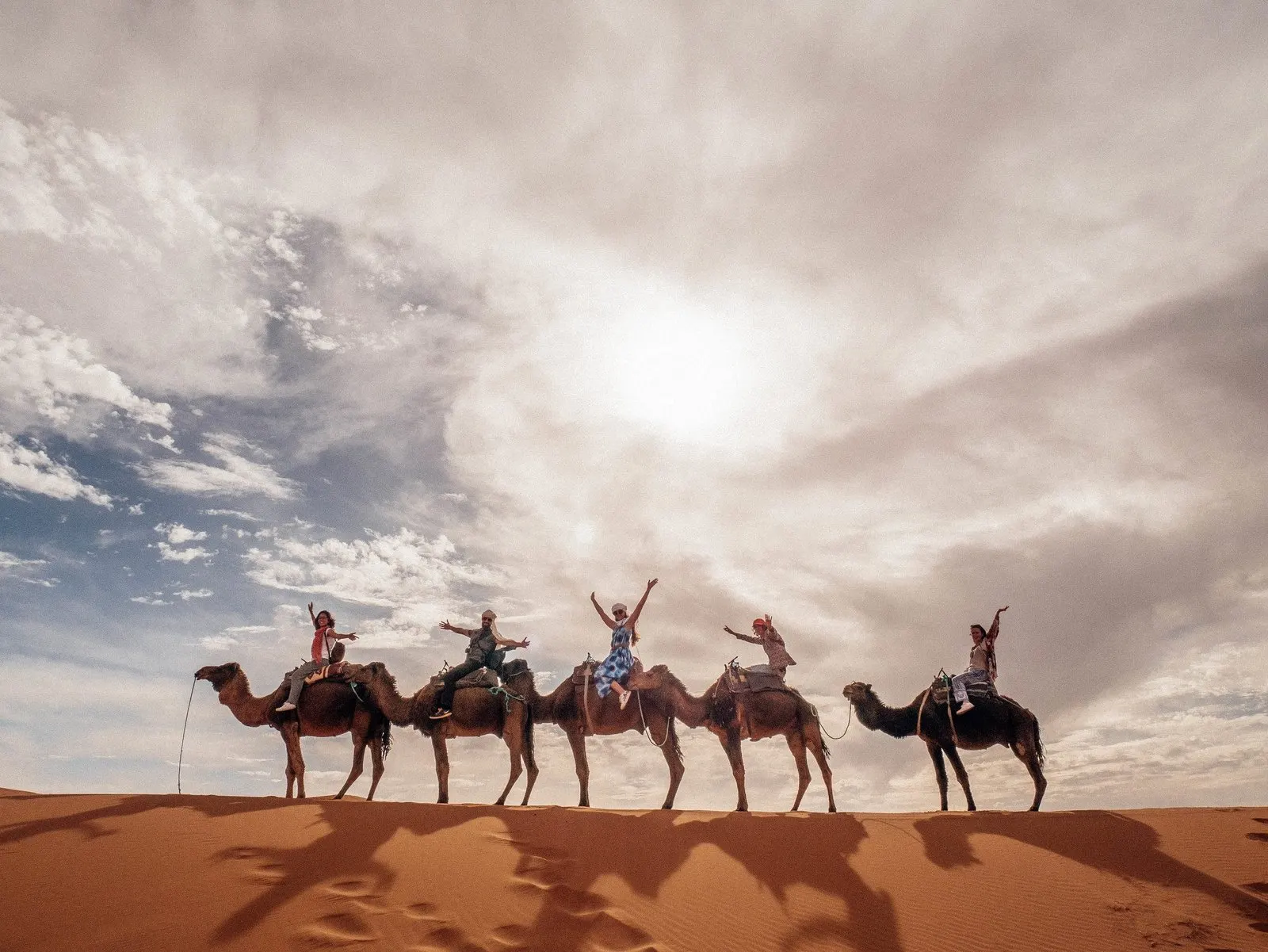
In the late afternoon you reach Merzouga, where camels are waiting at the foot of the Erg Chebbi dunes. You ride into the sand for sunset and on to your camp for dinner and music by the fire.
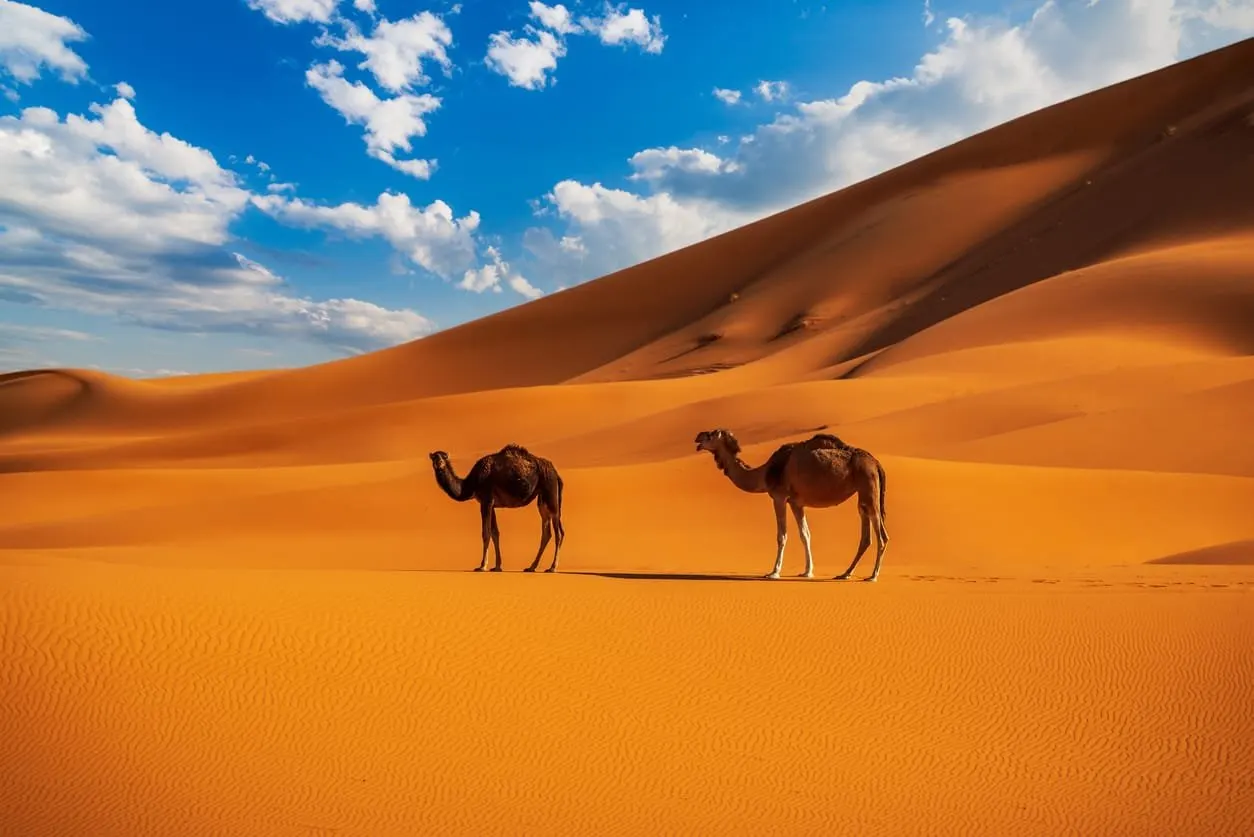
Day 7A full day in the Merzouga desert
After yesterday's drive, this is a slow day. Start with sunrise from the dunes, then breakfast.
Later in the morning your driver takes you to Khamlia to hear Gnawa musicians play, and around the edge of the erg to see nomad tents and the small palm oases that survive there. The afternoon is free for rest. If you want something more active, quad bikes and buggies can be booked for the evening as an extra.
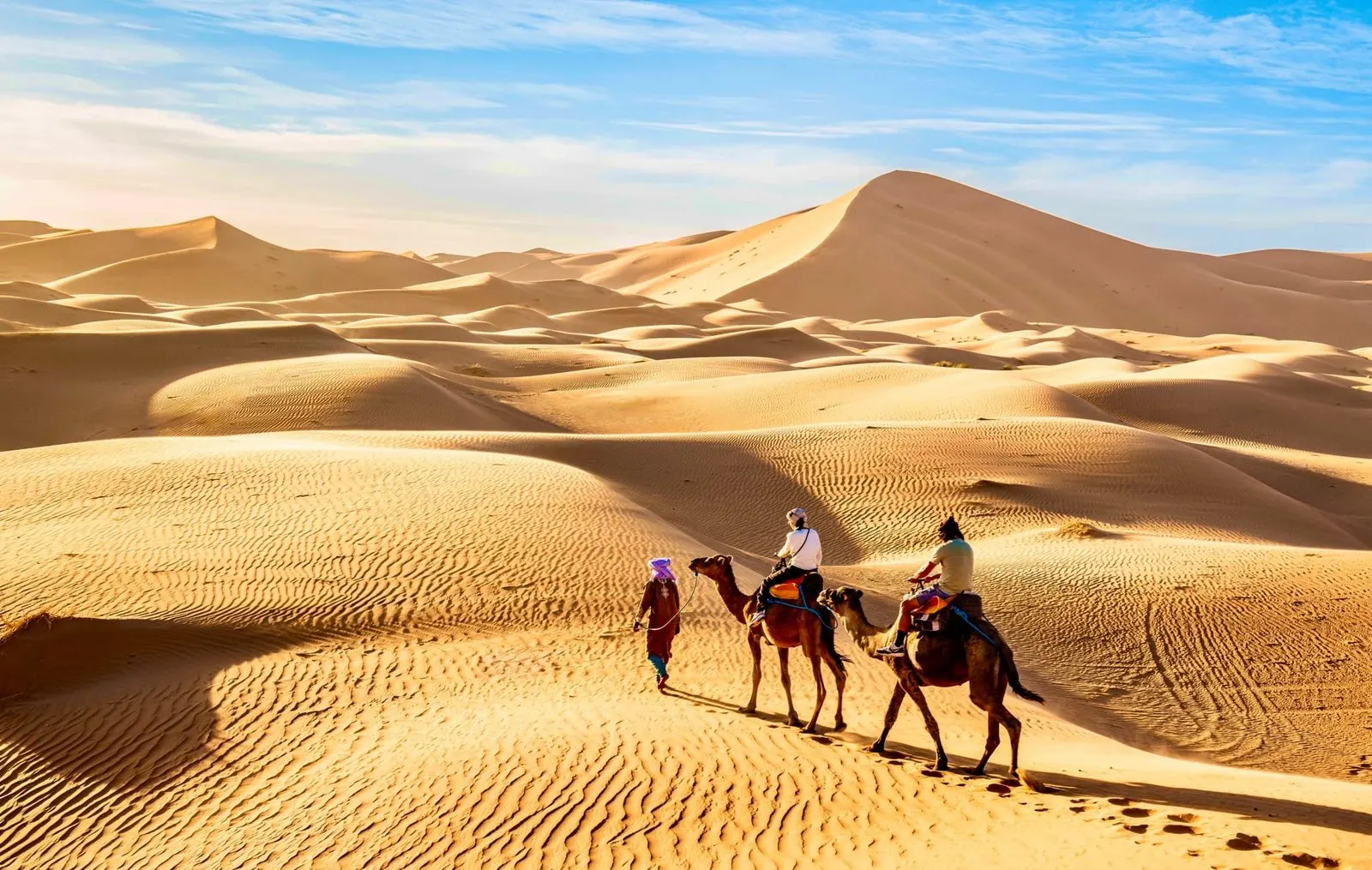
Day 8Merzouga to the Dades Valley by Rissani and Todra Gorges265 km
You leave the dunes and stop first in Rissani, an old caravan town with a covered souk where people from the surrounding oases buy dates, spices and household goods.
By midday you are at the Todra Gorges. The canyon narrows to a corridor with cliffs about 300 m high on both sides and a cold, clear stream along the bottom. It is shaded and cool, and a good place to stretch your legs.
The afternoon drive passes mud-brick villages and old kasbahs on the way into the Dades Valley, known for its twisted red rock and the hairpin road above it. You stay the night in the valley.
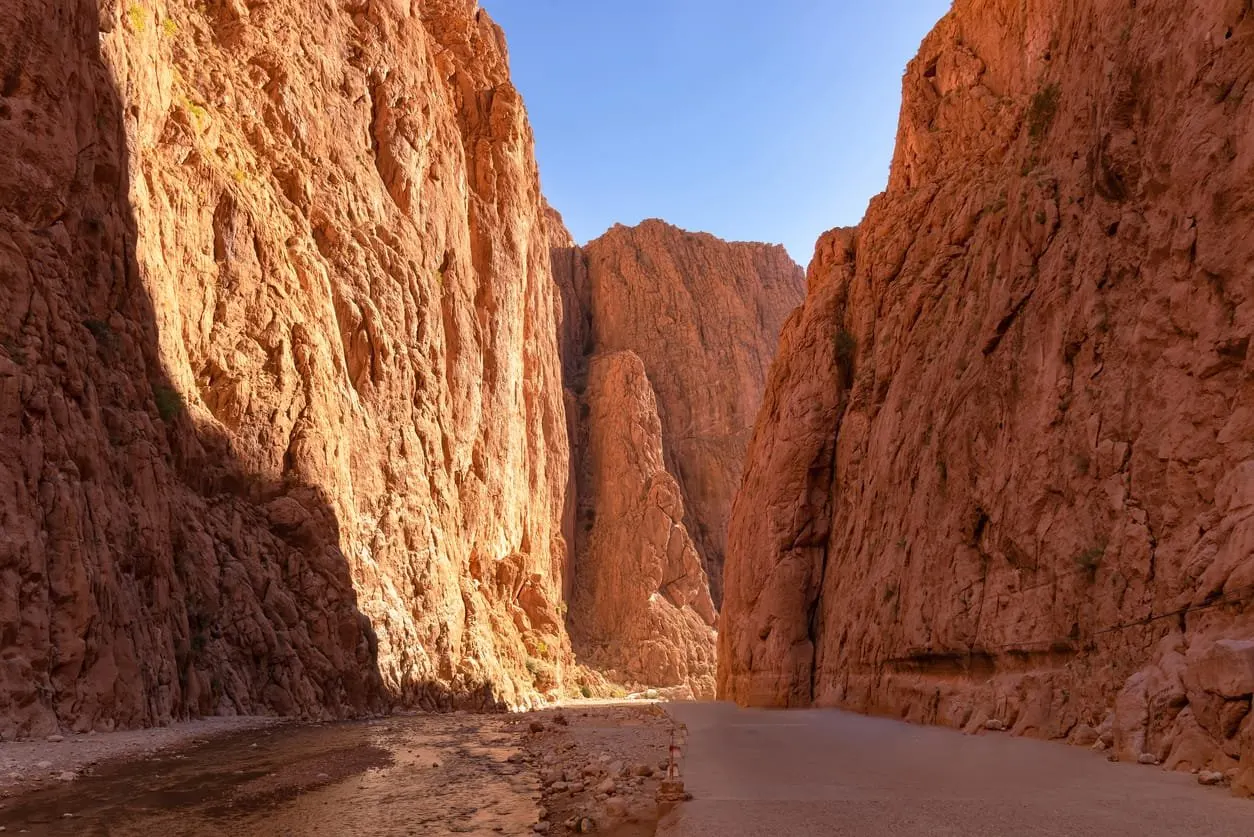
Day 9Dades Valley to Marrakech by Ouarzazate and Ait Ben Haddou324 km
The day begins in the Valley of the Roses around Kelaat M'Gouna, where cooperatives sell rose water and soap all year and the fields flower in spring. In Ouarzazate you can visit the Taourirt Kasbah, once a residence of the Glaoui family, and the Atlas film studios. Both charge an entrance fee.
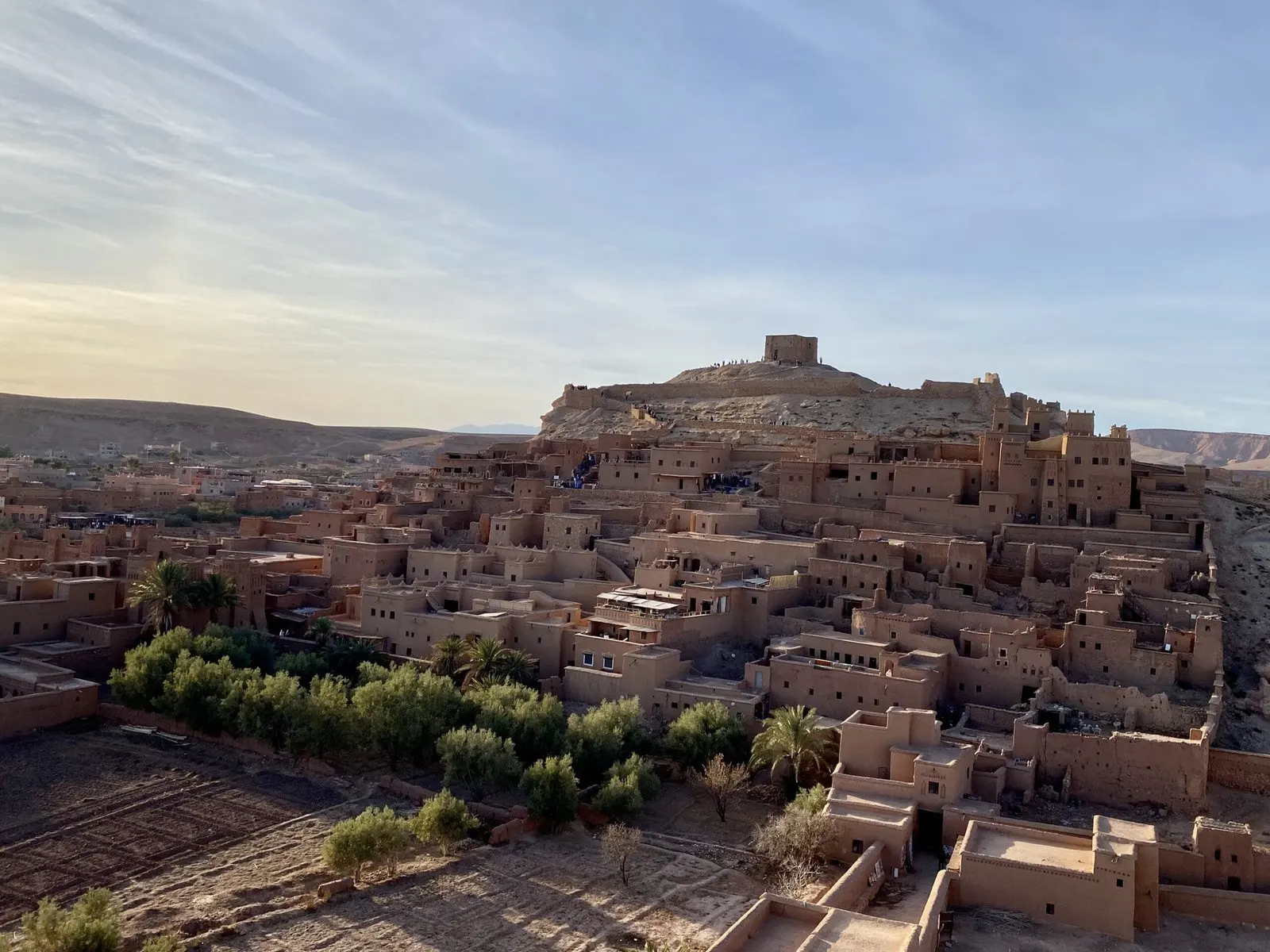
Half an hour on is Ait Ben Haddou, a ksar of earth towers stacked up a hillside, listed by UNESCO in 1987. Caravans crossing between the Sahara and Marrakech once stopped here. You walk its lanes and climb to the ruined granary at the top.
The road then crosses the High Atlas by the Tizi n'Tichka pass, at about 2,260 m the highest main road pass in the country. You reach Marrakech in the evening and unpack properly: this riad is home for three nights.
Day 10Guided day in Marrakech
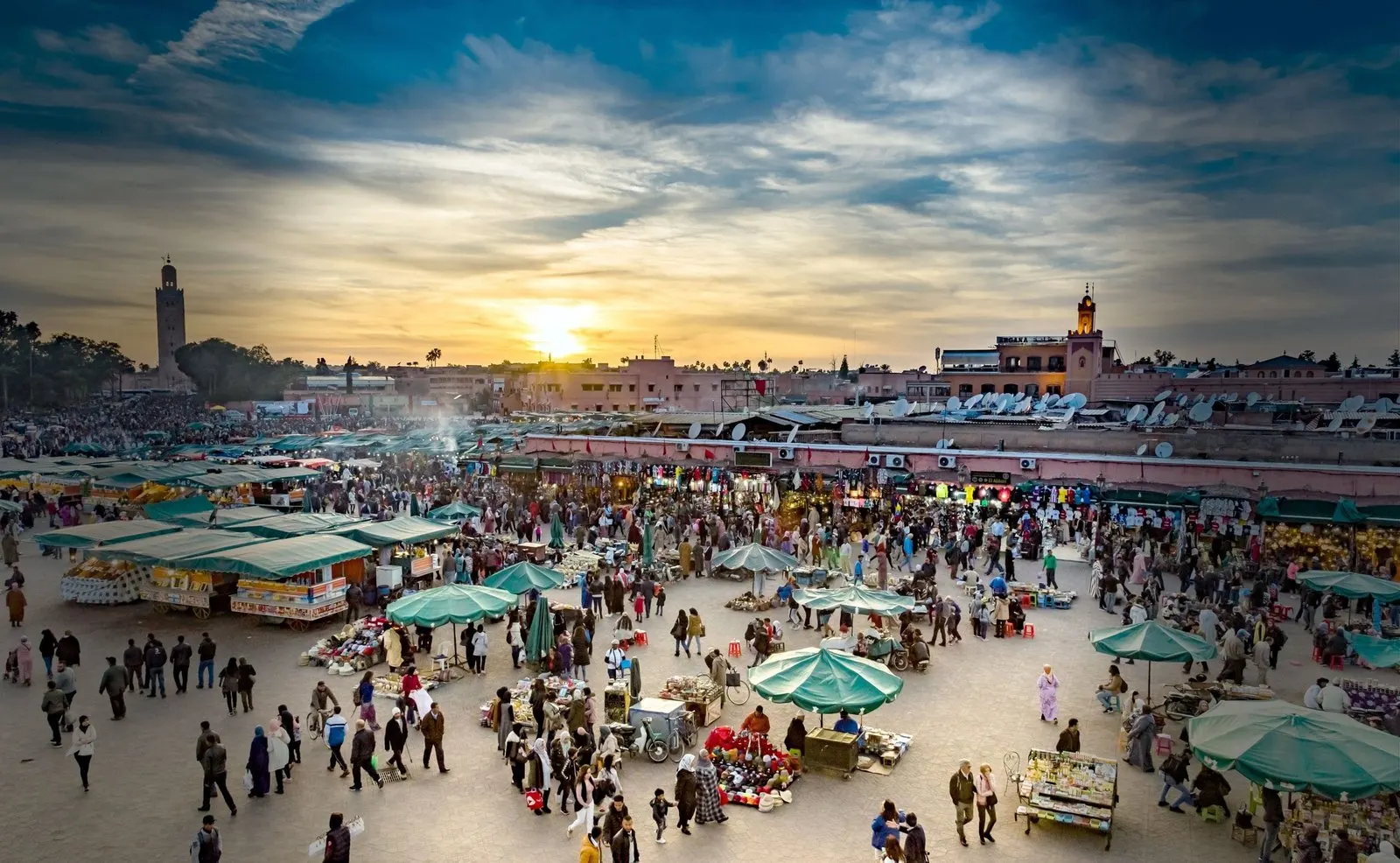
A local city guide shows you the old city on foot. The monuments come first: the Koutoubia Mosque from the outside, the painted ceilings and courtyards of the Bahia Palace, the Ben Youssef Madrasa and the Saadian Tombs. Entrance fees are paid at each door.
From there the guide leads you through the souks, which are grouped by trade: leather, brass, dyed wool, spices. The day ends at Jemaa el-Fna, the main square, as the food stalls set up and the musicians and performers gather.
Day 11Day trip to the Ourika Valley120 km
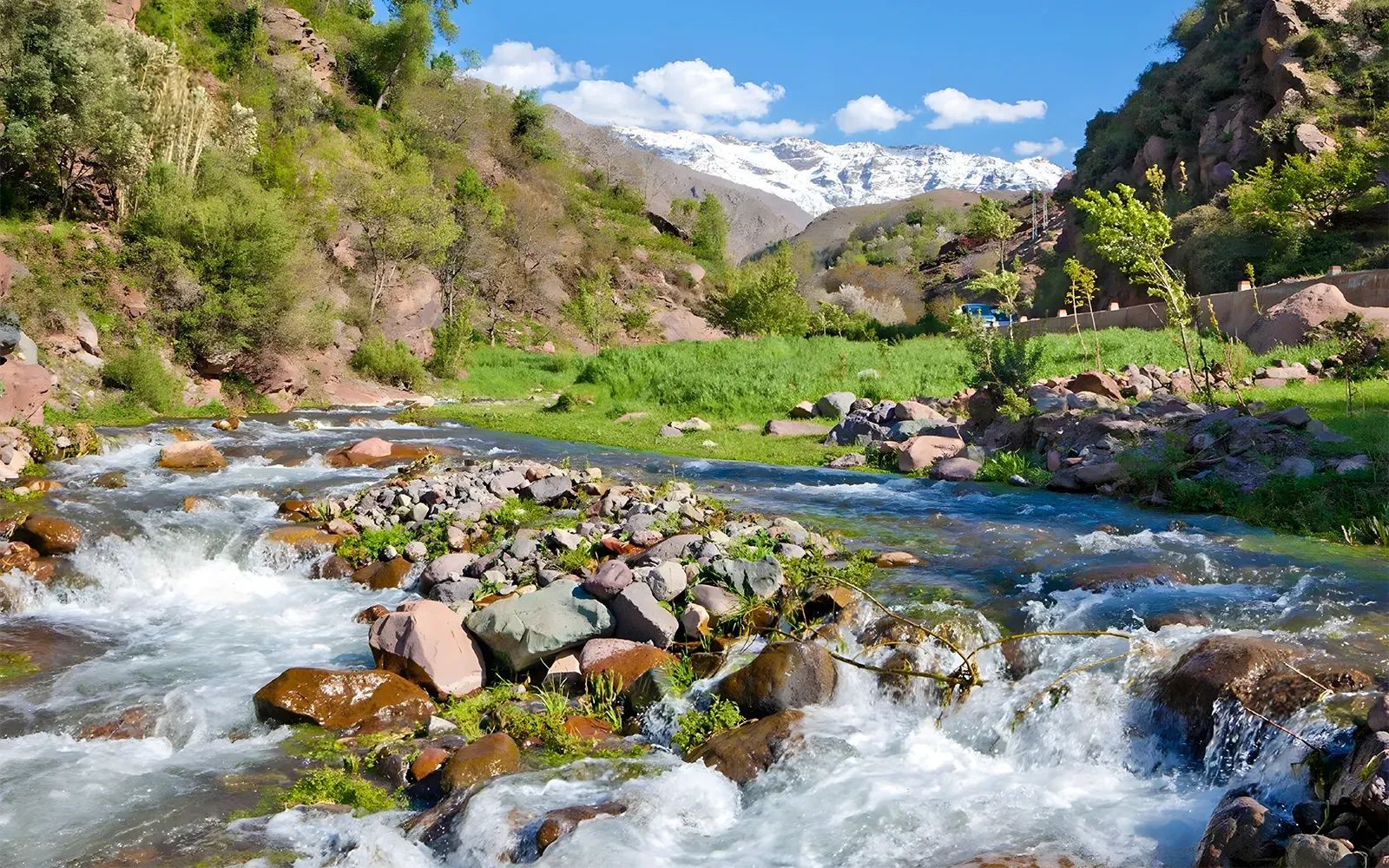
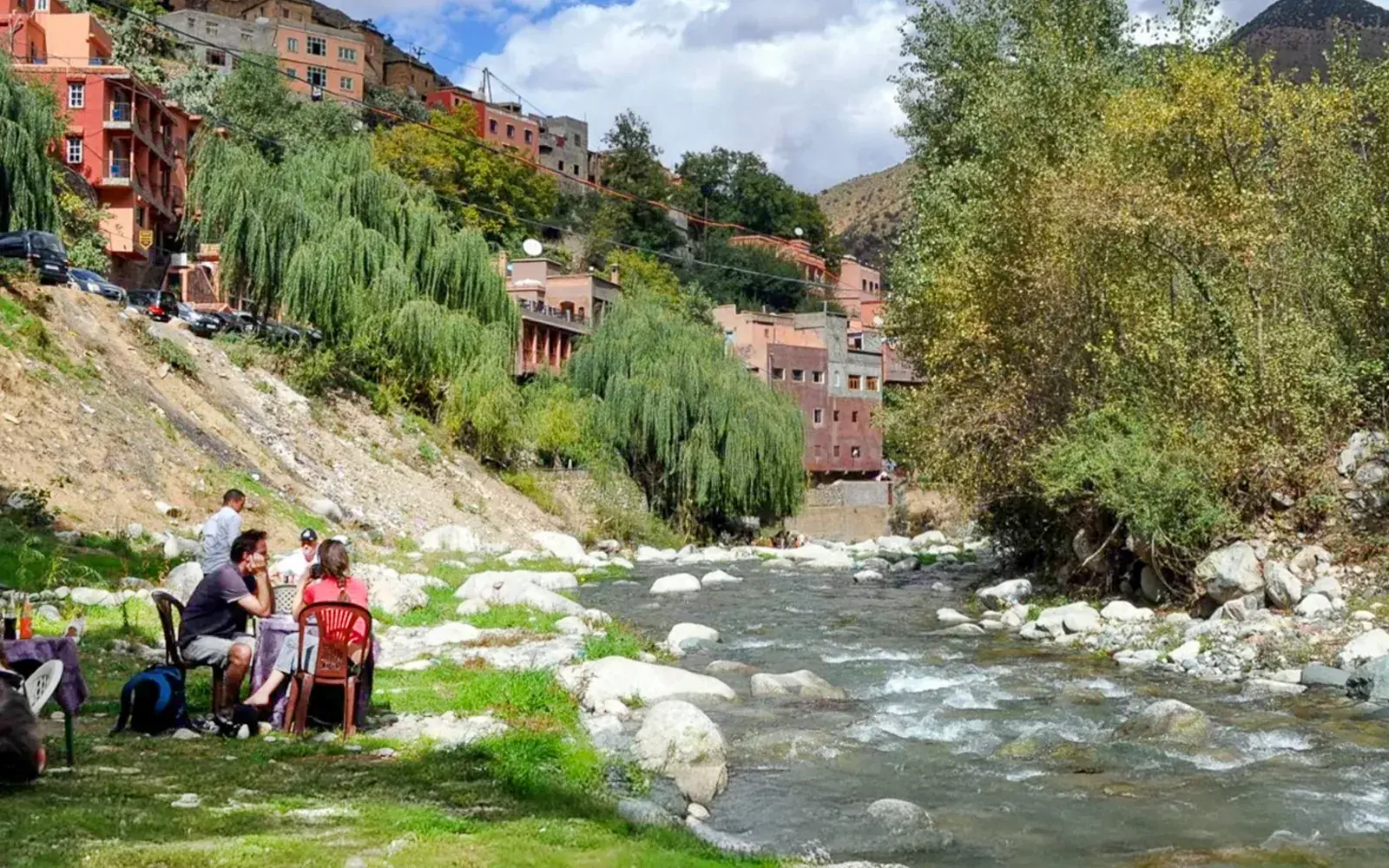
A change of air after the medina. The Ourika Valley cuts into the High Atlas south of Marrakech, and within an hour you are among terraced fields and Amazigh (Berber) villages beside a mountain river.
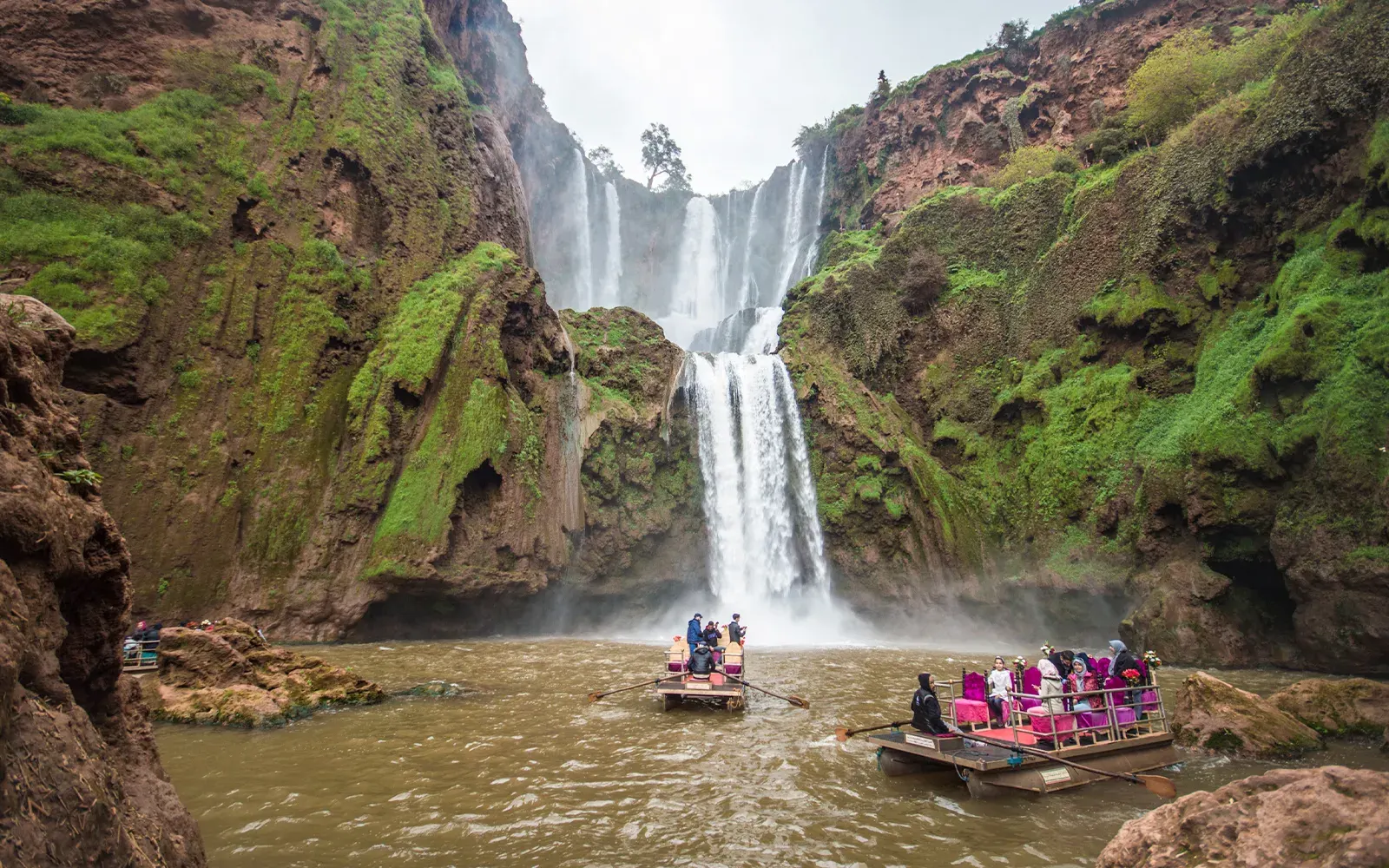
The road ends at Setti Fatma. From there you can walk up to the waterfalls, a rocky path that needs proper shoes and takes roughly half an hour to the first fall, or stay by the water at one of the riverside cafes. You are back in Marrakech by late afternoon with the evening free. On summer weekends the valley is busy with families from the city.
Day 12Marrakech to Essaouira178 km
You drive west across the plain towards the Atlantic. The argan tree grows almost nowhere outside south-west Morocco, and you stop at a cooperative on the way to see how the oil is pressed from its nuts.
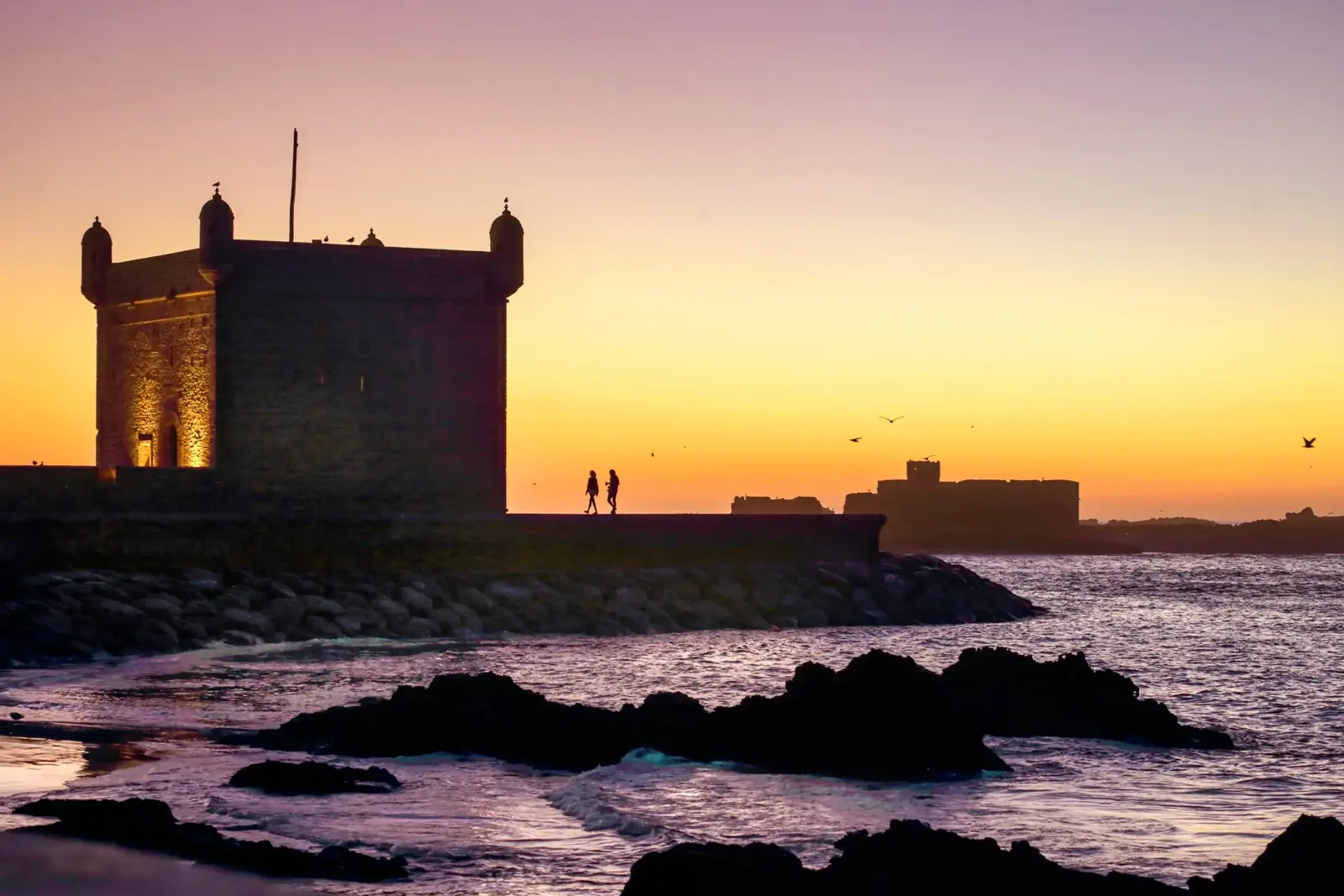
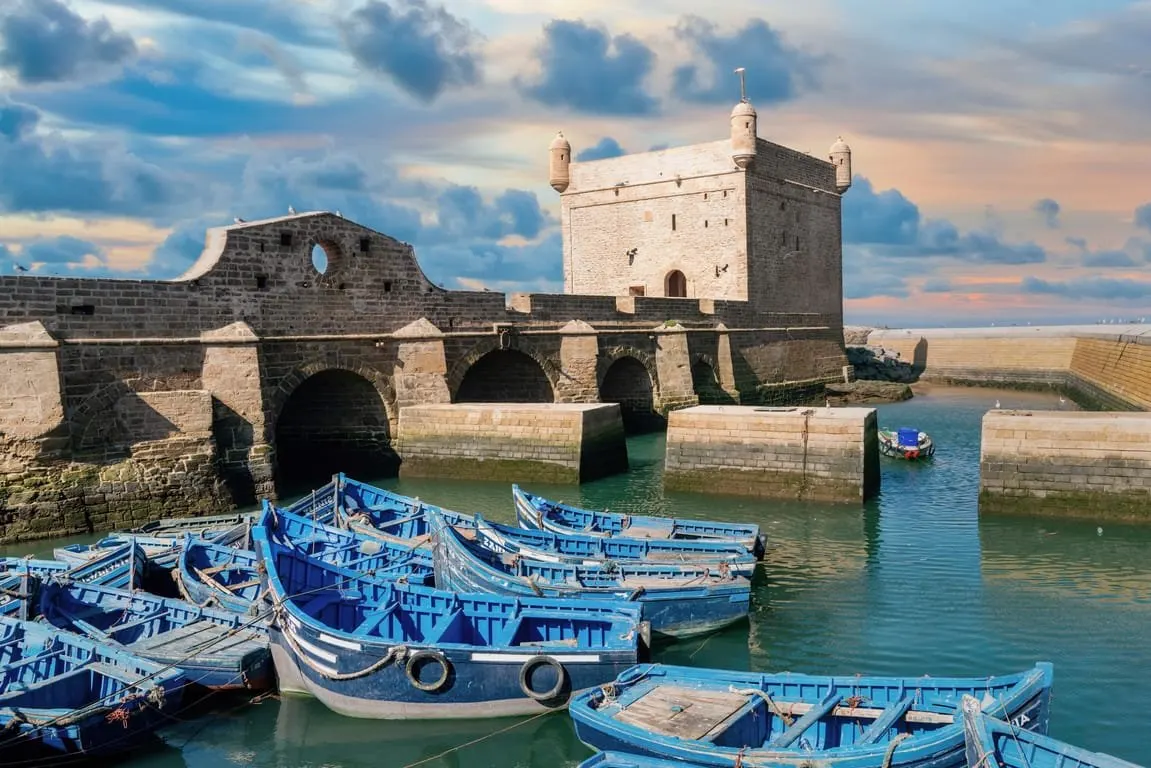
Essaouira is a walled port town, a World Heritage site since 2001, and much calmer than Marrakech. The afternoon is for the medina, the fishing harbour with its blue boats, and the Skala, the sea bastion lined with old cannon. The wind blows hard here for much of the year, which keeps it cool in summer and makes the beach better for walking than for sunbathing.
Day 13Essaouira to Casablanca by El Jadida375 km
The last road day follows the Atlantic coast north. It is a long drive, mostly on quiet coastal and regional roads until the motorway near El Jadida.
The stop is El Jadida, where the Portuguese built the fortified town of Mazagan in the 16th century. You walk the ramparts and, when it is open to visitors, go down into the Portuguese Cistern, an underground vaulted hall where a thin layer of water reflects the columns. You reach Casablanca for a final evening.
Day 14Departure from Casablanca
Your driver takes you to Mohammed V Airport for your flight. Because the tour closes its loop in Casablanca, a morning departure is possible. If you would rather fly from Marrakech, tell us when you enquire and the last days are rearranged to end there.
Price and what changes it
This 14-day private tour costs €3,700 to €6,700 per person. Every trip is tailored, so the final price depends on your group size, hotel and camp level, and what you add.
- Group size. The vehicle and driver are a shared cost for fourteen days, so the price per person drops noticeably with each extra traveller. A solo traveller pays the most.
- Accommodation level. Thirteen nights in standard, comfort or luxury riads, hotels and camp. Over two weeks this is the largest part of the difference between the bottom and top of the range.
- Desert nights. A standard or luxury camp, and whether the second Merzouga night is in the camp or a hotel by the dunes. See desert camps in Merzouga compared.
- What you add or remove. An extra night in Essaouira, activities in the desert, or a different end city. Our page on what a Morocco tour costs explains how the ranges are built.
Other lengths are priced on the Morocco tour cost page.
Included and not included
Included
- Private air-conditioned vehicle for the fourteen days
- English- or Spanish-speaking driver
- Airport pickup and departure transfer
- Thirteen nights of accommodation at the level you choose
- Local city guides for the guided days in Fes and Marrakech
- Camel ride in the Erg Chebbi dunes
- Breakfast every day, and dinners on the nights confirmed in your quote
Not included
- Lunches and drinks
- Entrance fees to monuments
- Optional activities such as quad bikes or buggies
- Tips
- Flights
Is this the right tour for you?
It suits you if
- You have two full weeks and want to see the north, the desert, the mountains and the coast in one trip.
- You want a return flight to and from Casablanca, which is often the simplest long-haul booking.
- You like some unplanned days. Six of the fourteen have no long drive.
- You are travelling with older relatives or children who need breaks between road days. Ask us about adjusting the pace further.
Think twice if
- You get restless. A free day in Chefchaouen and a valley day from Marrakech are slow by design. The 10-day Morocco tour from Casablanca keeps the cities and the desert and drops the quieter days.
- You were hoping for a beach holiday at the end. Essaouira gets one night, and it is a windy Atlantic town, not a resort. Ask us to add a second night if the coast matters to you.
- You expect short drives throughout. Day six is about 465 km and day thirteen about 375 km. Two weeks spreads the driving out, but it does not remove it.
- Your budget is fixed. Thirteen hotel nights cost more than seven. The 8-day Morocco tour from Casablanca covers the core route in the least time.
Places on the route
What travellers say
★★★★★
“Everything was well organized from the beginning to the end.”
Questions about the 14-day Morocco tour from Casablanca
Is 2 weeks in Morocco too long?
No, if you want variety. Two weeks is the point where you can add the Atlantic coast and a mountain valley to the cities and the Sahara, and still have rest days. If you only want the main cities and the dunes, ten days does it.
What do the extra days add compared with the 10 day tour?
Four things: a free day in Chefchaouen, a day trip to the Ourika Valley in the High Atlas, a night in Essaouira on the Atlantic, and a coastal drive by El Jadida that returns you to Casablanca. Marrakech goes from two nights to three.
How much driving is there in 14 days?
About 2,400 km in total over eight road days. The longest is Fes to Merzouga at about 465 km, and the shortest is the Ourika Valley day trip at about 120 km. Six days have no long drive.
What should I pack for a two-week trip that includes the desert?
Layers. You will go from the Rif to the Sahara to a windy coast, so bring light clothes for the day, a warm layer for desert nights and Essaouira evenings, a sun hat, sunscreen, walking shoes and a small day bag. See what to wear in Morocco.
Can the tour start in Marrakech instead of Casablanca?
Yes. The same loop can begin and end in Marrakech, with the order of stops shifted to suit. Because the tour is private, the start city, end city and number of nights in each place can all be changed.
Is this tour suitable for children or older travellers?
In most cases yes, because the pace is the gentlest of our Casablanca routes and the vehicle is yours alone. The Fes medina and the Ourika waterfall path are uneven underfoot, and the camel ride can be swapped for a 4x4 transfer at most camps. Tell us about your group when you enquire.