When is the best time to visit Morocco?
Spring and autumn are the best seasons for a trip that combines cities, mountains and desert. From March to May and from mid-September to November, days are warm without being punishing, the mountain passes are clear, and the desert is comfortable at both sunset and sunrise. These are also the busiest months, so the better riads and desert camps fill first.
| Region | Best months | Harder months | Why |
|---|---|---|---|
| Marrakech and Fes | March to May, October and November | July and August | Summer afternoons regularly reach the high 30s°C |
| Sahara (Merzouga, Erg Chebbi) | October to April | June to August | Summer days often pass 40°C. Winter nights are cold but the days are clear |
| Atlantic coast (Essaouira, Rabat) | May to October | None, though winter brings some rain | Sea breezes keep summer mild. Essaouira is windy, most of all in summer |
| High Atlas (Imlil, Ourika) | April to June, September and October | December to February for walkers | Snow lies on the high ground in winter. Summer days are warm and the nights cool |
| Rif (Chefchaouen) | April to June, September and October | December to February | Winters are cool and wet in the northern mountains |
What is the weather like in each month?
The table gives typical daytime highs, rounded and stated as ranges because years differ. Treat them as a guide for packing and planning, not a forecast. Nights are much cooler than days everywhere away from the coast.
| Month | Marrakech | Sahara (Merzouga) | Coast (Essaouira) | High Atlas | Verdict |
|---|---|---|---|---|---|
| January | 17 to 20°C | 16 to 19°C, nights near 0°C | 17 to 19°C | Cold, snow above about 2,000 m | Quiet. Good for cities and clear desert days |
| February | 19 to 22°C | 19 to 22°C, cold nights | 17 to 19°C | Cold, snow on the peaks | Almond blossom in the south. Still cold after dark |
| March | 21 to 25°C | 22 to 26°C | 18 to 20°C | Cool, snow retreating | Good everywhere. Some rain in the north |
| April | 23 to 28°C | 26 to 31°C | 18 to 21°C | Mild days, cold nights | One of the two best months |
| May | 26 to 31°C | 30 to 35°C | 19 to 22°C | Warm days | Very good. The desert is getting hot by late May |
| June | 30 to 35°C | 35 to 40°C | 21 to 23°C | Warm, good for walking | Coast and mountains. Desert only with an early start |
| July | 35 to 39°C | 38 to 43°C | 22 to 24°C | Warm days, mild nights | Hottest month inland. Choose the coast or the north |
| August | 35 to 39°C | 38 to 43°C | 22 to 24°C | Warm days, mild nights | As July. Busy on the coast with Moroccan holidaymakers |
| September | 30 to 34°C | 32 to 37°C | 22 to 24°C | Warm, settled | Good from mid-month |
| October | 25 to 30°C | 26 to 31°C | 21 to 23°C | Mild days, cool nights | One of the two best months |
| November | 20 to 24°C | 20 to 24°C, cool nights | 19 to 21°C | Cool, first snow possible | Very good. Short days, some rain |
| December | 17 to 20°C | 16 to 19°C, nights near 0°C | 18 to 20°C | Cold, snow likely on the passes | Good for cities and desert if you pack for cold nights |
Figures are approximate long-term averages in Celsius. Heatwaves in July and August can push Marrakech well above 40°C.
How hot is Morocco in summer?
Inland Morocco is very hot from June to August, and we would not pretend otherwise. Marrakech and Fes sit in the mid to high 30s°C most afternoons. Merzouga and the Draa Valley often pass 40°C, and the sand holds the heat into the evening.
- A desert tour in July or August is possible but not pleasant for everyone. Camel treks move to the last hour before sunset, the middle of the day is spent indoors, and tents stay warm at night. Travellers with small children, older travellers and anyone who struggles with heat should pick another season.
- The vehicle is air-conditioned, the stops are not. Ait Ben Haddou and Todra Gorge are visited on foot in full sun.
- The coast is the summer answer. Essaouira and Rabat are typically in the low to mid 20s°C when Marrakech is 38°C.
- The north copes better than the south. Chefchaouen and the Rif are warm, not extreme.
If summer is the only time you can travel, tell us. Best Morocco Travel can shorten the desert section, schedule early starts and add the coast. The day trips from Marrakech to Essaouira, Imlil and the Ourika Valley are all cooler than the city.
How cold is the desert in winter?
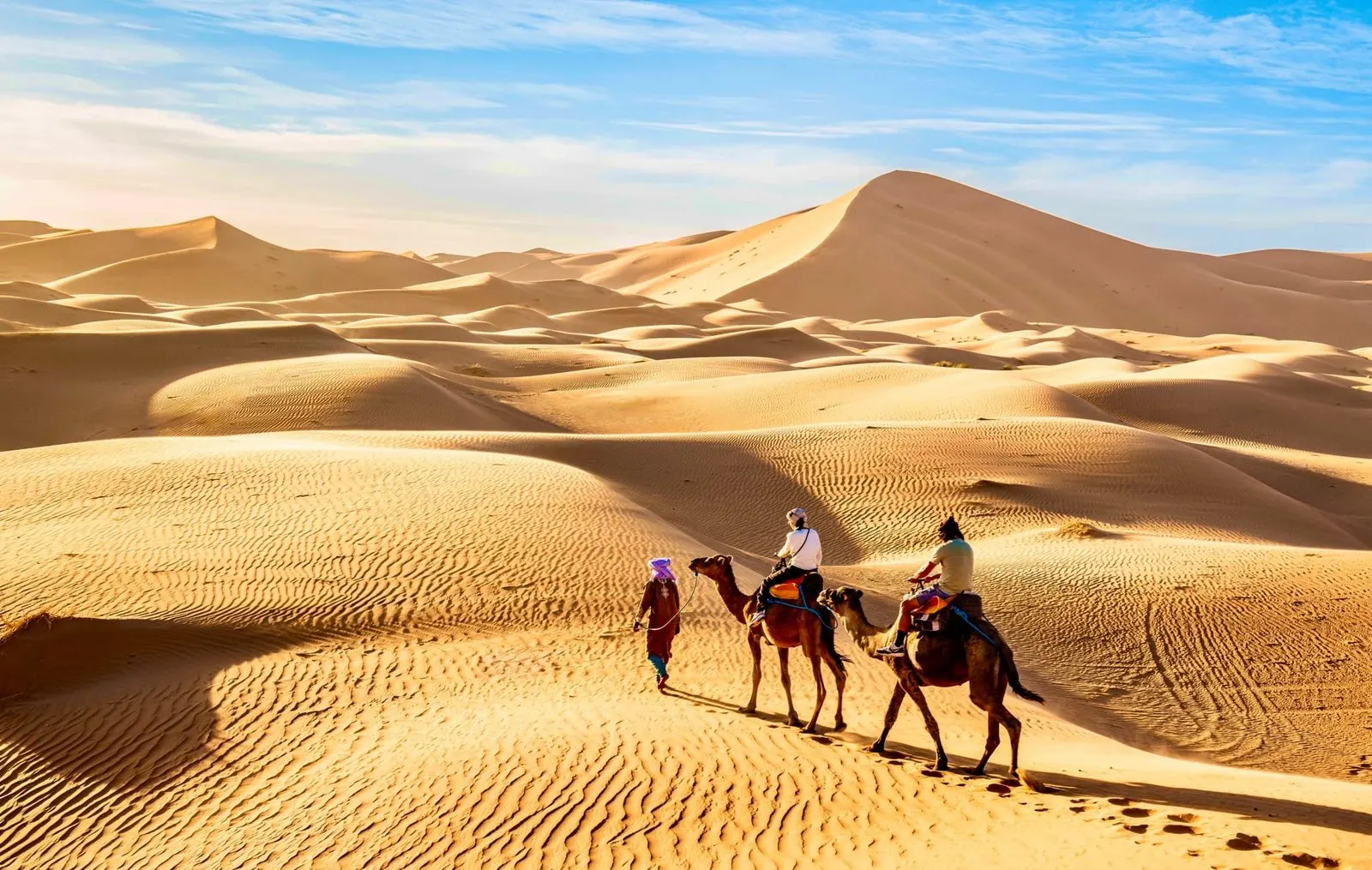
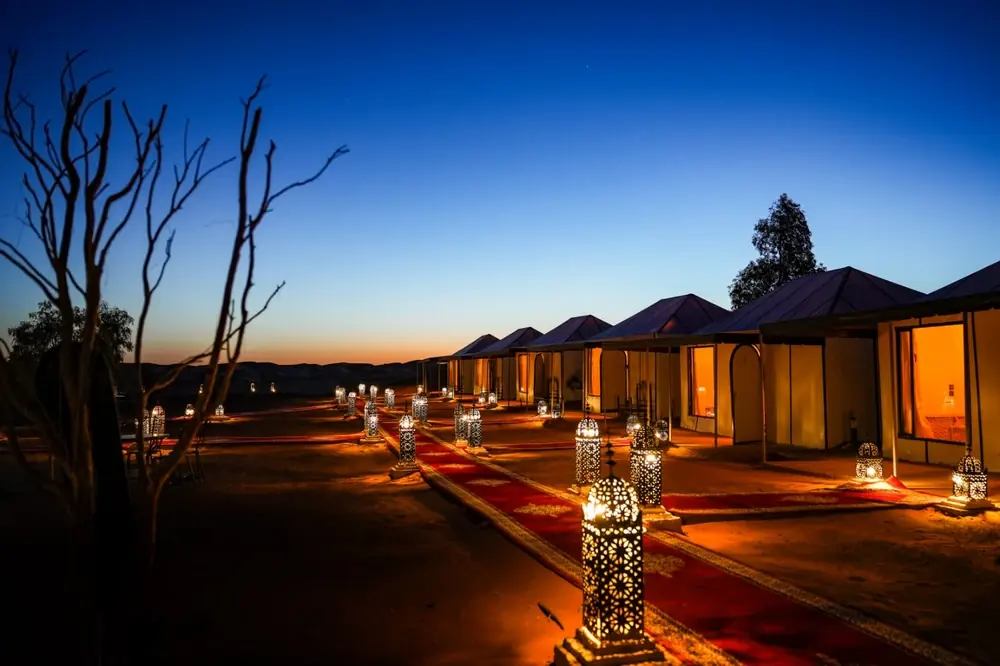
Winter days in the Sahara are sunny and mild, and winter nights are cold. From December to February, expect about 16 to 20°C at midday around Merzouga and temperatures close to freezing before dawn. A frost is possible.
Desert camps provide heavy blankets, but tents are not heated the way a hotel room is. Bring a warm jacket, a hat and thermal layers for the evening and for sunrise. Our what to wear in Morocco guide has a full list. The comfort gap between camp levels is widest in winter, which is worth knowing when you compare a standard and a luxury desert camp.
Is December a good time to visit Morocco?
December is a good month for cities and the desert, and a poor one for beaches and high mountain walking. Marrakech is usually sunny with highs around 17 to 20°C and cool evenings. Riads are built to stay cool, so rooms can feel chilly: ask whether yours has heating.
- Daylight is short. The sun sets at about 6.30 pm in Marrakech, so long road days can finish in the dark. Start early.
- The Tizi n'Tichka pass can see snow. The road is normally cleared, but a heavy fall can close it for some hours or longer. A private tour can adjust the day around it.
- Christmas and New Year are busy. The last week of December is one of the fullest of the year in Marrakech and at Merzouga. Camps and riads book out early.
- The rest of the month is quiet. Early December has few visitors and wide availability.
What is it like to visit Morocco during Ramadan?
Morocco stays open to visitors during Ramadan, with a different daily rhythm. Most Moroccans fast from dawn to sunset, so mornings are slow, the hour before sunset is hectic, and the evenings are lively. Hotels, riads, transport and tours run as normal.
- Food by day. Many local cafés close until sunset. Restaurants in hotels, riads and tourist areas generally serve as usual. Visitors are not expected to fast, but it is polite not to eat, drink or smoke in the street during the day.
- Opening hours. Monuments and museums stay open, often with shorter afternoon hours. Shops in the souks open later and close before sunset.
- Alcohol. Sales are restricted during the month. Many shops stop selling it, while some hotels continue to serve guests.
- Sunset. Roads empty and services pause for about an hour while people break the fast. Plan to be at your accommodation or at a restaurant by then.
- Evenings. Squares and streets fill after the meal and stay busy late.
In 2027 Ramadan falls in late winter, when days are short and cool, which makes fasting hours shorter and travel easier than in a summer Ramadan. A private tour helps because meal stops and start times can be moved around the day.
Do tour prices change with the season?
Our prices are the same all year. A private tour costs €500 to €1,000 per person for 3 to 5 days and €1,300 to €7,800 per person for 6 to 17 days, in every month. What changes with the season is availability. In April, May, October and over New Year the best-value rooms at each level go first, so early booking gives more choice. The full table is on the Morocco tour cost page.
| Season | Routes that work well |
|---|---|
| Spring (March to May) | Any route. The 10-day tour from Casablanca is at its best |
| Summer (June to August) | Northern cities, Chefchaouen, the coast and High Atlas day trips. Keep the desert short |
| Autumn (September to November) | Any route, especially desert tours from October |
| Winter (December to February) | Marrakech, the desert with warm layers, the 3-day Merzouga tour. Chefchaouen is cool and often wet |
Questions people ask
What is the best month to visit Morocco?
April and October are the two most reliable months for a trip that includes cities, mountains and the Sahara. Days are typically in the mid to high 20s°C in Marrakech and around 30°C in the desert.
What is the cheapest time to go to Morocco?
Flights and hotels are generally cheapest in the quieter weeks of November, early December, January and February, outside the Christmas and New Year period. Our own tour prices do not change by season.
Does it rain in Morocco?
Rain falls mainly between November and March, and mostly in the north and on the Atlantic side of the mountains. Marrakech has only a few wet days a month in winter, and the Sahara is dry almost all year.
Does it snow in Morocco?
Yes. The High Atlas and Middle Atlas get snow most winters, typically from December to March, and the town of Ifrane is known for it. Snow can occasionally delay the mountain passes between Marrakech and the desert.
Can I visit the Sahara in summer?
You can, but daytime temperatures at Merzouga often exceed 40°C from June to August. Activities move to early morning and the hour before sunset. October to April is far more comfortable.
Is it a problem to travel during Ramadan?
No. Tours, hotels and sights operate, and restaurants for visitors stay open. Expect shorter hours by day, a pause at sunset and restricted alcohol sales, and avoid eating or drinking in the street in daylight.
When is Morocco most crowded?
April, May, October and the week between Christmas and New Year are the busiest periods in Marrakech, Fes, Chefchaouen and at the desert camps. Book accommodation early for those dates.