What you see and do
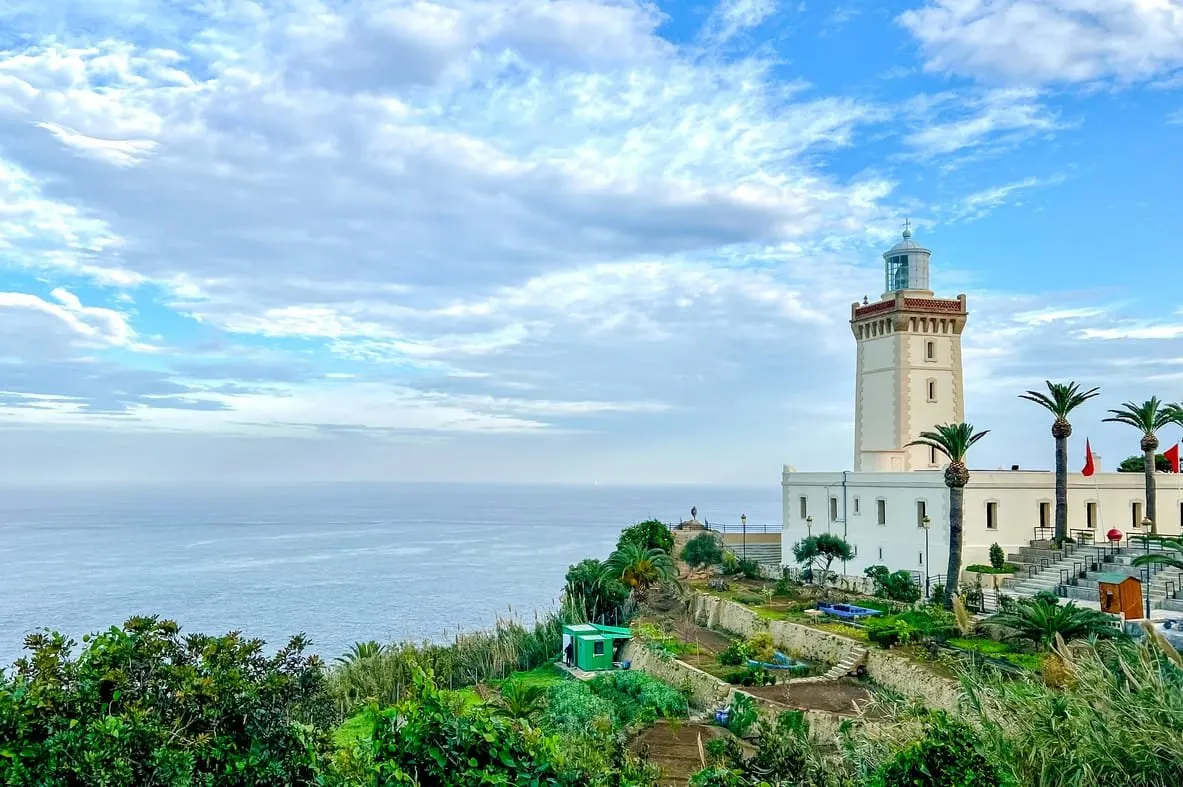
- Reach Tangier and stand at Cap Spartel, where the Atlantic meets the Strait of Gibraltar. No shorter Casablanca route on this site goes this far north.
- Visit the Caves of Hercules on the coast west of Tangier before driving into the Rif.
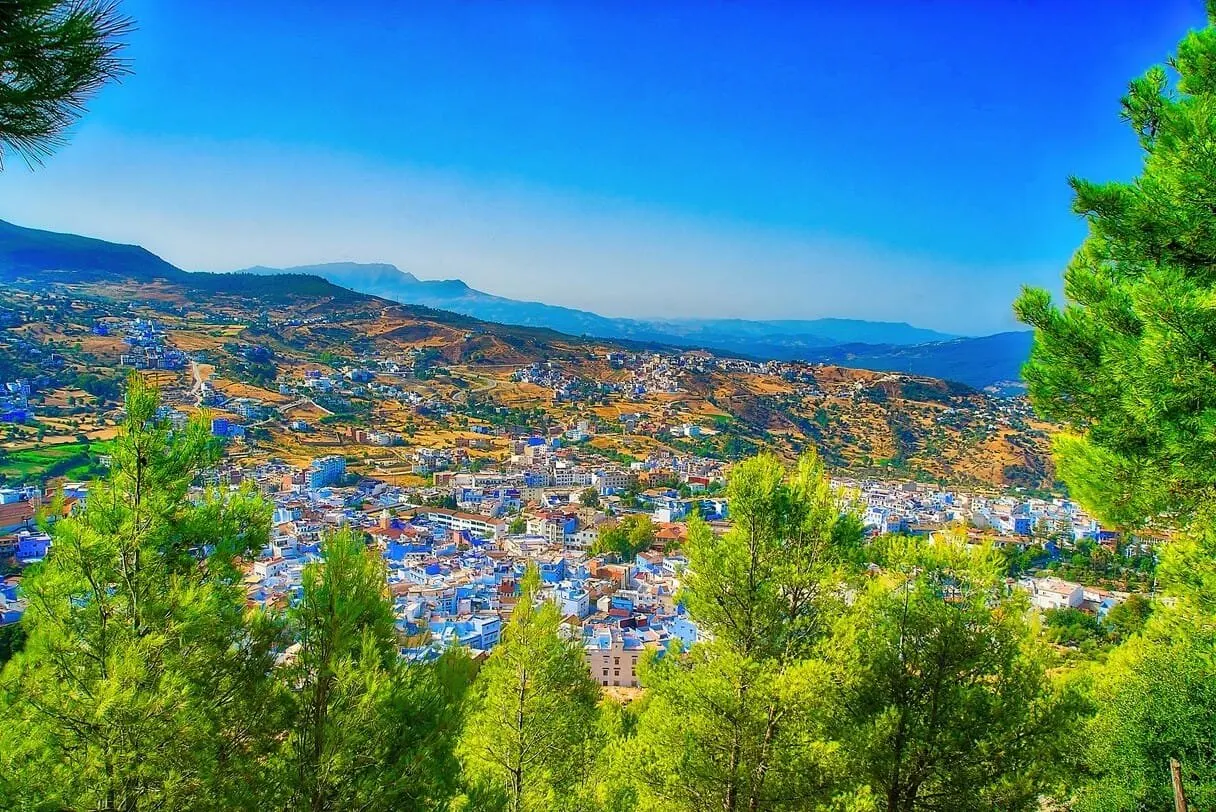
- Arrive in Chefchaouen after a morning drive of only about 115 km, with the afternoon and the whole next day free.
- Follow a local city guide through Fes el Bali, and another through the palaces and souks of Marrakech.
- Spend two nights at Merzouga, with Gnawa music in Khamlia and a sunset camel ride to a desert camp.
- Drive the kasbah road by Todra Gorges, the Dades Valley and Ait Ben Haddou.
- Finish with the Ourika Valley and two nights in Essaouira before the coast road back.
Day-by-day itinerary
16 days, about 2,478 km by road. Tap a day to open it.
Day 1Arrival in Casablanca
Your driver collects you at Mohammed V Airport. Casablanca is the business capital and a working port, and one afternoon is enough for a first visit.
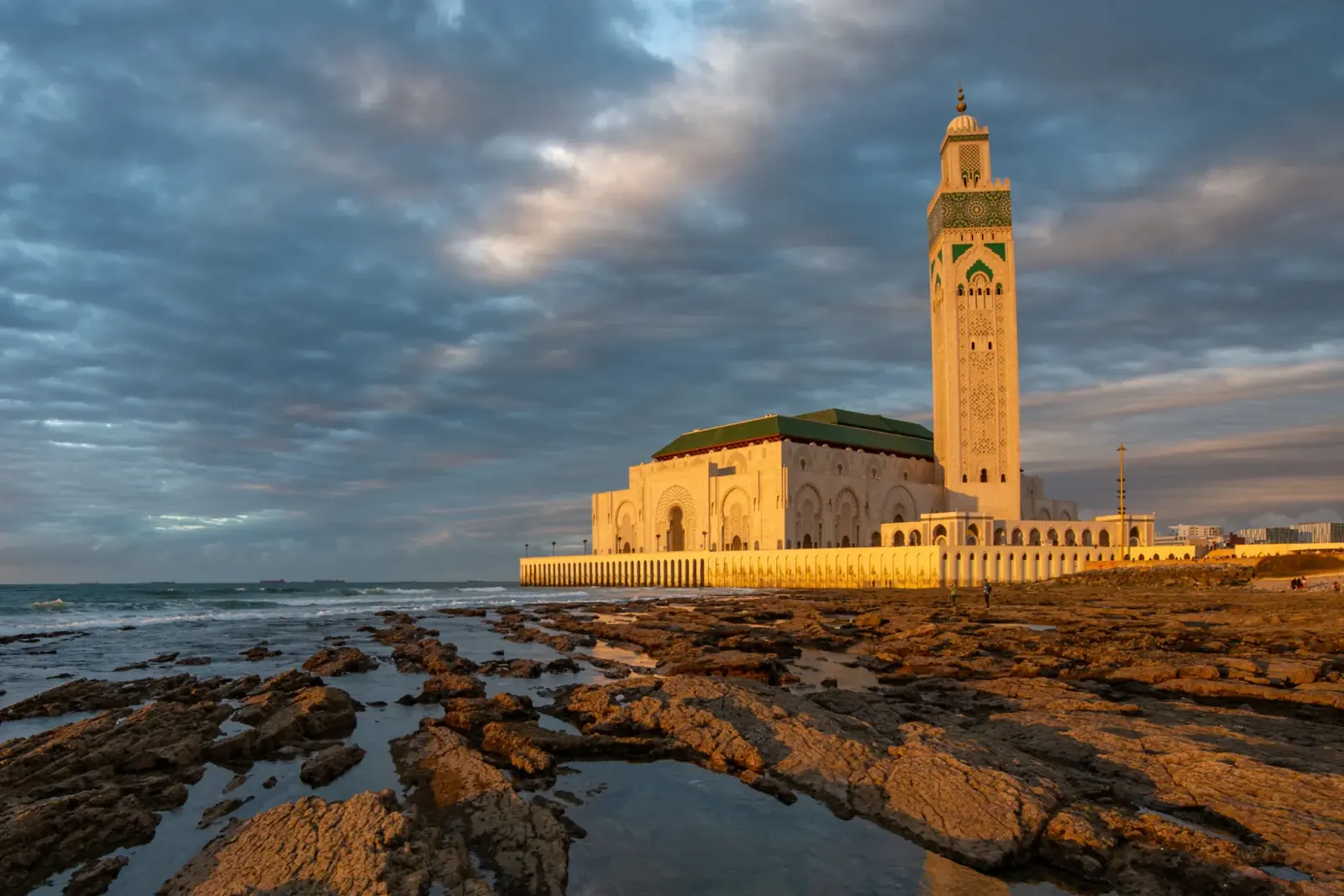
With an early arrival you go to the Hassan II Mosque on the shore, then stroll the Ain Diab Corniche past its cafes. With a late arrival, you rest. The mosque is on the way out of town tomorrow.
Day 2Casablanca to Tangier by Rabat345 km
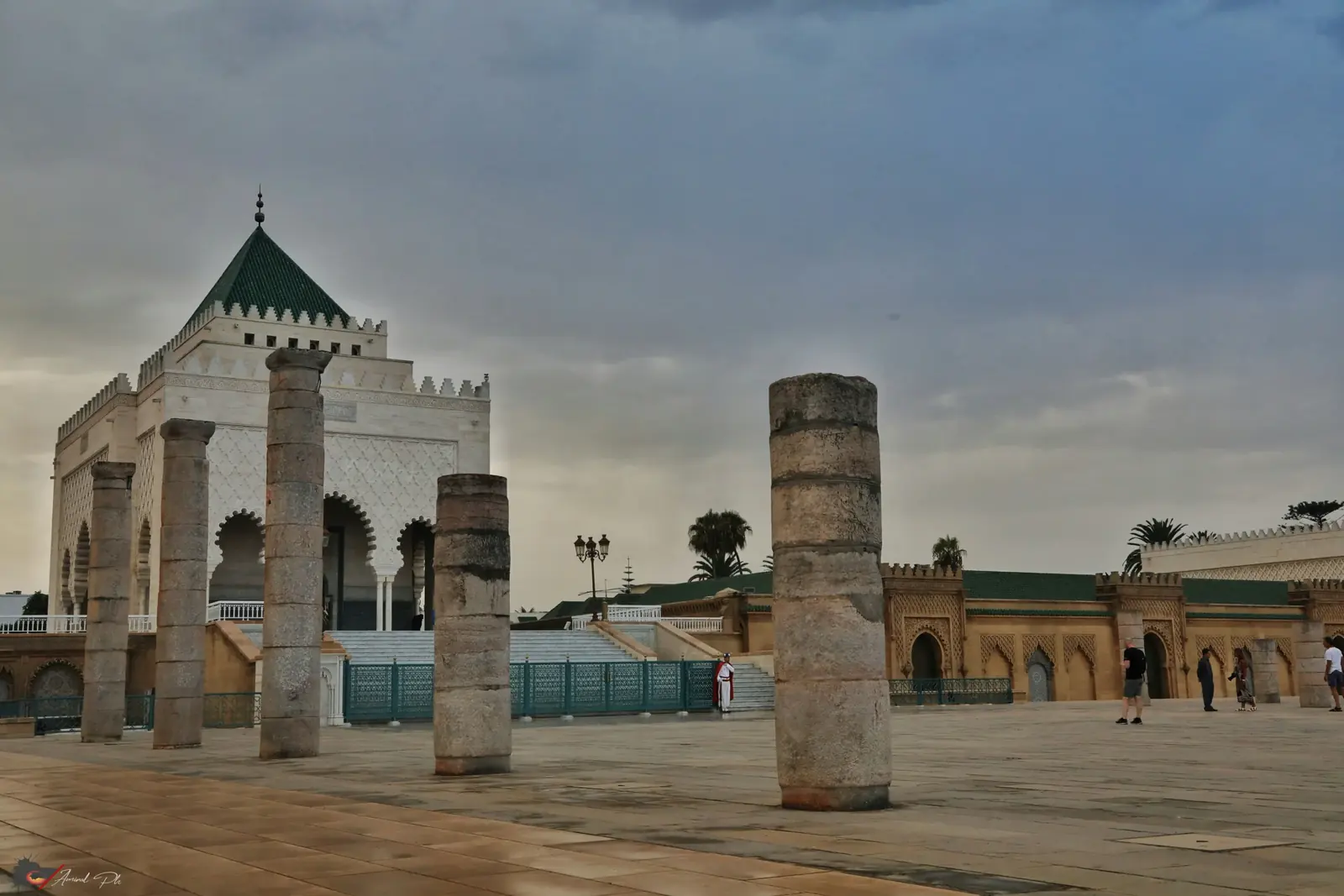
You pass the Hassan II Mosque once more and take the coast motorway to Rabat. The stops are the Hassan Tower with the Mausoleum of Mohammed V beside it, and the Kasbah of the Udayas, a walled quarter of white lanes with a garden and a terrace over the Atlantic.
On the shorter tours the road turns inland for the Rif after Rabat. Here you carry on up the coast to Tangier, at the north-west tip of Africa. Spain is only about 14 km across the water at the narrowest point of the Strait, and on a clear evening you can see it from the seafront promenade. That walk is the plan for the evening.
Day 3Tangier to Chefchaouen by Cap Spartel115 km
The morning is spent on the headland west of the city. Cap Spartel, with its lighthouse, marks the corner where the Atlantic meets the Strait of Gibraltar. A few minutes down the coast are the Caves of Hercules, sea caves with an opening onto the ocean that are tied by legend to the Greek hero. Both are popular with Moroccan visitors and can be busy at weekends.
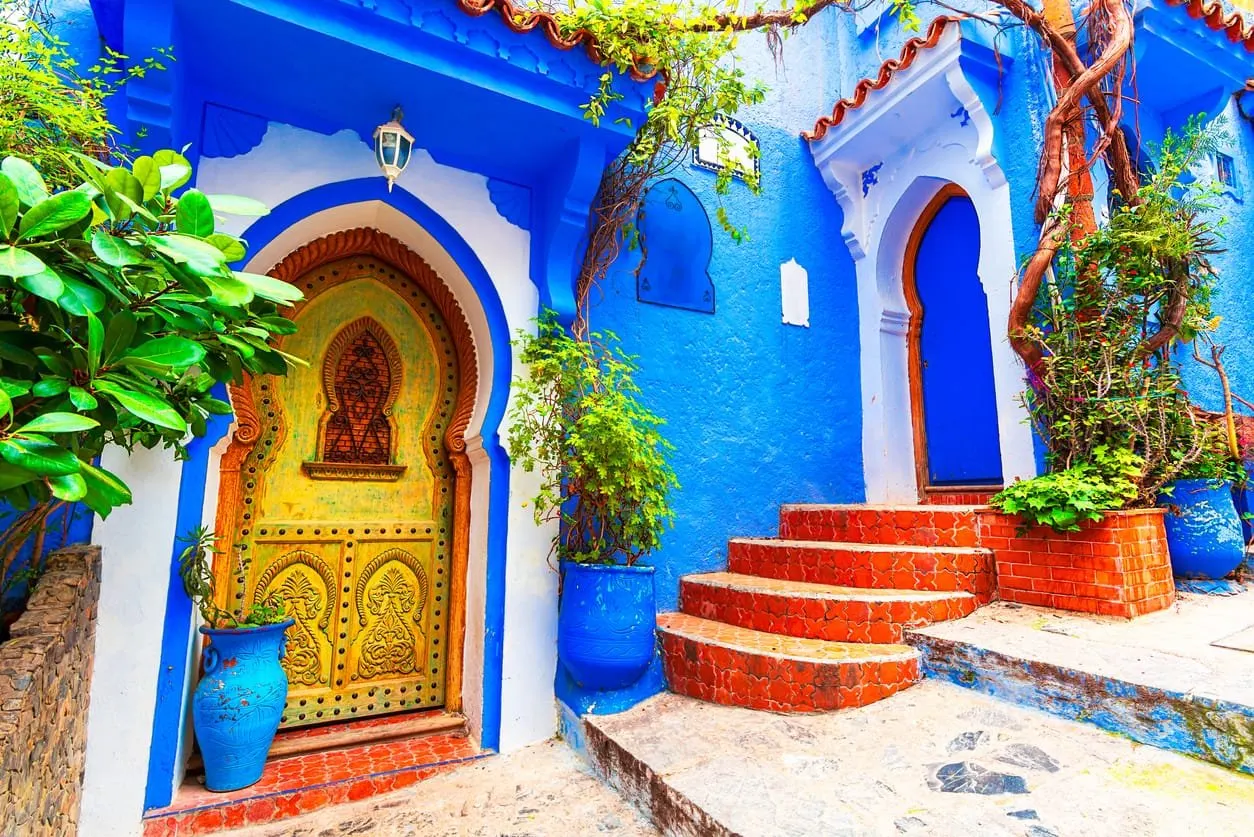
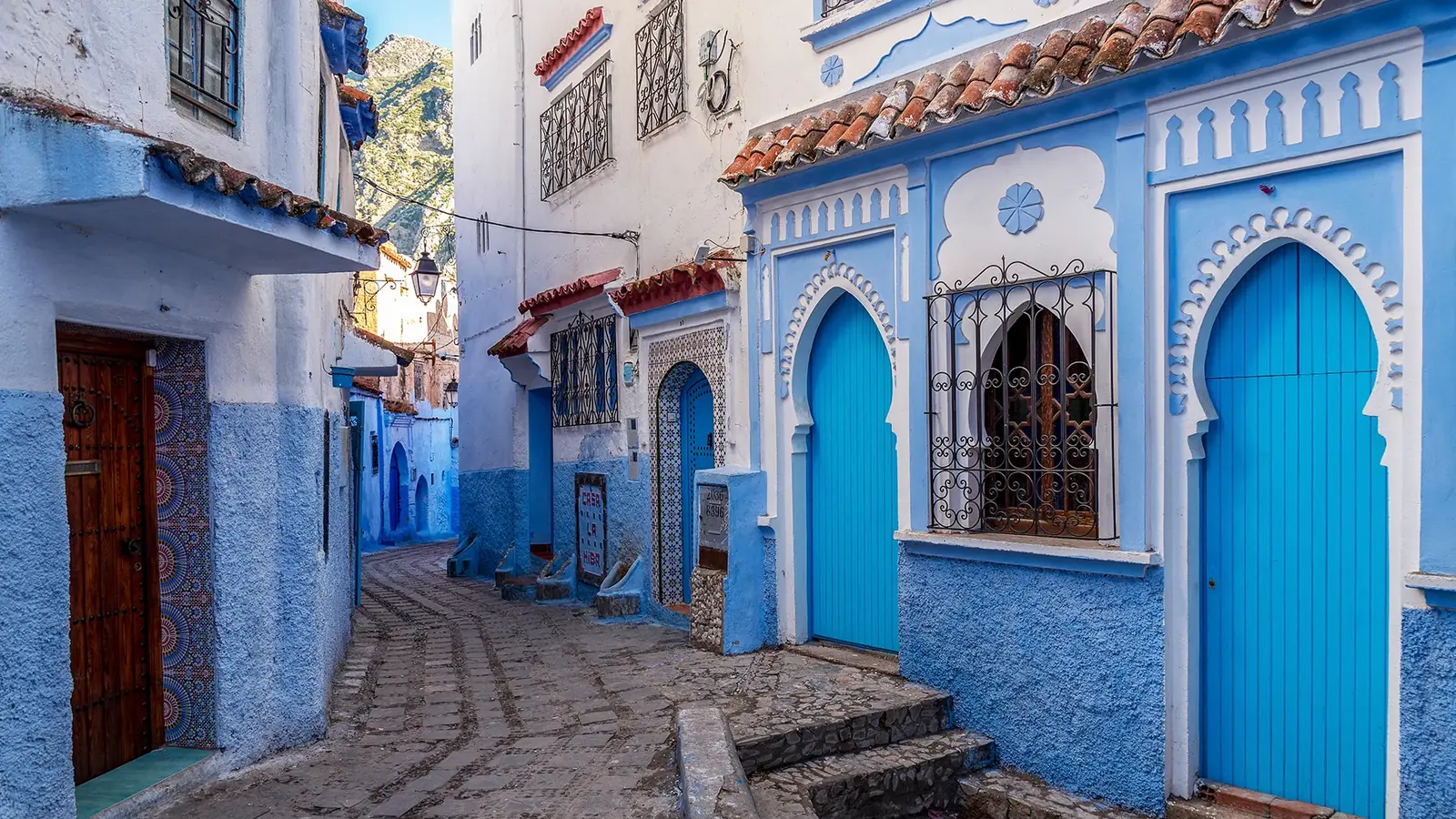
Then one of the shortest transfers of the trip, inland and up into the Rif. You are in Chefchaouen early enough to have the afternoon in the medina. This is a real gain over the direct route from Casablanca, which arrives near dusk.
Day 4Free day in Chefchaouen
A day with nothing fixed. Having already had yesterday afternoon here, you can treat today as properly idle.
If you want a focus, the small Kasbah Museum on the main square explains how the town was founded in the 15th century, and its tower gives a view over the roofs. Late in the day, walk up to the Spanish Mosque on the facing hill for the light on the town. Allow about half an hour each way.
Day 5Chefchaouen to Fes by Volubilis and Meknes245 km
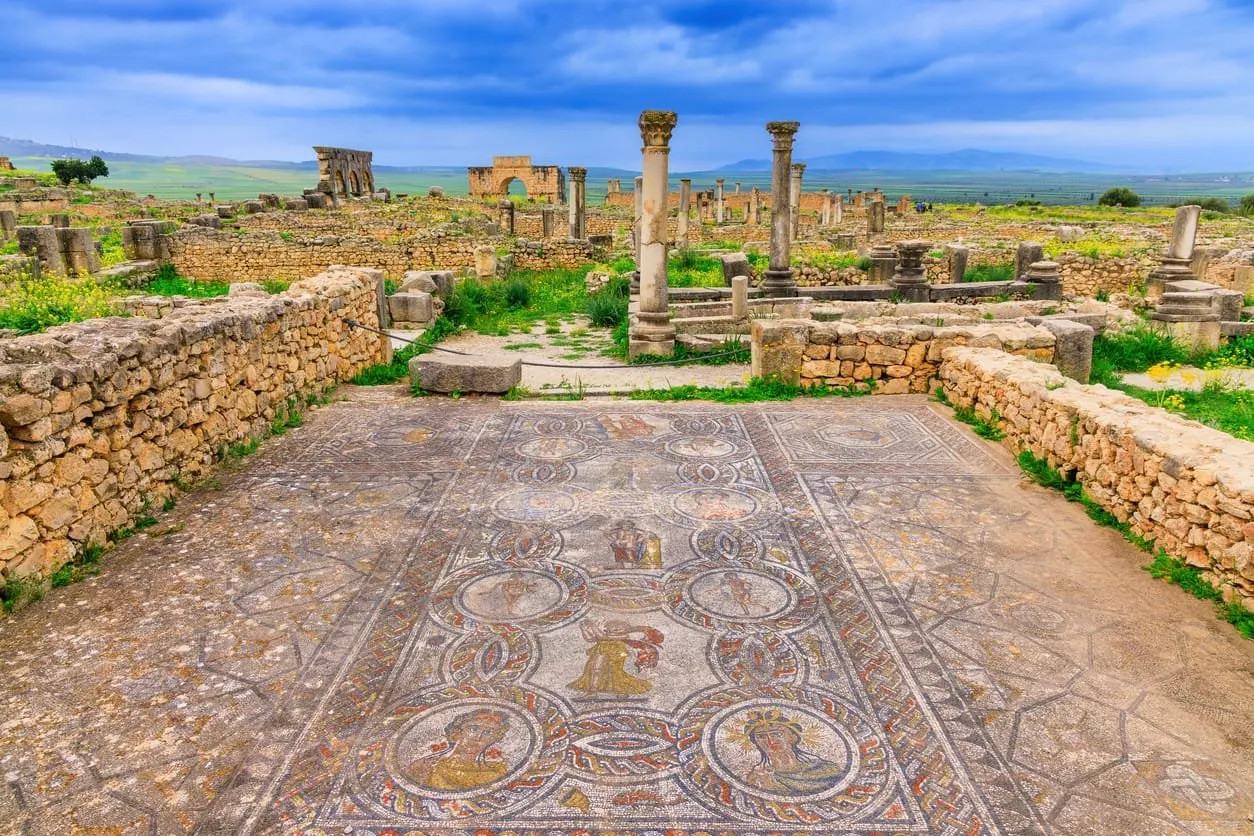
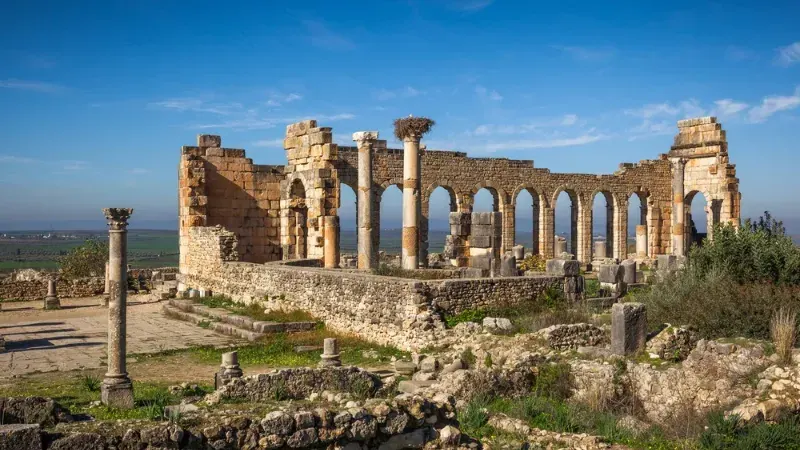
Three places in one day, so an early start helps. Volubilis was a Roman provincial town at the edge of the empire. Its arch, basilica columns and house mosaics stand on a low ridge among wheat fields and olive trees.
In Meknes you stop at Bab Mansour, the great tiled gate of Moulay Ismail's imperial city, and at the Royal Stables and granaries if they are open. Restoration has kept parts of Meknes closed in recent years.
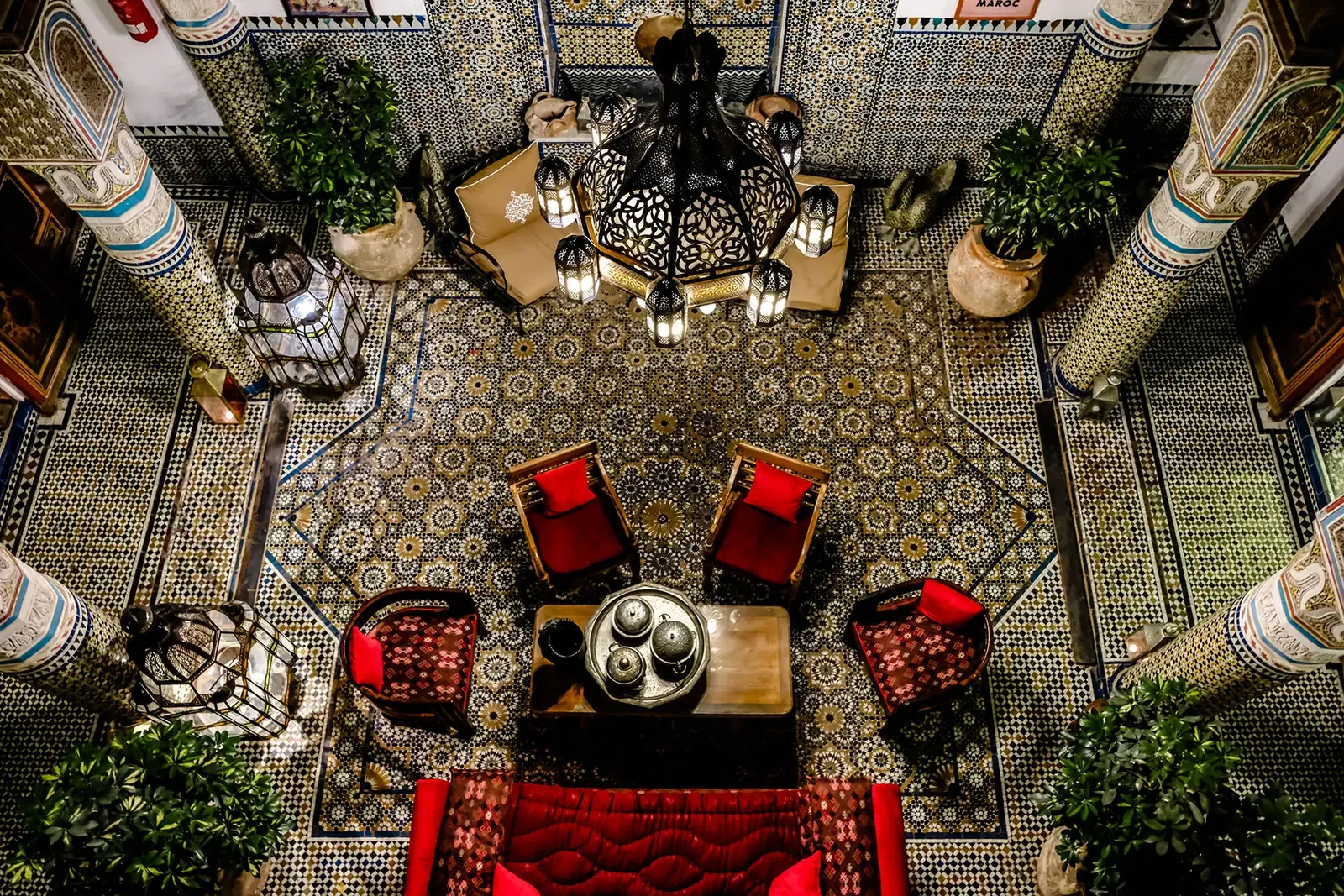
You reach Fes by evening and settle into a riad inside the walls.
Day 6Guided day in Fes
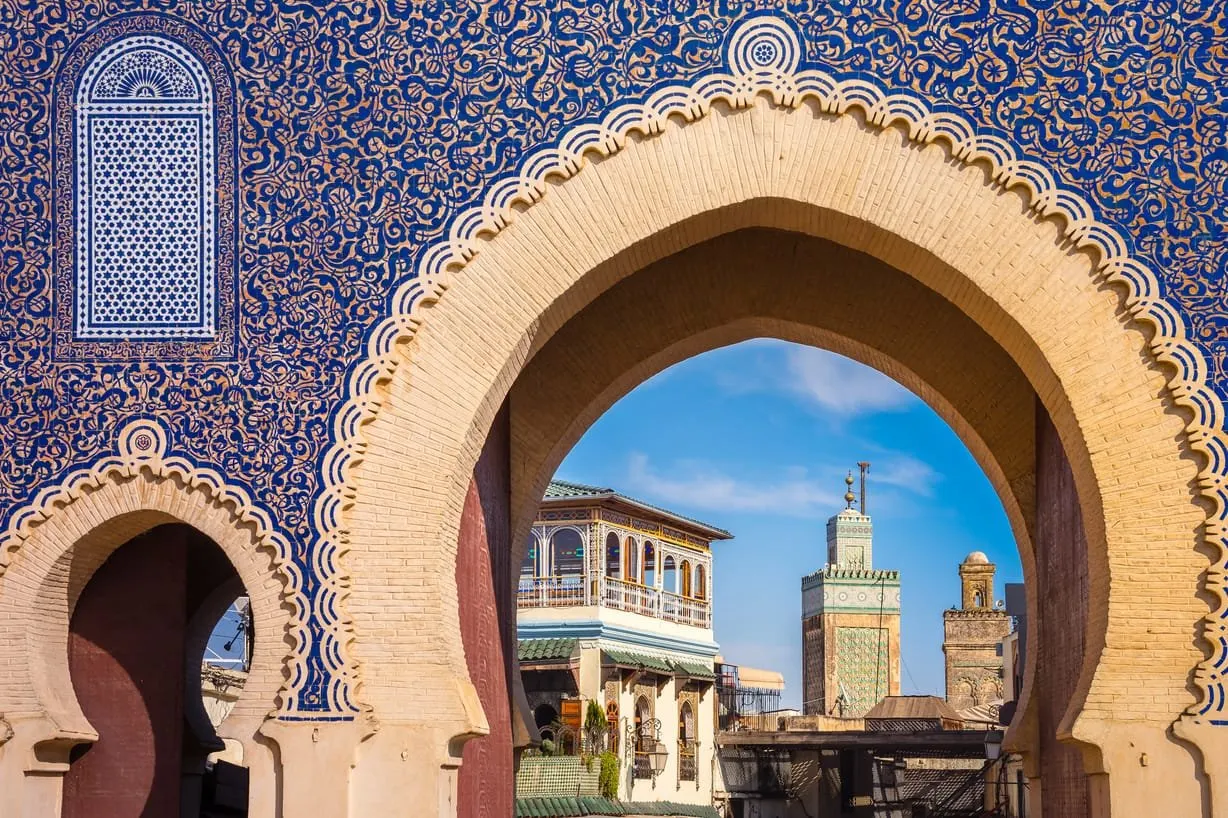
A local city guide leads the day. The old medina of Fes is car-free, steep in places and very easy to get lost in, so this is the one city where a guide changes the visit most.
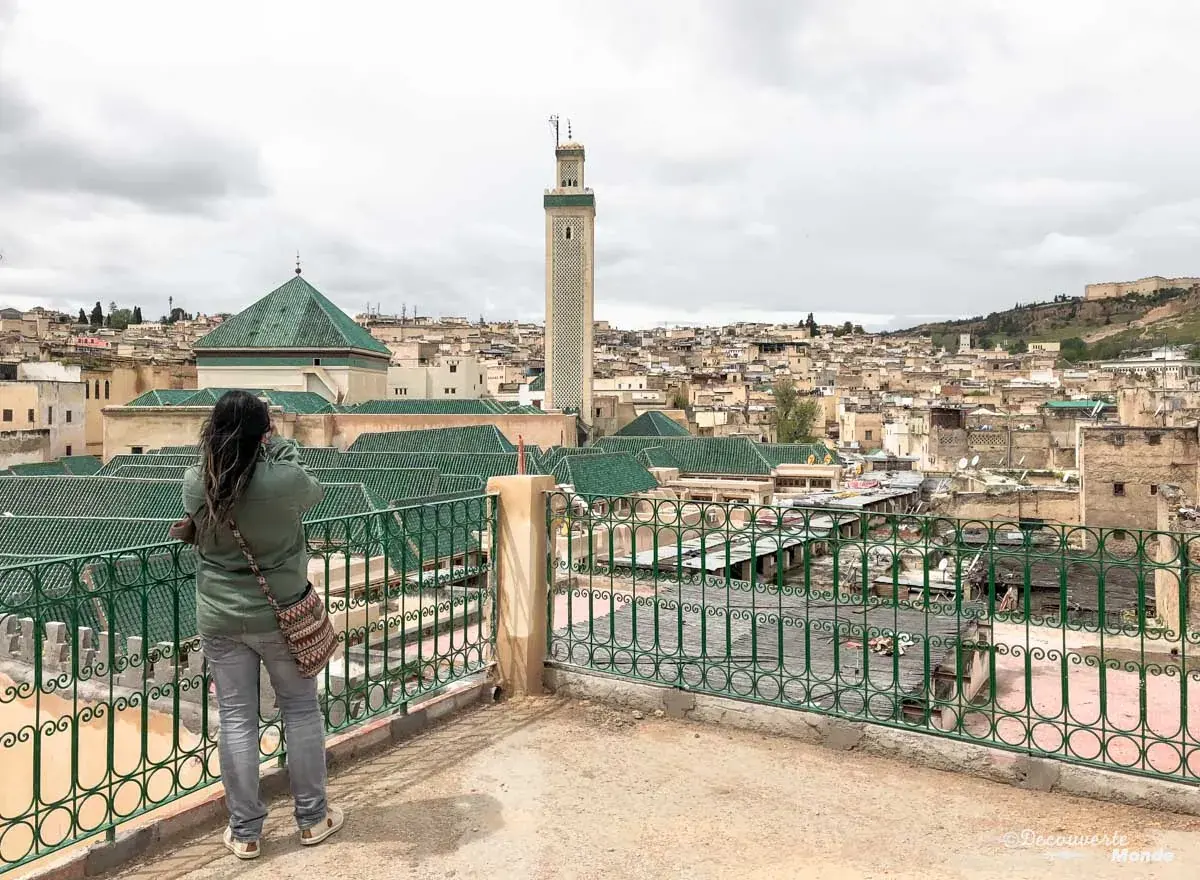
You pass through the souks and craft workshops, see Al Quaraouiyine from its doorways (the prayer hall is closed to non-Muslims), look over the tannery pits from a leather shop terrace, and end at a viewpoint above the city. Expect a lot of walking on uneven paving.
Day 7Fes to Merzouga by Ifrane, Azrou and the Ziz Valley454 km
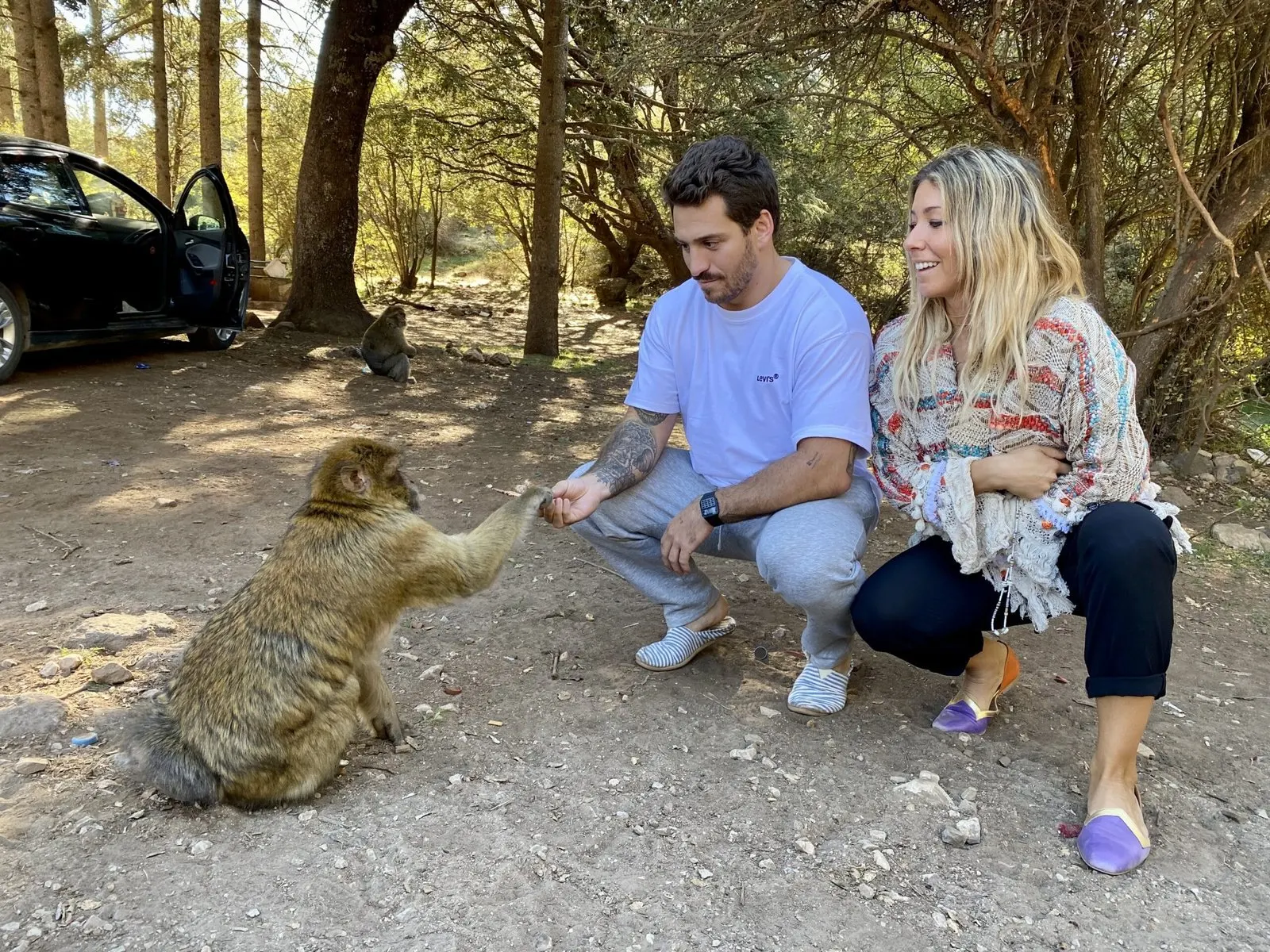
The longest drive of the sixteen days. You climb out of Fes to Ifrane, built in the 1930s in a European mountain style, and through the cedars near Azrou where macaques live.
South of the Middle Atlas the country dries out quickly. The road follows the Ziz Valley and its palm groves down to the desert, and you arrive at Merzouga near the end of the afternoon.
Tonight you sleep in a hotel at the foot of the dunes. The camel ride waits until tomorrow evening.
Day 8Khamlia and a sunset camel ride into Erg Chebbi
A late start is fine. During the day you drive to Khamlia, a village on the south side of the dunes, to listen to Gnawa music, whose roots lie south of the Sahara.
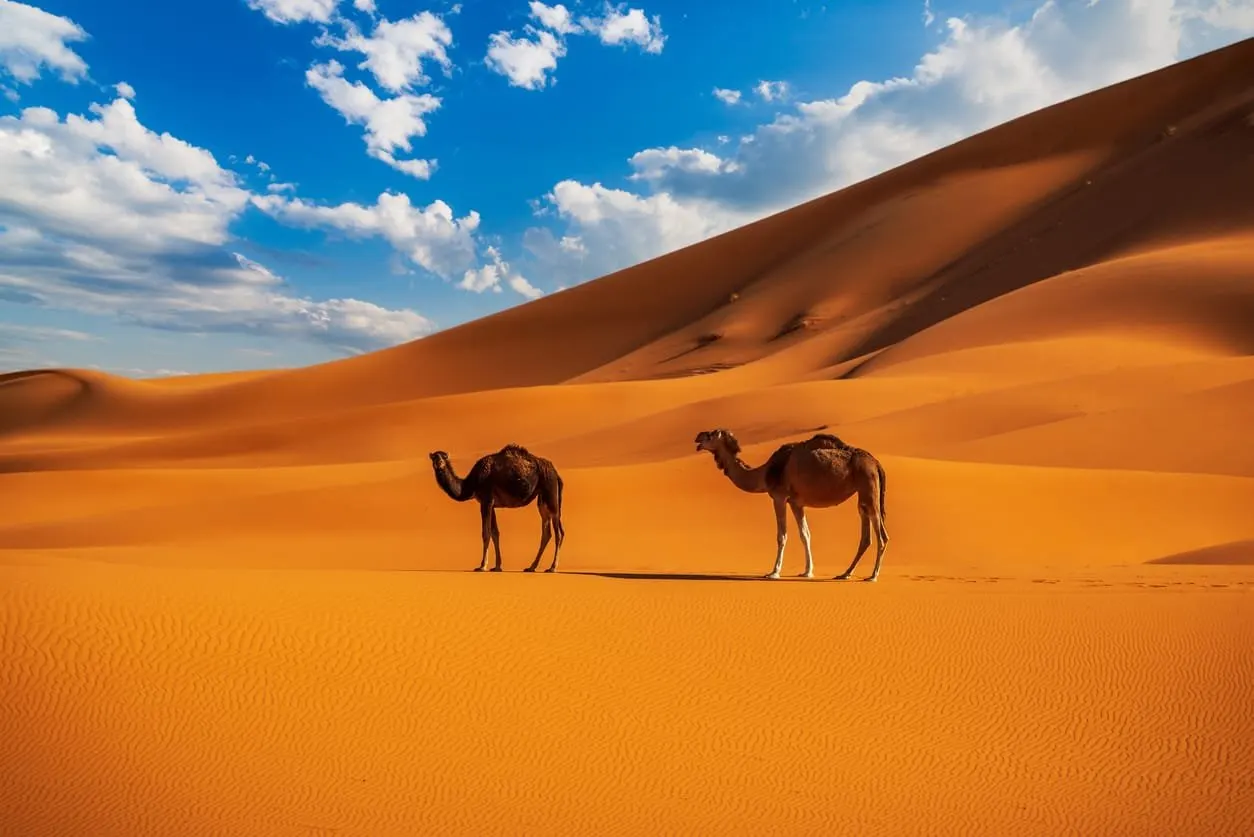
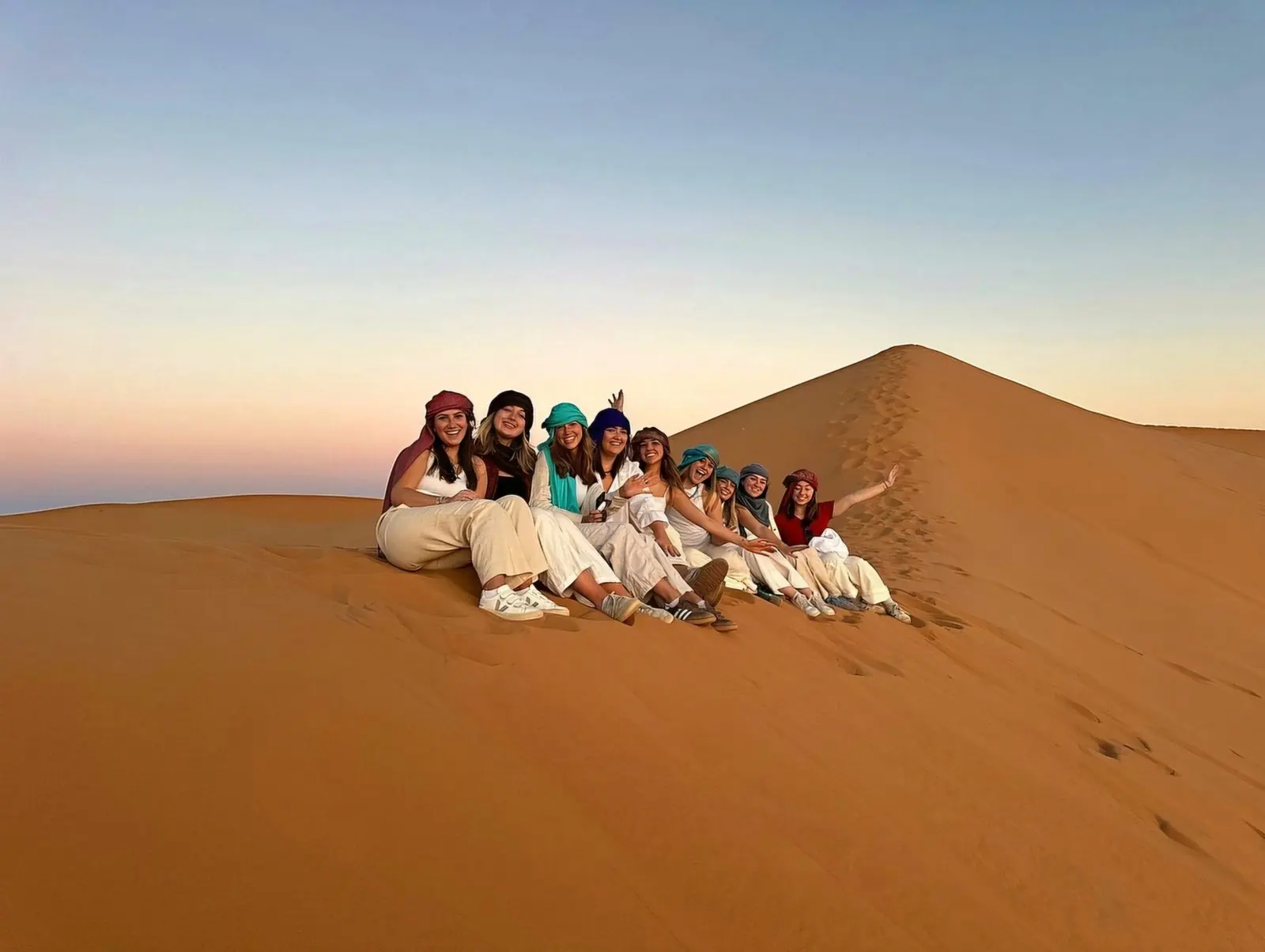
Towards evening you ride camels into the sand of Erg Chebbi and watch the sun go down from a dune. Camp is nearby: dinner, music at the fire, and a very dark sky when the lamps are out. If you would rather not ride, most camps can arrange a 4x4 transfer.
Day 9Merzouga to the Dades Valley by Todra Gorges275 km
Get up for sunrise if you can, then ride or drive out of the dunes for breakfast. The route west passes Rissani and the oasis of Tinghir.
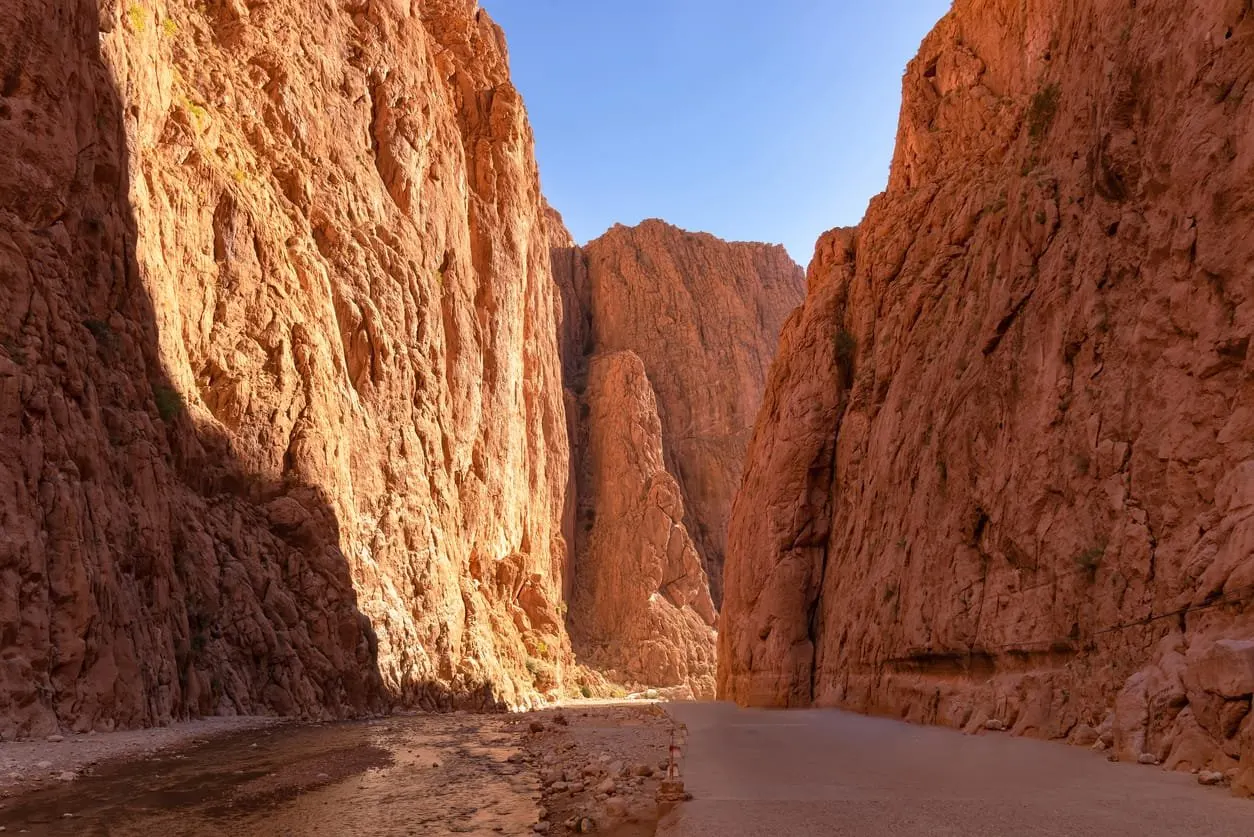
At the Todra Gorges the cliffs rise about 300 m above a path you can walk in a few minutes. Climbers use these walls, and in the middle of the day the gorge is the coolest place for many kilometres. The day ends in the Dades Valley.
Day 10Dades Valley to Marrakech by Ouarzazate and Ait Ben Haddou324 km
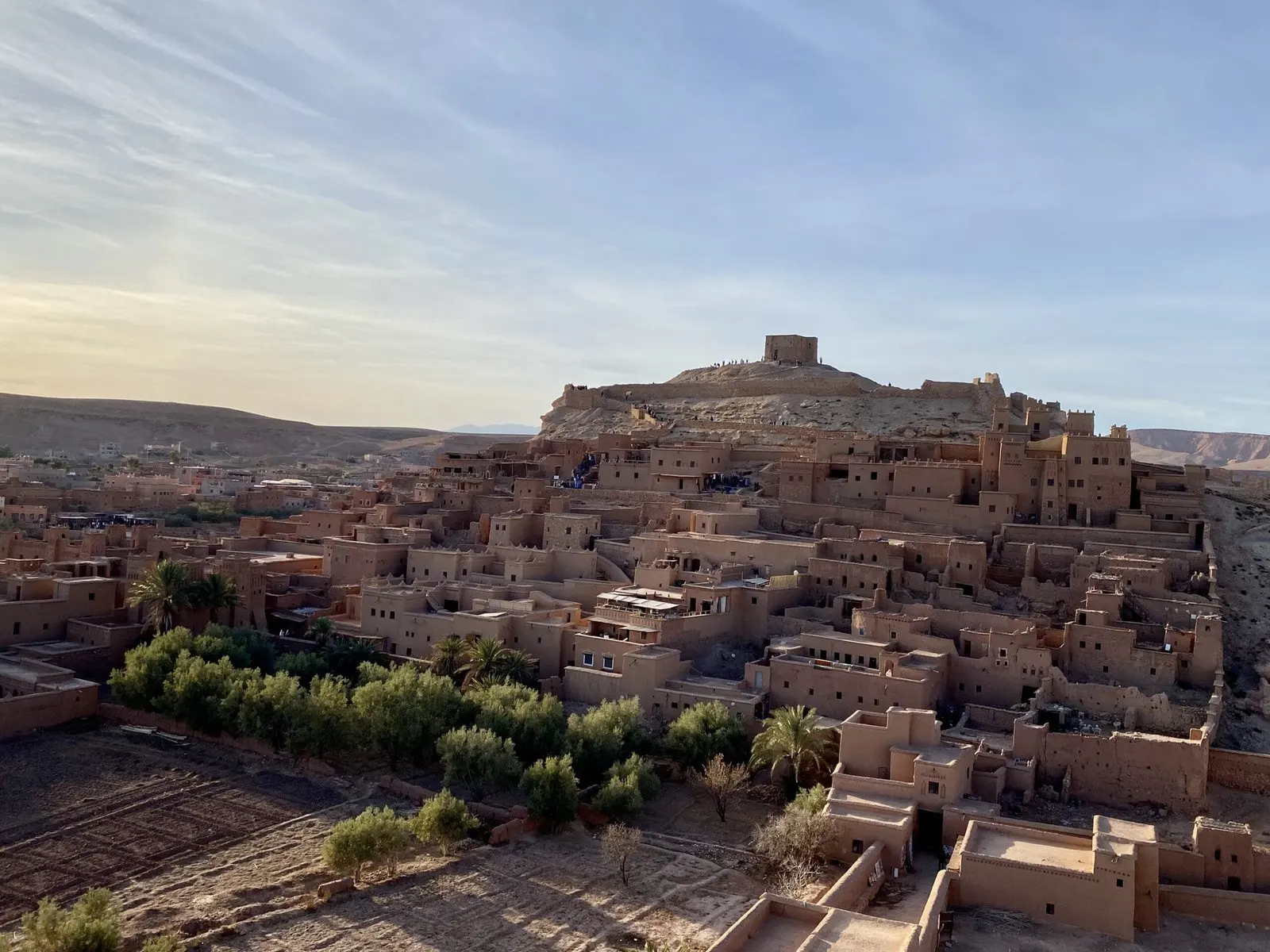
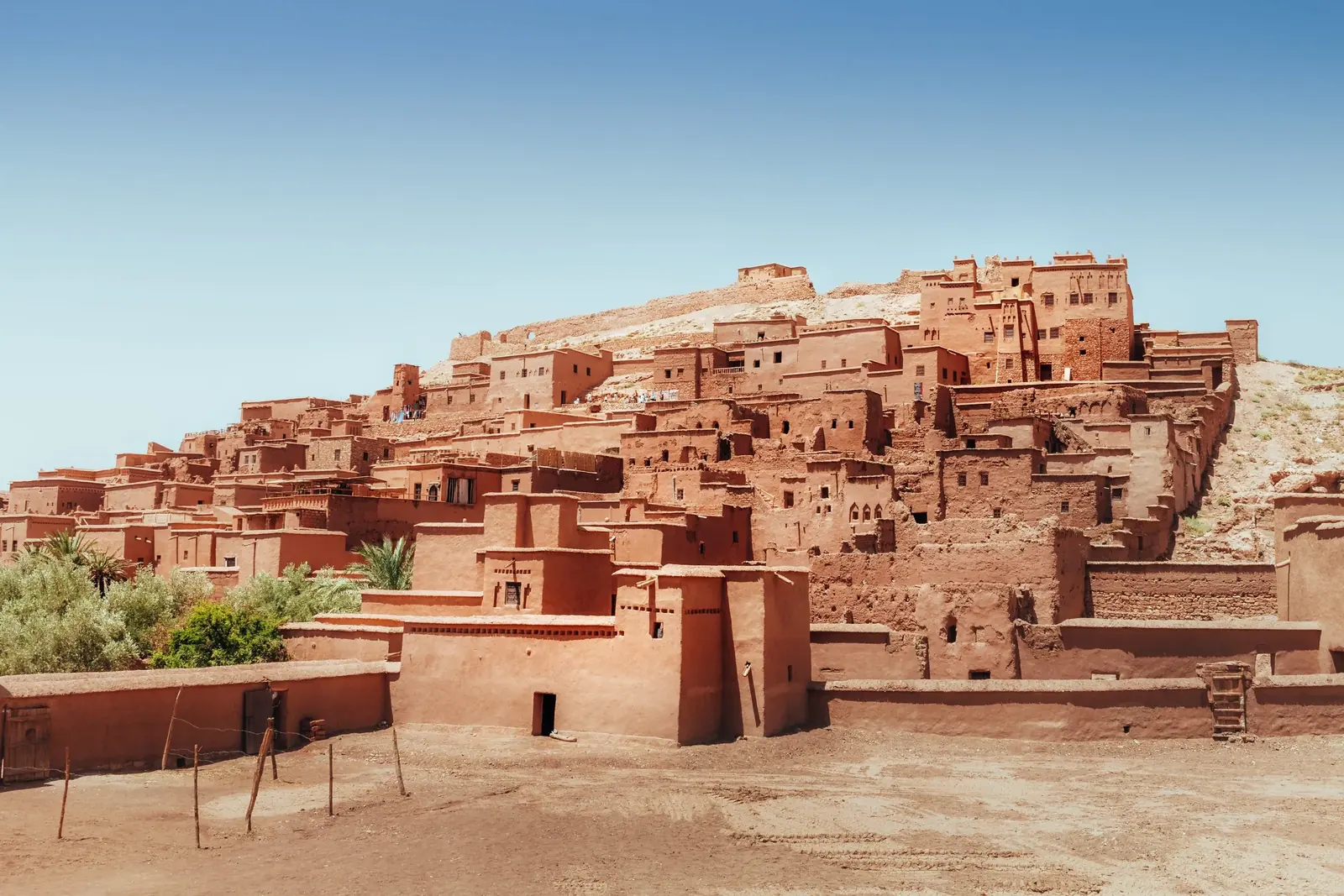
You follow the valley down to Ouarzazate, where the Taourirt Kasbah and the film studios can be visited for an entrance fee, then turn off for Ait Ben Haddou. The ksar is built of rammed earth and has been used as a set for many films. It is best seen by walking up through it to the top.
The crossing of the High Atlas by the Tizi n'Tichka pass takes most of the afternoon. You come down into Marrakech in the evening and stay three nights.
Day 11Guided day in Marrakech
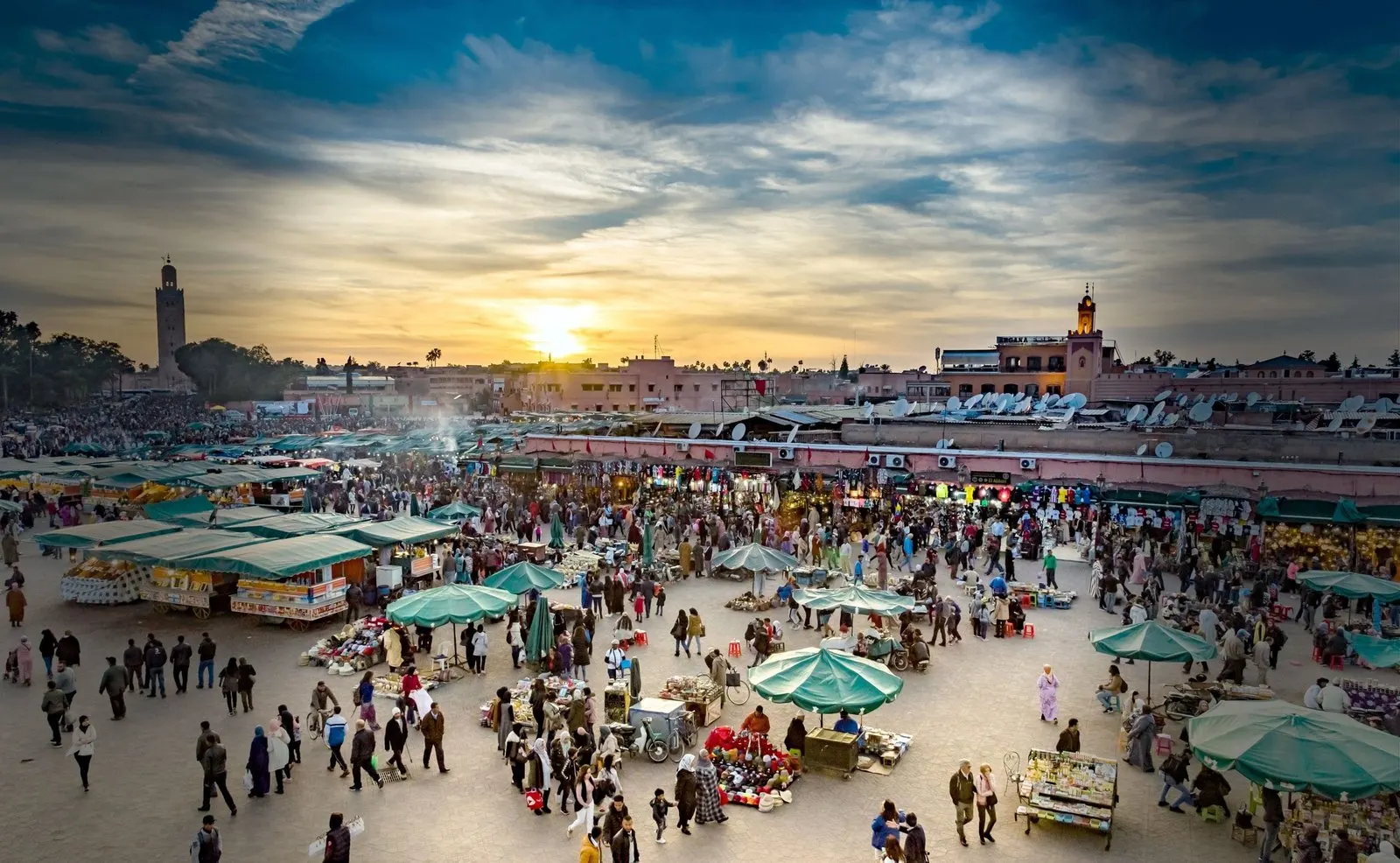
A local city guide takes you round the main sights of the old city: the Koutoubia Mosque from outside, the Bahia Palace and the Saadian Tombs.
After a break for lunch you go into the souks, then out onto Jemaa el-Fna as the square fills for the evening. Ask the guide about fair prices before you buy anything. It saves time and awkwardness later.
Day 12Day trip to the Ourika Valley120 km
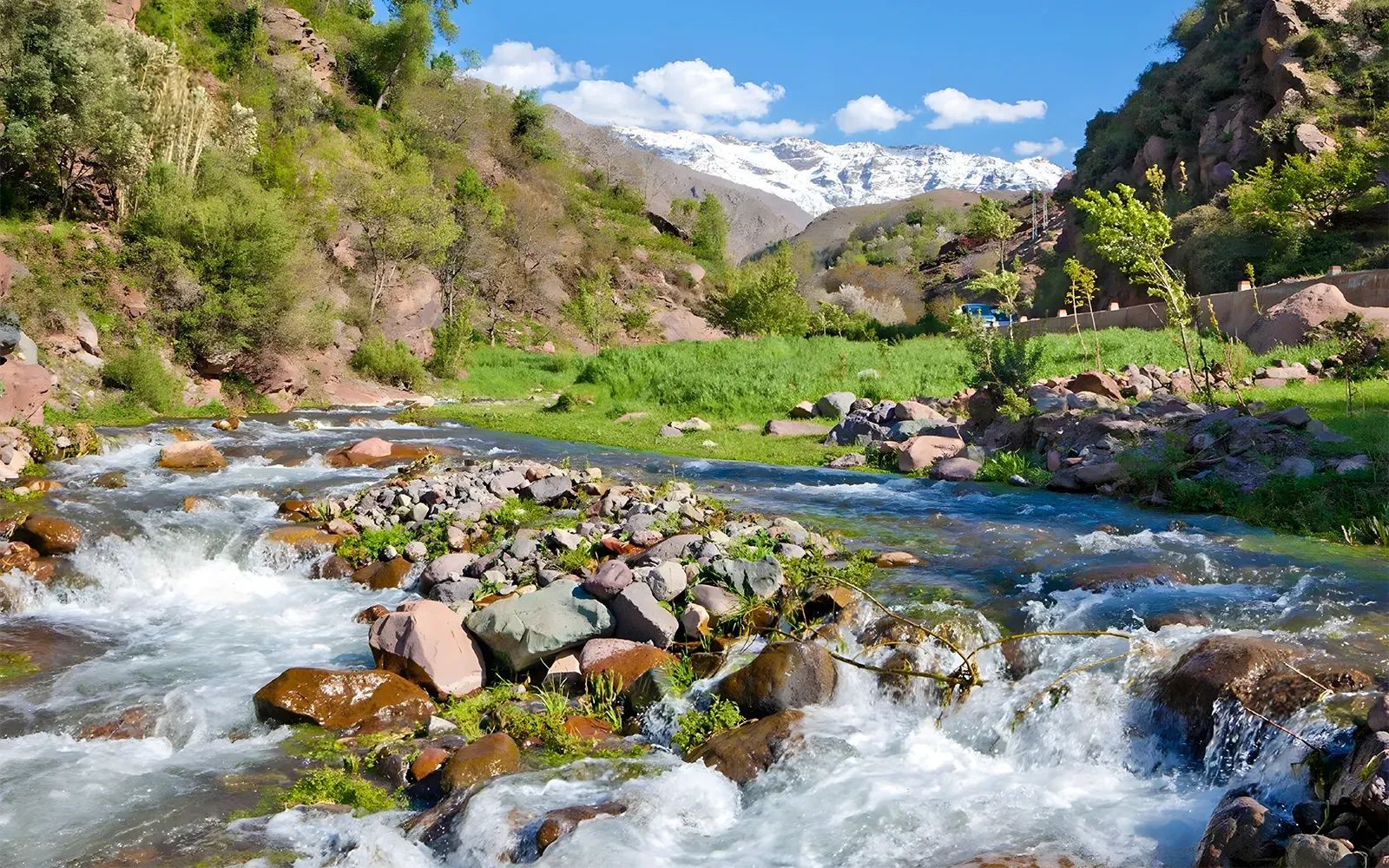
Mountain air after two city days. The Ourika Valley is the closest High Atlas valley to Marrakech, with Amazigh (Berber) villages, gardens and a river that runs all year.
You can walk to the falls above Setti Fatma, which is a scramble in places, or keep to the valley floor. The return to Marrakech is in time for a free evening.
Day 13Marrakech to Essaouira178 km
An easy morning drive to the ocean, with a stop at an argan oil cooperative on the plain.
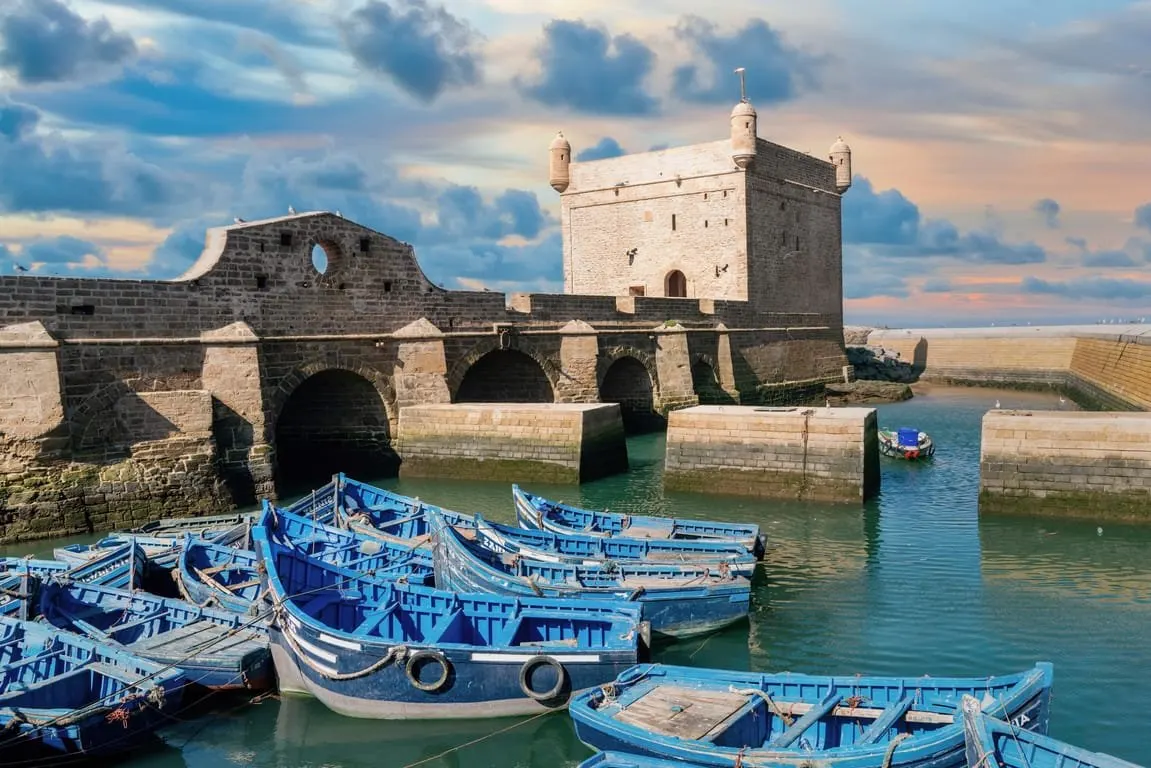
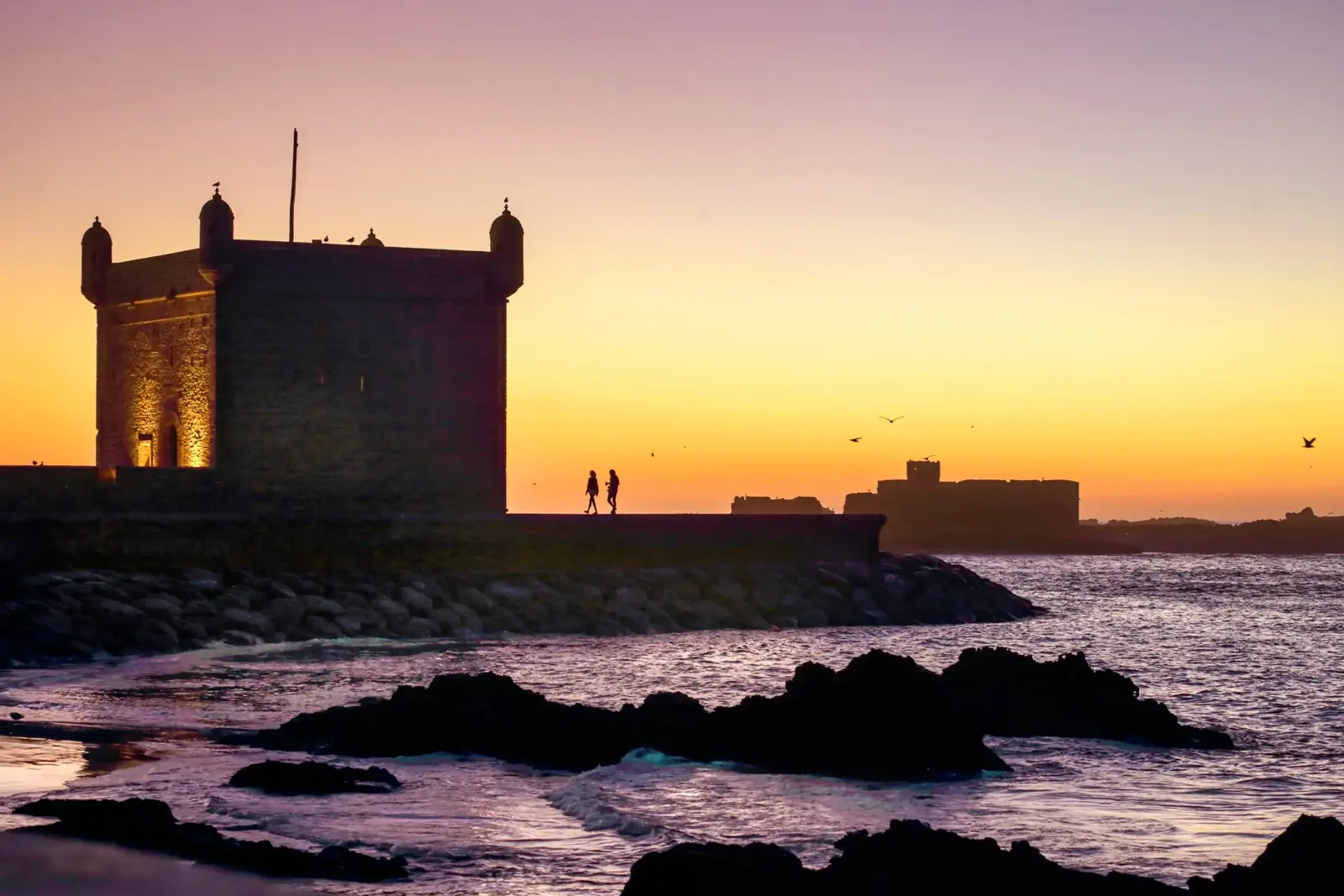
Essaouira is a fortified port laid out in the 18th century, and a World Heritage site since 2001. You have the afternoon for the ramparts, the harbour where the catch is landed, and the straight main streets of the medina. It is noticeably cooler and calmer than Marrakech.
Day 14Free day in Essaouira
A second unplanned day, this one by the sea. By now you have been travelling for two weeks, and most people use it to do very little.
Options if you want them: galleries and wood workshops in the medina, grilled fish near the port, a long walk on the beach, or wind sports and horse riding booked locally as extras. The wind is a constant here.
Day 15Essaouira to Casablanca377 km
The loop closes with a drive up the Atlantic coast past farmland and small towns. It is a long day in the vehicle with few set stops.
Once you are checked in at Casablanca, the evening is free for a last dinner or a walk on the Corniche.
Day 16Departure from Casablanca45 km
You are driven to Mohammed V Airport for your flight. The tour can also be arranged to end in Marrakech or to begin in Tangier. Ask when you enquire.
Price and what changes it
This 16-day private tour costs €4,300 to €7,500 per person. Every trip is tailored, so the final price depends on your group size, hotel and camp level, and what you add.
- Group size. The vehicle and driver are a fixed cost over sixteen days, shared by the group. Four people pay much less each than two, and a solo traveller pays the most.
- Accommodation level. Fifteen nights in standard, comfort or luxury hotels, riads and camp. City riads in Fes and Marrakech vary most between levels.
- Desert choices. A standard or a luxury camp for the night in the dunes. Our comparison of desert camps in Merzouga shows what changes.
- Changes to the route. A second night in Tangier, a different end city, or added activities all alter the quote. See what a Morocco tour costs for how the ranges are set.
Other lengths are priced on the Morocco tour cost page.
Included and not included
Included
- Private air-conditioned vehicle for the sixteen days
- English- or Spanish-speaking driver
- Airport pickup and departure transfer
- Fifteen nights of accommodation at the level you choose
- Local city guides for the guided days in Fes and Marrakech
- Camel ride in the Erg Chebbi dunes
- Breakfast every day, and some dinners, listed in your quote
Not included
- Lunches and drinks
- Entrance fees to monuments and sites
- Optional activities such as quad bikes or wind sports
- Tips
- Flights
Is this the right tour for you?
It suits you if
- You want to see the north coast. Tangier and Cap Spartel are the one part of the country that our 14-day and 15-day loops leave out.
- You would like more daylight in Chefchaouen. Coming from Tangier you arrive around midday, not at the end of a 345 km day.
- You have been to Spain and like the idea of seeing the Strait from the other side.
- You have sixteen days and prefer to add a new place than to add another rest day.
Think twice if
- Tangier is not on your list. Its extra night is the only difference from the 15-day Morocco tour from Casablanca, which is otherwise the same trip.
- You hoped to explore the Tangier medina in depth. With one night, the time goes to the seafront, Cap Spartel and the caves. Ask us for a second night, or look at the 17-day tour, which gives the afternoon to the Kasbah and medina.
- A long driving day worries you. Day seven is still about 454 km from Fes to Merzouga. The 17-day tour breaks it at Midelt.
- Sixteen days away is hard to arrange. The 10-day tour from Casablanca covers Rabat, Chefchaouen, Fes, the desert and Marrakech.
Places on the route
What travellers say
★★★★★
“The itinerary was well planned, the accommodations were in great locations, and our driver Ismail made everything comfortable and fun.”
Questions about the 16-day Morocco tour from Casablanca
What does the 16 day tour add to the 15 day tour from Casablanca?
A night in Tangier. On day two you continue up the coast from Rabat to Tangier, and on day three you visit Cap Spartel and the Caves of Hercules before a short drive to Chefchaouen. From there the two routes match.
Is one night in Tangier enough?
It is enough for the seafront, Cap Spartel and the Caves of Hercules. It is not enough to see the Kasbah, the medina and the museums as well, so ask for a second night if Tangier is a priority.
Can you see Spain from Tangier?
Often, yes. The Strait of Gibraltar is about 14 km wide at its narrowest, and on a clear day the Spanish coast is visible from the seafront and the headlands. Haze or cloud can hide it.
How far is Tangier from Chefchaouen?
About 115 km on this route, which is roughly two to two and a half hours on the road. It is one of the shortest transfers of the tour.
How many days have long drives on the 16 day tour?
Four days are over 300 km: Casablanca to Tangier, Fes to Merzouga, the Dades Valley to Marrakech and Essaouira to Casablanca. The total is about 2,480 km across nine road days.
Can the 16 day tour start in Tangier?
Yes. Travellers who arrive by ferry from Spain or fly into Tangier can begin there and finish in Casablanca or Marrakech. Tours are private, so tell us your arrival point and the route is rebuilt around it.