When is Ramadan in 2027?
Ramadan 2027 is expected to begin around 8 February 2027 and end around 8 March, with Eid al-Fitr on or around 9 March. Ramadan is the ninth month of the Islamic lunar calendar, which is about 11 days shorter than the solar year, so it moves about 10 to 11 days earlier each year. In Morocco the start and end are confirmed by an official sighting of the new crescent moon the evening before. The dates below are astronomical projections and can shift by a day, and Morocco sometimes starts a day later than the Gulf states.
| Event | Expected date | How sure |
|---|---|---|
| Ramadan 2027 begins | Around 8 February 2027 (first fast) | Projection. Could be a day later in Morocco |
| Ramadan 2027 ends | Around 8 March 2027 | Lasts 29 or 30 days depending on the moon |
| Eid al-Fitr 2027 | Around 9 March 2027 | Could be 10 March if the moon is not seen |
| Eid al-Adha 2027 | Around 16 or 17 May 2027 | Projection |
| Ramadan 2028 | Around 28 January to around 26 February 2028 | Projection |
Projections from published astronomical calculations, checked October 2026. Confirm the dates again a few weeks before you travel.
Because Ramadan keeps moving earlier, it falls in late winter for the next few years. In February the days are short and cool, so fasting hours are shorter than in a summer Ramadan, and the weather suits both the cities and the desert. Our best time to visit Morocco guide gives typical temperatures for each region in February and March.
What changes day to day during Ramadan?
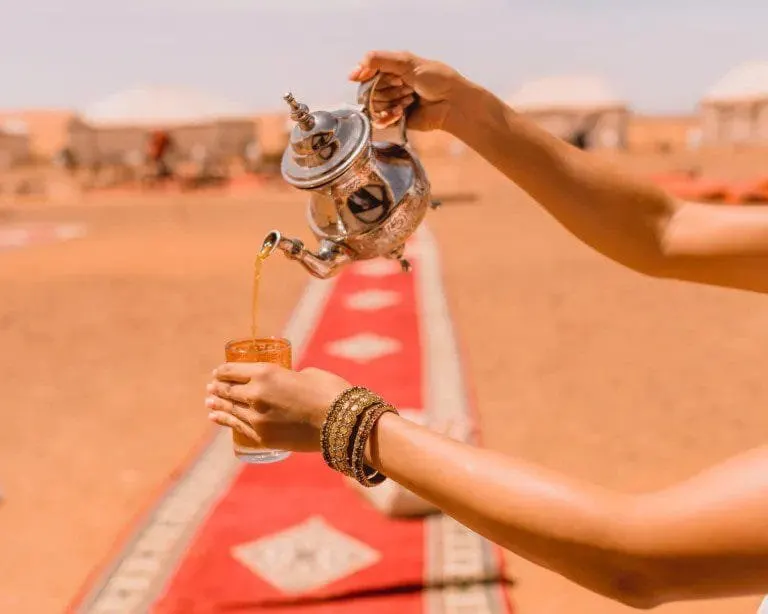
The country runs on a different timetable: slow mornings, a quiet afternoon, a rush before sunset and busy evenings. Most Moroccans fast from dawn until sunset, which means no food, no drink and no smoking in daylight. In February that is roughly 12 to 13 hours. The fast is broken at sunset with a meal called iftar, traditionally dates and milk followed by harira, a tomato and lentil soup, and honeyed pastries such as chebakia.
- Mornings are slow. Many people sleep later after a late night and an early pre-dawn meal. Souk stalls open later than usual.
- Opening hours are shorter. Monuments, museums and gardens generally stay open, often with shorter afternoon hours. Banks and offices keep reduced hours.
- Food by day. Many local cafés and snack bars close until sunset. Restaurants in hotels, riads and tourist areas generally serve as usual, sometimes in a separate room or behind a screen.
- The hour before sunset is hectic. Everyone heads home or to a table at once. Traffic is heavy and driving can be erratic just before dusk.
- Sunset is a pause. For about an hour after the call to prayer, streets empty and many services stop while people eat.
- Evenings are lively. After iftar, squares, cafés and markets fill up and stay busy late, with families out walking and extra evening prayers at the mosques.
- Alcohol is harder to find. Supermarkets and shops generally stop selling alcohol to the public for the month. Some licensed hotels continue to serve their guests, but do not count on it.
How should visitors behave during Ramadan?
Visitors are not expected to fast, and nobody will mind you eating in a hotel, a riad or a restaurant that serves visitors. The courtesy that matters is not doing it in public. Eating, drinking, smoking or chewing gum in the street in daylight can cause real offence during Ramadan, and Moroccan law forbids Muslims from breaking the fast in public. The law is not aimed at tourists, but the social rule applies to everyone.
- Eat and drink discreetly. Keep a water bottle in your bag and drink in the vehicle, your room or a restaurant, not while walking through the medina.
- Dress a little more modestly than usual. Cover shoulders and knees, especially in medinas, small towns and near mosques. Our what to wear in Morocco guide covers this in detail.
- Keep public affection low-key. This is good practice in Morocco at any time, and more so during Ramadan.
- Be patient. People who are fasting can be tired in the late afternoon, and service can be slower.
- Learn a greeting. "Ramadan Mubarak" or "Ramadan Kareem" is always well received.
- Accept an invitation if one comes. Being asked to share an iftar meal is a sign of hospitality. A small gift of pastries or dates is a kind gesture.
What still works normally for tourists?
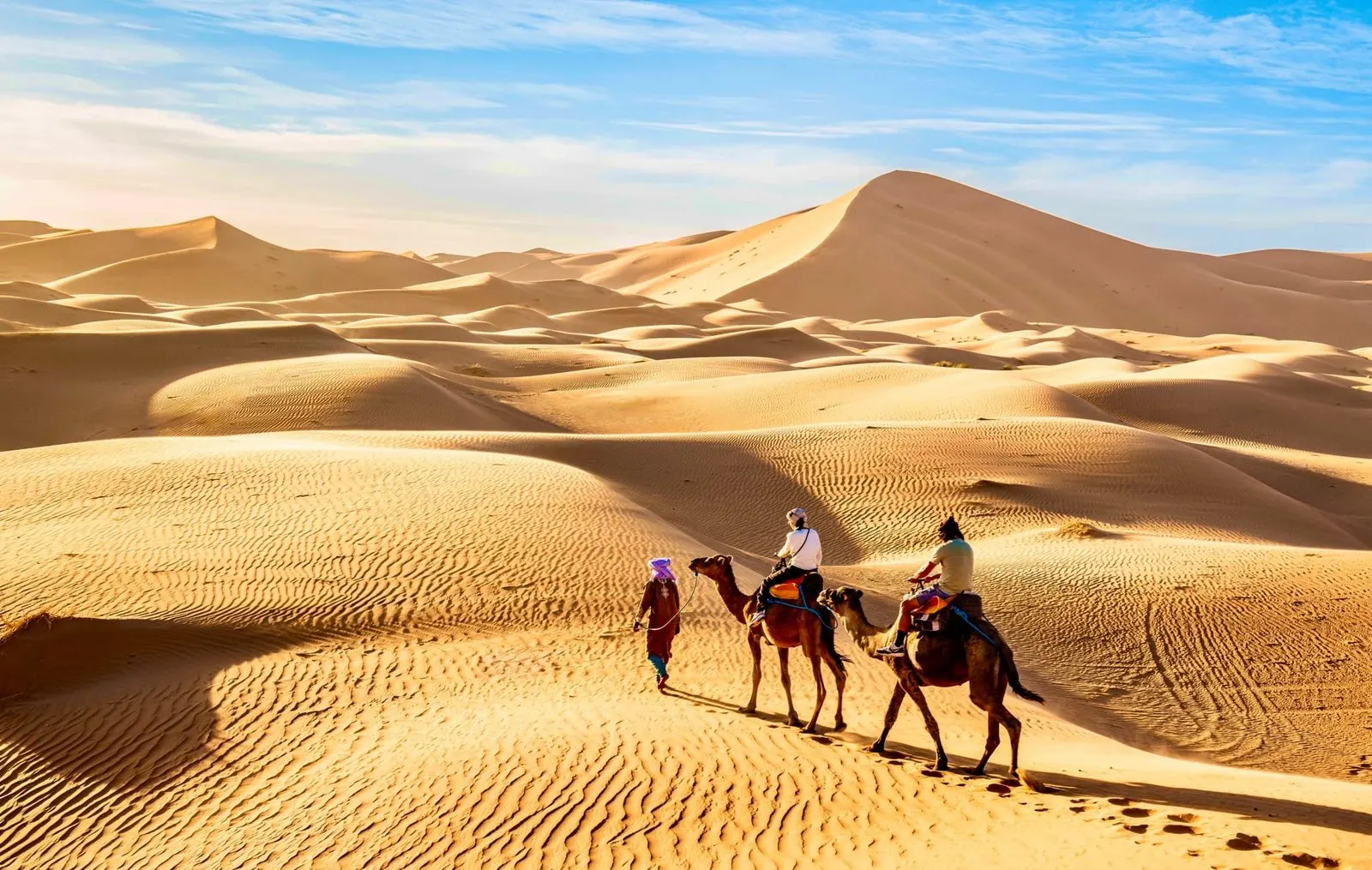
Almost everything a visitor relies on keeps running. Flights, trains, hotels, riads and tour operators work as usual through the month, and the desert camps near Merzouga stay open. Breakfast is served in your riad as normal. Main sights such as palaces, gardens and the old medersas generally open, although hours may be shorter, so it is worth checking each one locally rather than relying on published hours.
The things that change are the small ones: finding lunch outside tourist areas, buying alcohol, and getting anything done in the hour around sunset. In Marrakech, Fes, Casablanca and Rabat, restaurants that serve visitors at lunchtime are easy to find. In small towns and along the desert road, choice is thinner, which is where a driver who knows the route helps.
Which places are easiest during Ramadan?
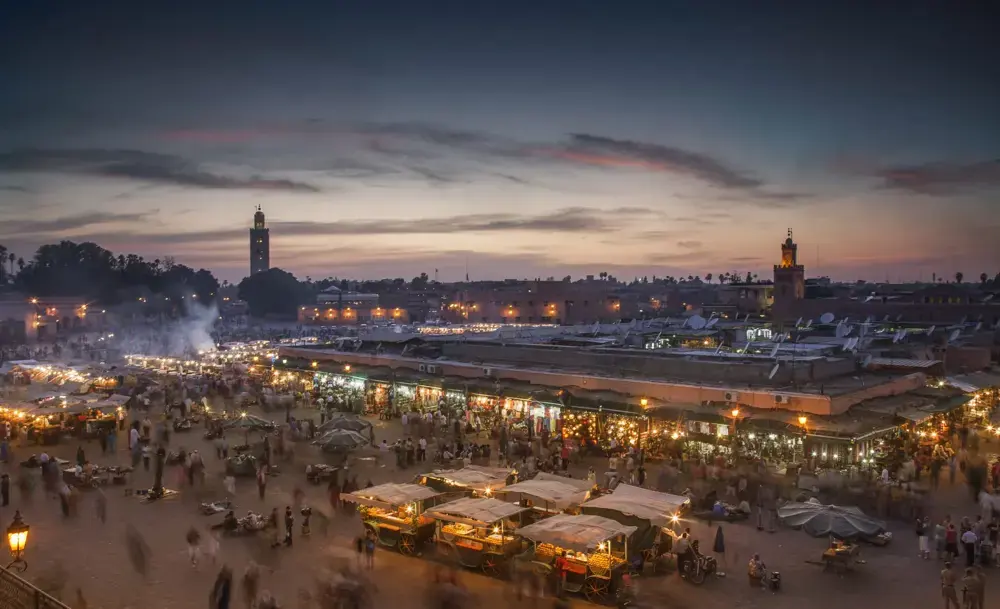
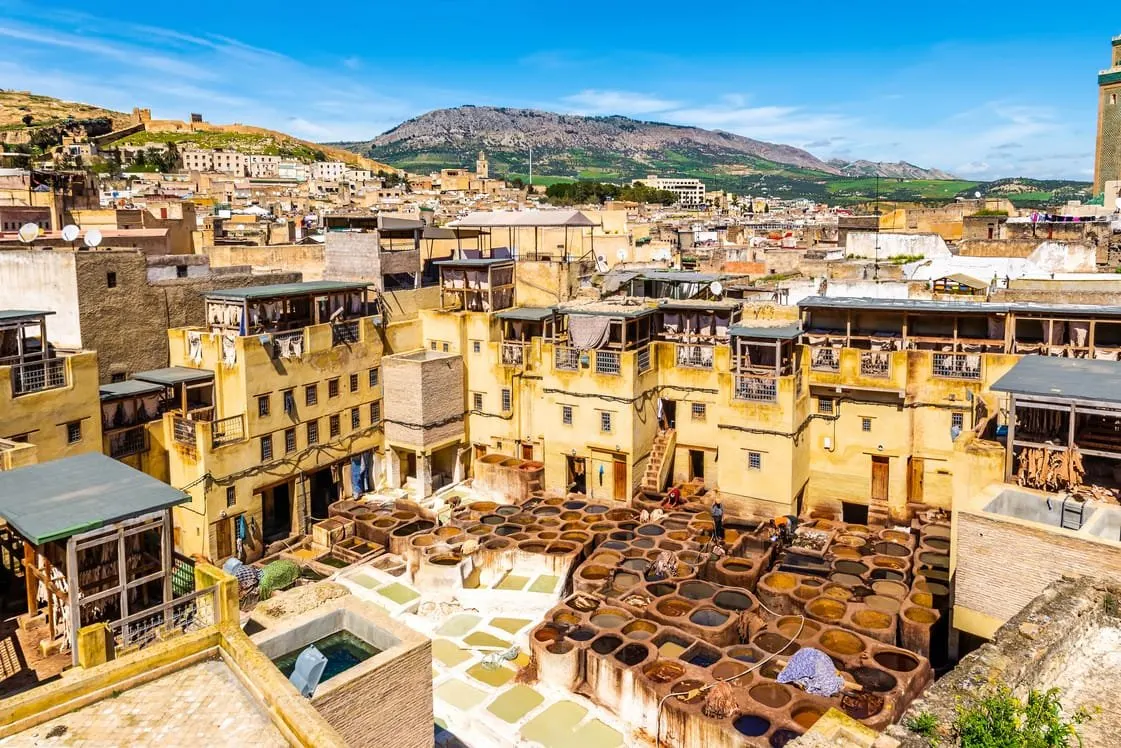
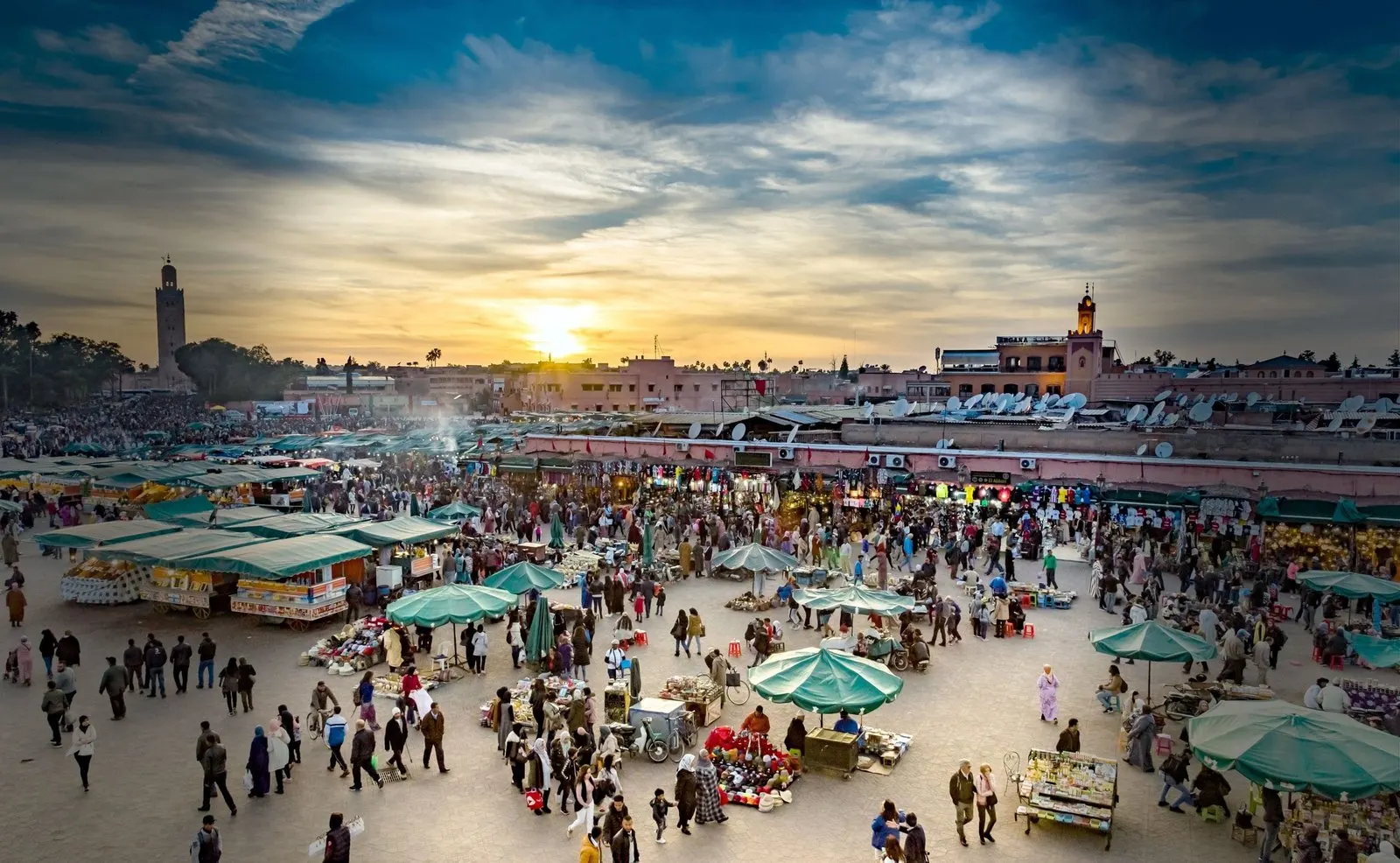
Travelling to Morocco during Ramadan is easiest in the big cities and on the main tourist routes. Marrakech is calm in the morning and very lively after iftar, when Jemaa el-Fna fills with food stalls and families. Fes keeps a more traditional, quieter pace inside the medina. Casablanca and Rabat have the widest choice of restaurants open at lunchtime. Small villages and roadside towns are the places where daytime food is hardest to find, so plan lunch stops there in advance.
Is Ramadan a good time to visit Morocco?
For most travellers, yes, as long as you are happy to plan around the rhythm of the day. It is a poor choice only if nightlife, long lunches in local cafés or easy access to alcohol are central to your trip.
| What is better | What is harder |
|---|---|
| Quieter mornings at major sights in Marrakech and Fes | Many local cafés and snack bars are closed by day |
| Lively evenings and seasonal food you will not see at other times | Shorter opening hours at sites, shops and banks |
| In 2027 it falls in late winter: mild days, good for the desert | Alcohol is hard to find outside some licensed hotels |
| A real view of Moroccan family and religious life | Roads are busy and rushed just before sunset |
| Shorter fasting hours in February than in a summer Ramadan | Accommodation can be busy around Eid al-Fitr, when Moroccans travel home |
How do our tours work during Ramadan?
Tours run as normal during Ramadan, with the timing adjusted to the day. Every tour is private, so the schedule is yours and can move around opening hours and sunset, which a fixed group timetable cannot do. Hassan and his team in Marrakech plan Ramadan trips the same way as at any other time of year, with the route, hotels and inclusions agreed before you pay anything.
- Your driver may be fasting. Many Moroccan drivers and guides fast during Ramadan and still work their normal days. Do not feel awkward eating in front of them in a restaurant. Simply be discreet in the vehicle, and accept that the last hour before sunset is the hardest of their day.
- Lunch stops still happen. Lunch is not included on any tour, but your driver will stop where visitors can eat. On the desert roads that usually means a hotel or a restaurant used to travellers.
- Early starts work well. Sightseeing in the morning and arriving by late afternoon avoids the busy roads before sunset.
- Dinner comes after sunset. On tours that include dinner, it is served in the evening as usual, at your hotel or desert camp.
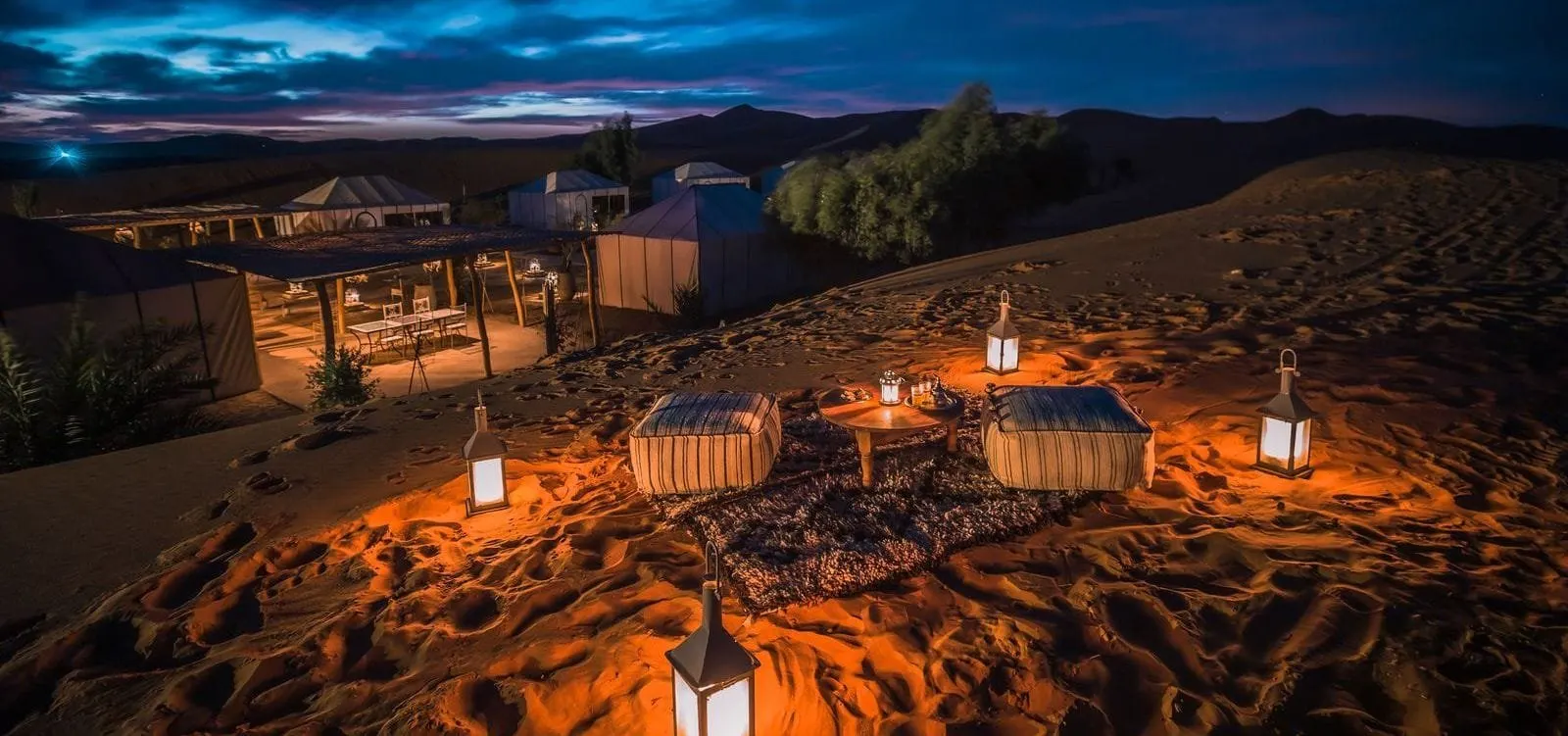
Late-winter Ramadan suits a desert trip well. The 3-day Marrakech to Merzouga tour costs €500 to €800 per person and the 7-day tour from Marrakech €1,700 to €3,800 per person, the same as in any other month. Desert nights in February are cold, so pack warm layers. See all our desert tours for other lengths.
What are Eid al-Fitr and Eid al-Adha?
Eid al-Fitr marks the end of Ramadan, and Eid al-Adha follows about two months later. Both are public holidays in Morocco and are family occasions above all.
- Eid al-Fitr (expected around 9 March 2027). The day after Ramadan ends, families attend morning prayers, visit relatives and share sweet pastries. Many shops and businesses close for a day or two, and buses and trains are busy as people travel home.
- Eid al-Adha (expected around 16 or 17 May 2027). The Feast of the Sacrifice, when families who can afford it slaughter a sheep. It is the biggest family holiday of the year. Expect closed shops and quiet medinas for a few days, full intercity transport and higher demand for accommodation.
Neither holiday stops a private tour, since the vehicle and driver are booked for you. If your dates touch either Eid, tell us when you enquire so the route allows for closed shops and busy roads.
Questions people ask
Can tourists eat during Ramadan in Morocco?
Yes. Visitors are not expected to fast and can eat in hotels, riads and restaurants that serve visitors. Avoid eating, drinking or smoking openly in the street during daylight.
Is everything closed in Morocco during Ramadan?
No. Hotels, riads, transport, tours and most sights stay open. Many local cafés close until sunset, and sites, shops and banks often keep shorter hours.
Can you drink alcohol in Morocco during Ramadan?
Availability is much reduced. Most shops stop selling alcohol for the month, and only some licensed hotels continue to serve guests. Drinking in the street is illegal at any time of year.
Do I have to cover up more during Ramadan?
There is no special dress code for visitors, but covering shoulders and knees is more appreciated during Ramadan, especially in medinas, villages and near mosques.
Is the Sahara open during Ramadan?
Yes. Desert camps around Merzouga operate as normal, and in 2027 Ramadan falls in February and early March, when days in the desert are mild and nights are cold.
Will my guide or driver be fasting?
Possibly. Many Moroccan drivers and guides fast and work normally. Eating in front of them in a restaurant is fine, and a little patience in the late afternoon is appreciated.
Does Morocco change its clocks for Ramadan?
It did until 2026, when the country switched to GMT for the month. Since 20 September 2026 Morocco has used GMT all year, so no Ramadan change is expected in 2027.
Sources
- UK Foreign, Commonwealth & Development Office: Morocco, safety and security (Ramadan and alcohol), updated 19 August 2026 (checked October 2026)
- Khaleej Times: likely dates for Ramadan, Eid al-Fitr and Eid al-Adha 2027, citing UAE astronomical projections (checked October 2026)
- When-is.com: Ramadan 2028 projected dates (checked October 2026)
- Morocco World News: Morocco returns to GMT on 20 September 2026 (checked October 2026)
- Public holidays in Morocco (checked October 2026)